-

Sharing Experience and Methods for Platycodon grandiflorus Planting and Seedling Cultivation
Since Platycodon grandiflorus was domesticated from wild varieties into cultivated ones, root branching and plant lodging have become bottlenecks hindering production and planting. Especially since the 1980s, with large demand from countries such as South Korea and Japan, the standard requires fresh Platycodon grandiflorus roots to have a diameter above 1.2cm, a length above 15cm, and no branching.
-
Experience Sharing on Dwarfing and Close Planting Cultivation of Jujube Trees
Dwarfing and close planting cultivation of jujube trees means transforming the large, widely spaced arbor into a short, compact plant resembling a small shrub; it is a new type of cultivation model. This model helps save land resources, facilitates intensive cultivation, and supports modern management. Jujube tree ju
-
How to Fertilize Jujube Trees Well? Sharing Planting and Fertilization Experience
Jujube is rich in nutrition. Besides being rich in a large amount of sugar, every 100 grams of fresh jujube contains 300 mg of vitamin C, far exceeding the content in ordinary fruits. Jujube also contains a certain amount of fat, protein, cellulose, fruit acid, vitamin A, vitamin B
-
Experience Sharing on Raising Jujube Sucker Seedlings by Returning Them to the Nursery
Using jujube sucker seedlings from jujube orchards and returning them to the nursery is a widely applied method for cultivating strong jujube seedlings. (1) Land preparation: choose flat loam soil with a water source as the nursery. Plow deeply 20 cm and apply sufficient farmyard manure as base fertilizer. Make beds 90 cm wide and 10 m long, oriented north-south, with 2 rows of seedlings per bed.
-
How to manage pear trees in early spring? Sharing growing experience
Rational distribution of stored nutrients in the tree body and reducing useless consumption is one of the important techniques for promoting normal tree growth and producing high-quality fruit. During this period, measures such as bud removal and flower bud thinning can reduce useless consumption in the tree body, and this is a relatively important point in early spring management of pear trees.
-
What to Do When Garlic Bulbs Split Apart? Sharing Practical Countermeasures
Garlic Allium sativum L. (Garlic) belongs to the lily family, genus Allium, and its bulb is used as medicine. Harvest in spring and [purple-skin garlic] summer, tie into bundles, hang in a ventilated place, and dry in the shade for later use. When the leaves wither in June, dig it up, remove the mud and sand, and dry it in a ventilated place or roast it until the outer skin is dry. Garlic is flatly spherical
-
What fertilizer is best for Shatang mandarin? Sharing new methods for controlling summer shoots
As technology becomes more and more advanced, people can eat fresh fruits of different varieties no matter what season it is. Today, the editor wants to introduce a fruit that is also deeply loved by many friends, called Shatang mandarin. So many people in the planting industry seem
-
How to Propagate Four-Season Chrysanthemums? Sharing Several Common Propagation Methods
The four-season chrysanthemum is a type of chrysanthemum that can purify the air, and many people like to keep a pot at home, so how do you propagate four-season chrysanthemums? 1. How to propagate four-season chrysanthemums? Four-season chrysanthemums can be propagated by two methods: softwood cuttings and offshoot division. Their
-
What to Do When Lettuce Gets Pests? Sharing Practical Control Methods
The economic benefits of lettuce are very high, it has good planting value and edible value, and it is grown fairly widely. If pests appear during the growing process, what should be done? 1. What to do when lettuce gets pests? Lettuce generally rarely gets pests; the main pest is aphids, aphids
-
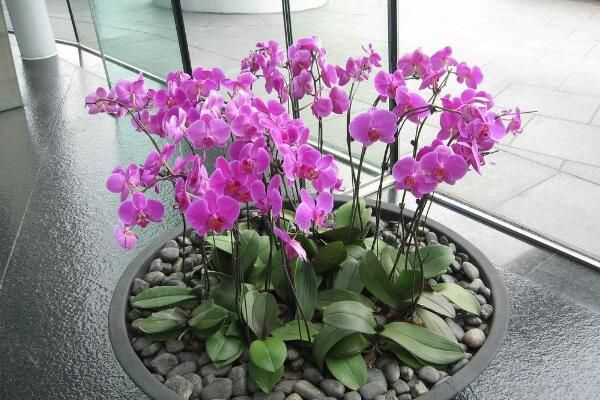
How to grow Phalaenopsis orchids? Sharing the simplest method
Simple Phalaenopsis care, the easiest way to grow Phalaenopsis orchids
条件筛选