-

How should a tempered glass screen protector be applied in a deep V-shaped area?
Three-lobed, short-foot, round-head, tightly edged; green-shell type plum petal; thick petals; divided-socket silkworm-moth dear-heart; large ruyi tongue; one-character shoulder. It has been listed as one of the New Eight Varieties of Cymbidium faberi. The flower scape is slender and round, a light green "lamp-rush stalk," rising above the leaves. The outer three lobes are short-footed and round-headed, tightly edged, with thick petal flesh; the two lateral sepals are in an arching embrace, and the tongue surface has brilliant red spots.
-
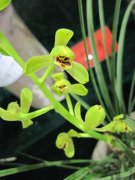
Cymbidium faberi 'Qinghua Mei': Price Trends and Leaf Shape Characteristics Explained
Cymbidium faberi 'Qinghua Mei' was selected as one of the New Eight Varieties of Cymbidium faberi. This orchid variety was obtained in the spring of the first year of the Republic of China by Che Qing of Shaoxing. Previously, no one favored this variety, but now it has become one of the New Eight Varieties of Cymbidium faberi, enjoying great fame and deep love among orchid enthusiasts.
-
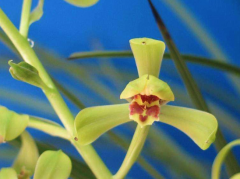
How much is one seedling of the Cymbidium faberi 'Liu Mei'? Detailed explanation of leaf shape characteristics
Liu Mei, as soon as you hear this name, friends who don't like orchids definitely won't know it's the name of an orchid. Why is this orchid called Liu Mei? Because it was selected by Liu Hengfeng of Shaoxing in the early years of the Republic of China, and its petal type is a plum petal of the green-shelled type of Cymbidium faberi. So it is called
-
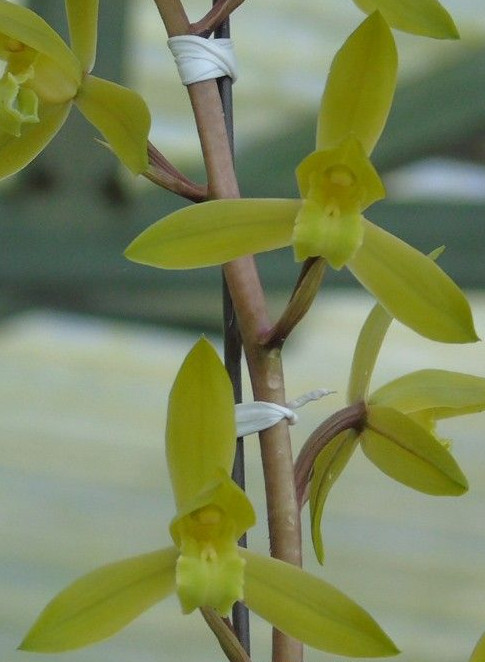
A detailed explanation of the care principles behind orchid leaf shape, to help you grow good leaf shape
This flower was collected in Bijie, Guizhou in earlier years. Because plain-heart orchids were cheap at the time, this flower was divided among several orchid friends to grow for fun, and later all of them died. Fortunately, fate favored this flower: the two small seedlings that President Yang Gang received at the time managed to keep this variety alive, and after several years of careful care, it finally recovered its vigor and bloomed many times. This year at the Bijie Cymbidium exhibition, President Yang...
-
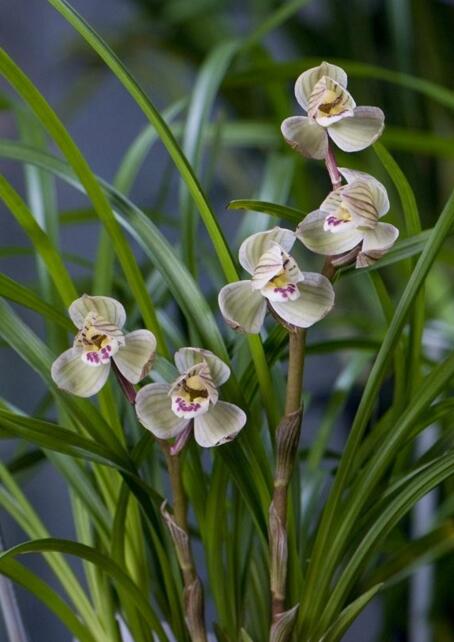
Methods and Techniques for Manually Adjusting Orchid Leaf Shape
Collected in 2007 in the Yaoguan mountain area of Shidian County, Baoshan, it is a typical broad-leaf Cymbidium lianpan. It first bloomed on New Year's Day 2012, with two scapes bearing five flowers, each identical to the others. Because the flowering period was too early, it missed that year's orchid show, but at the "2012 Spring Festival Tea Gathering" this new variety stunned the orchid enthusiasts present and became that year's best new Cymbidium lianpan; 20...
-
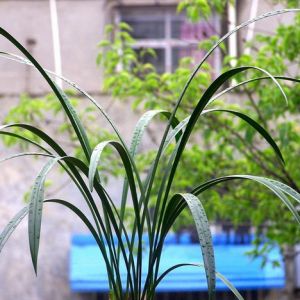
What kind of leaf shape is considered beautiful in Cymbidium ensifolium?
Lan Shangling, fragrance comes first in orchids! One, the pseudobulb base (the petiole part is the leaf foot) should be slender and upright, not sprouting randomly or scattering, that is what makes it neat and elegant. Like a tall beauty with long legs. Two, the middle of the leaf should be firm and straight (the middle part of the leaf blade is the leaf waist) and the leaf tip should droop. Being a person is the same, the waist must be firm and straight, that is how one stays neither haughty nor humble....
-
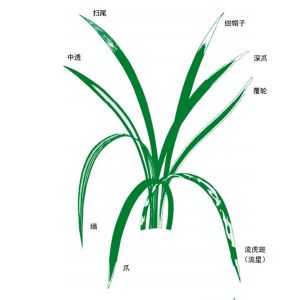
A Guide to Appreciating Orchid Leaf Variegation and Leaf Shapes
The white or yellow patches and patterns that appear on the leaves of Chinese orchids (Cymbidium) are called "yi" (variegation), and orchids cultivated for the changing patterns on their leaves are called "yi orchids" (variegated orchids). According to the standards of Japan and Taiwan, China, there are as many as 35 types of variegation patterns. Each type of pattern is called 1 yi; those with multiple patterns and spots are called "comprehensive yi," but on the same leaf...
-
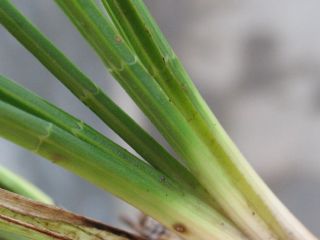
What is the orchid petiole ring? A leaf structure shaped like a finger ring
The orchid's finger ring: both Cymbidium goeringii (spring orchid) and Cymbidium ensifolium (Chinese cymbidium) have a petiole ring, located roughly within 1-4 cm of the orchid pseudobulb, appearing as a ring-shaped protrusion, the dividing line between the petiole and the leaf blade; when the leaf withers it breaks off at the finger ring. The appearance of the petiole ring also indicates that this seedling is about to reach maturity. Orchid leaves often drop at a certain point at the base, and this point is usually formed by transverse...
-
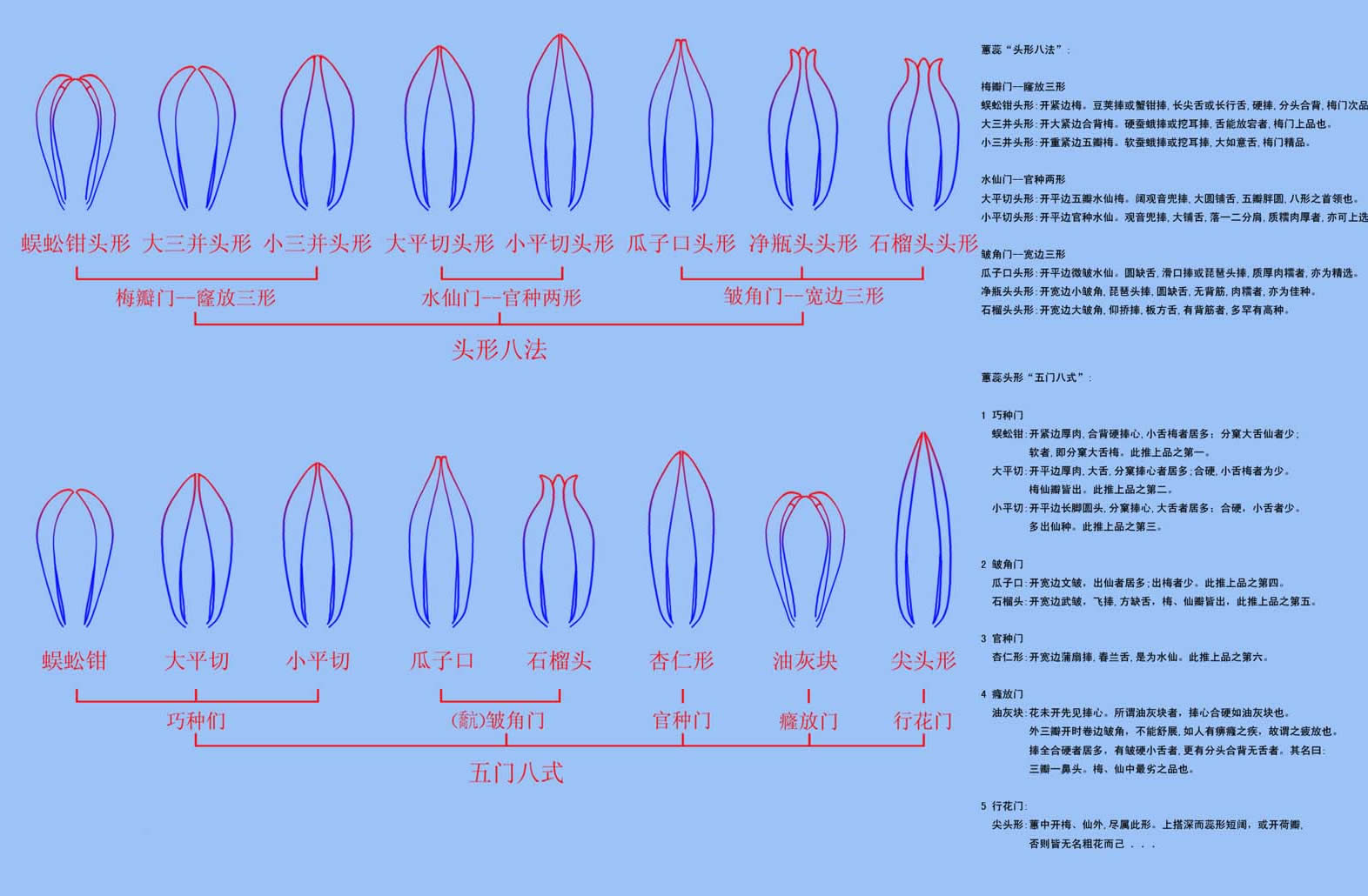
Detailed Explanation of the Eight Head Shapes and the Five Categories and Eight Forms of Cymbidium faberi
The "Five Categories and Eight Forms" of the small bud head shapes of Cymbidium faberi flowers is a summary of valuable experience left by predecessors in selecting superior varieties based on the shape of the small buds of Cymbidium faberi flowers, and is a priceless treasure left to us by our orchid-growing forebears. The "Five Categories and Eight Forms" has spread throughout the world, has had a profound influence in the community, and is an eternal topic often on the lips of orchid enthusiasts. However, because the writings of predecessors were mostly in classical Chinese...
-
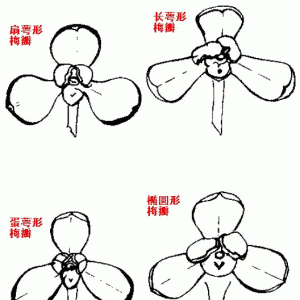
Detailed Explanation of Orchid Petal Shape Characteristics and Appreciation Knowledge
Petal shape refers to the shape of the petals. Orchids generally have five major petal shapes: plum petal, lotus petal, narcissus petal, plain-heart petal, and strange petal. 1. Plum petal: The sepals are short and round, shaped like plum blossom petals, the column petals form a hood, and the lip petal is flat and straight, hard and not curling backward. Song Mei is the most typical representative variety, and there are about 50 commonly seen varieties. 2. Lotus petal: The sepals are thick and broad...
条件筛选