-

Chengdu salt prices quietly rise, salt industry system reform may break the deadlock
More than 4 months after the Ministry of Industry and Information Technology confirmed the news of canceling the state salt monopoly, unusual movements have appeared in the market retail price of salt. Recently, an Economic Observer reporter learned exclusively that salt prices at major supermarkets in the Chengdu area have been quietly raised. Economic Observer reporters visited
-

Explanation of the detection of dithiocarbamate pesticides in organic agricultural products
Explanation of the retest results of eighteen samples of organic agricultural products in which dithiocarbamate pesticides were detected. Would you like to know more about it? Then let us take a look together. 1. In May of the 93rd year, eighteen samples of organic agricultural products in which "dithiocarbamate pesticides" were detected
-
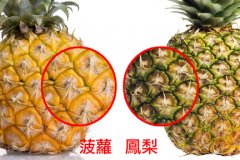
What's the difference between a pineapple and a "fenli"? Turns out fenli doesn't need to be soaked in salt water
Do you know how a pineapple differs from a fenli? These two fruits are not the same; these two fruits, which could be called "cousins," can both bring us health. But they are so similar, so where is the difference? Does fenli need to be soaked in salt water? Some
-
Is the cutlassfish a freshwater fish or a saltwater fish? Learn about the cutlassfish's habitat in one article
The cutlassfish is a fish with extremely delicious meat, tender in texture, rich but not greasy, and loved by many people. So is the cutlassfish a freshwater fish or a saltwater fish? 1. Is the cutlassfish a freshwater fish or a saltwater fish? The cutlassfish is a freshwater fish. Every spring, from late February to early March, groups of individuals
-
Is snow mustard the same as salted vegetable, and what is the difference between the two?
There are many pickled vegetables commonly eaten in daily life, such as salted vegetable, snow mustard, zhacai, and so on, but is snow mustard the same as salted vegetable? Let's find out together! 1. Is snow mustard the same as salted vegetable? Snow mustard is not salted vegetable; snow mustard refers to snow-in-red (Brassica juncea var. multiceps), an annual herbaceous plant and a variety of mustard, commonly used for pickling.
-
How to clean up moss in shrimp fields, can it be killed with salt?
Abstract Salvage: If the moss is sheet-like or in clumps, the salvage method can be used. Sun-drying the field: Suitable for ponds with no shrimp fry and adult shrimp; drain the water and expose to the sun. Deepen the water level: Suitable for ponds with many adult shrimp and small young shrimp; deepening the water level helps block light
-
Why should salt be added to the water when raising crucian carp?
Adding coarse salt or special salt to the water can serve many purposes: it can increase the concentration of ions in the water so that suspended particles sink to the bottom and the water is purified; it can also balance osmotic pressure, relieve the adverse reactions of fish when they enter a new environment, and replenish salt for wounds.
-
How to keep parrot fish, and should salt be added to the water?
When keeping fish, first keep the water, especially for more delicate fish species like goldfish. And because parrot fish like fresh water quality, some people try changing some of the water in the tank every day, but this is actually not a good method; no fish can have its water changed every day. Everyone should ⟦4 <p>When keeping fish, first keep the water, especially for more delicate fish species like goldfish. And because parrot fish like fresh water quality, some people try changing some of the water in the tank every day, but this is actually not a good method; no fish can have its water changed every day. If you want to keep your fish well, you should pay even more attention to regulating the water temperature, and the pH of the water especially must be balanced.</p><p></p><p><strong>How to keep parrot fish</strong></p><p>1. After small blood parrot fry are born, they do not have any of the characteristics of blood parrots at all; instead, they look somewhat like ordinary Central and South American cichlid species. After about 20 days of rearing, the appearance of the small blood parrots will gradually change, the muscles on the top of the head and back will gradually bulge, the thickness will also begin to increase, and the body color will slowly change from striped black to gray-silver.</p><p>2. Another characteristic of blood parrots is their cute, round, plump shape, but this is not caused by eating a lot of feed. If you want to cultivate such round and plump blood parrots, you should start from two major directions: first, provide sufficient food for their development during the fry stage, and second, choose feed with a protein content of around 32%, a high-protein feed.</p><p>3. Insufficient oxygen content in the water is the first thing blood parrots cry out for help about. Generally, blood parrots on the market are roughly divided into three grades: special A grade, A grade, and B grade. Of course, there will be different price differences according to different grades. The lifespan of blood parrots can be as long as 4 to 5 years, but a blood parrot around three years old is already considered old.</p><p></p><p><strong>Should salt be added to the water for keeping parrot fish</strong></p><p>1. If using salt, it is best to use coarse salt or special aquarium salt. Do not use seasoned salt containing additives, such as iodized salt; do not use seasoned salt. The salt should be dissolved in advance and roughly filtered before adding. The salt concentration should be gradually increased over 1-2 days to avoid causing osmotic pressure shock in the fish.</p><p>2. Safe concentration for using salt: the salt concentration must reach 0.3%-0.5% to play a role in regulating osmotic pressure. This concentration is very safe for the vast majority of fish. Some fish, for example some soft-water fish species and some catfish, are very sensitive to sodium chloride, so salt must be used carefully. Simply put, the role of salt is to regulate the osmotic pressure of the water. By regulating osmotic pressure, the condition of the fish is adjusted so that the fish can grow healthily.</p><p></p><p><strong>How to condition the water for parrot fish</strong></p><p>1. Temperature control: during the rearing process, it is best to keep the water temperature within the range of 25-28°C. The temperature difference before and after each water change should not exceed 0.5°C.</p><p>2. Water quality control: parrot fish relatively like new water, and as much as possible 1/5 of the new water should be changed every day. If the water quality is weakly acidic and clear, then do not change the water frequently. Due to genetic factors, the respiratory system of parrot fish is not complete enough, and its effectiveness is only half that of other fish, so parrots need much higher dissolved oxygen in the aquarium.</p><p></p><p>3. Because parrot fish are born with lips that cannot close, their ability to control the intake and output of water flow is relatively poor, the water flow passing through the gills is relatively small, and their ability to exchange oxygen through the water flow and gills is much worse than that of their paternal and maternal parents and other fish. Therefore, the water body for keeping parrot fish must have sufficient oxygen.</p><p></p><p><strong>What to pay attention to when keeping parrot fish</strong></p><p>1. Red parrots can be fed once or twice a day. There are several possibilities for parrot fish turning black or developing black spots. Parrot fish will also develop black spots when frightened, and they will disappear after a period of time. Poor water quality or unsuitable water quality can also cause this. When water quality is poor, water changes should be strengthened. If the water quality is unsuitable, the water should be changed immediately and the water quality adjusted well.</p><p>2. During this period, pay more attention to water quality and feed. If you want the red parrot's color to be more beautiful, feed more shrimp or red-enhancing feed such as Baozeng Hong. How much water to change each time and how often to change it depends on how dirty your water is. Most people change 1/3, and of course 1/4 is also acceptable; there is no fixed standard. If the fish tank filtration is good, then carrying out a partial water change (1/3) once a week is enough, and carry out a full water change once every one or two months.</p><p></p><p>There is no need to add salt to the water for keeping parrot fish, because it is a freshwater fish, and in their growth environment it is not like the ocean. However, if parrot fish become sick, then appropriately adding some coarse salt or special aquarium salt can change the growth environment of the fish somewhat and help the fish recover their health.</p>
-
Clever Use of Table Salt to Prevent and Treat Diseases in Grass Carp Farming
Table salt has a strong insecticidal and sterilizing effect, and is a commonly used drug for preventing and treating many fish diseases, especially bacterial, fungal, and parasitic fish diseases, with remarkable results. The prevention and treatment methods are described below. 1. Prevention and treatment of bacterial fish diseases using 3% salt water
-
Salt fed to mink must be in the right amount; overfeeding is not advisable
During the breeding process, each mink needs no more than 0.5 grams of salt added per day to ensure its growth and development salt requirements are met. However, if too much salt is added, or if the salt is not mixed evenly in the feed, it can easily cause salt poisoning in mink, mildly affecting
条件筛选