Explanation of the detection of dithiocarbamate pesticides in organic agricultural products
Explanation of the retest results of eighteen samples of organic agricultural products in which dithiocarbamate pesticides were detected. Would you like to know more about it? Then let us take a look together.
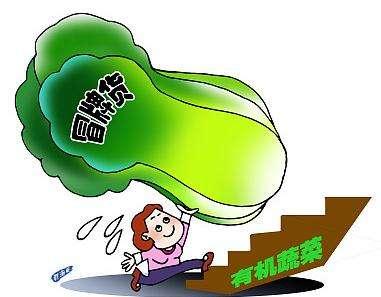
1. The eighteen samples of organic agricultural products in which "dithiocarbamate pesticides" were detected in May of the 93rd year were analyzed by the Agricultural Chemicals and Toxic Substances Research Institute of the Council of Agriculture, Executive Yuan using high performance liquid chromatography (HPLC), and it was confirmed that there was no residue of "dithiocarbamate pesticides."
2. From this day forward, the testing method for "dithiocarbamate pesticides" in cruciferous crops among organic agricultural products will still be carried out by the colorimetric method and the headspace sampling gas chromatography method for detecting carbon disulfide. Test results below 1ppm are temporarily regarded as not detected; for those above 1ppm, the original sample after washing is used as a control, and if there is no difference, it is also regarded as not detected, and when necessary, confirmation is made by high performance liquid chromatography.
3. Regarding the reason why "glucosinolates" present in some plants cause interference in the testing for "dithiocarbamate pesticides":
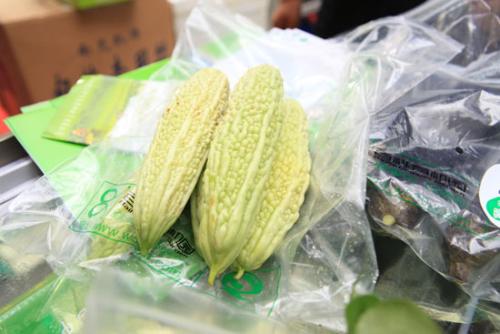
There are many kinds of glucosinolates (or thioglucosides), and they share a common structure. That is, they have a side chain R and a sulfur atom connecting D-glucose and thiohydroxamate-O-sulphate. In earlier times, glucosinolates were often named by common names, and it was not until 1961 that systematic naming was introduced, namely by adding the structure of the side chain R before glucosinolate.
Because of differences in the side chain R, more than one hundred kinds of glucosinolates are currently known, commonly present in some plants, and most abundant in cruciferous (Brassicaceae) vegetables, such as: heading Chinese cabbage, non-heading Chinese cabbage (rapeseed, bok choy, Chinese kale, baby bok choy), cauliflower, cabbage, kohlrabi (turnip cabbage), Brussels sprouts, radish, turnip, mustard and other vegetables. Cruciferous vegetables, when reacting with acid, often release carbon disulfide (CS2), and therefore often cause interference when testing for dithiocarbamate fungicides.