-
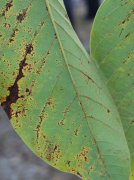
Symptoms and Control Methods of Rust Disease in Atemoya Orchards
Because orchards in mountainous areas and river valleys have high humidity, they are prone to triggering the spread and expansion of "annona rust." The Taitung District Agricultural Research and Extension Station of the Council of Agriculture (hereinafter referred to as the Taitung Station) recently monitored Beinan, Luye, and Donghe, among other areas, and found that some atemoya orchards
-

How to grow potted chrysanthemums so they bloom profusely and how to prevent and control rust disease?
The chrysanthemum is a very famous ornamental flower with a great many varieties, cultivated all over the world. Chrysanthemums can be planted in the open ground or grown in pots in courtyards, and they carry the meaning of good fortune and longevity. Let's take a look below at how potted chrysanthemums can bloom
-
How much is a jin of cowpeas? Detailed explanation of rust disease prevention and control methods
Cowpea is a vegetable rich in nutrients, with a crisp texture and many ways to prepare it, and it is deeply loved by consumers. Cowpeas are widely grown in the northern regions of China, can be sold on the market all year round, and have a strong ability to adapt to the growing environment. So what is the current
-
Identification of Mushroom Rust Spot Disease Symptoms and Introduction to Control Methods
The mushroom (scientific name: Agaricus campestris) is composed of two parts: the mycelium and the fruiting body. The mycelium is the vegetative organ, and the fruiting body is the reproductive organ. Mushrooms have as many as 36,000 sexes, and mature spores germinate into hyphae. The hyphae are multicellular, have septa, and elongate by apical growth; they are white, slender, cottony, and gradually become filamentous. The hyphae interweave with one another to form a dense mass known as the mycelium. After the mycelium has saprophytically colonized the substrate, the dark brown compost turns light brown. When mature, the fruiting body of the mushroom closely resembles an open small umbrella. It is composed of parts such as the cap, stipe, gills, annulus, and pseudorhiza. Most mushrooms can be used as food and medicine, but poisonous mushrooms can harm people.
-
A Detailed Guide to the Occurrence and Control of Cowpea Rust Disease
Cowpea (scientific name Vigna unguiculata), commonly known as black-eyed pea, ginger bean, belt bean, hanging bean pod. Cowpea is divided into two types, long cowpea and rice cowpea, and belongs to the legume family. Cowpea is an annual plant of the legume family. The stem has three types: dwarf, semi-climbing and climbing. In the south, climbing types are mainly cultivated,
-
How to prevent and control white rust in amaranth
Amaranth, original name: amaranth, aliases: Joseph's coat, old youth, old age few, tricolor amaranth, Latin name: Amaranthus tricolor, Amaranthaceae, Amaranthus genus annual herb, stem stout, green or red, often branched, hairy or hairless when young. Amaranth has a soft and smooth texture and a rich vegetable
-
How to Identify and Control Soybean Rust? A Complete Guide to the Methods
Edamame is simply fresh soybeans in their pods; after being sun-dried, they are also called soybeans. The seeds are divided into six sizes by size: extra large: 100-seed weight above 30 grams; super large: 100-seed weight 24.1-30 grams; large: 100-seed weight 18.1-24 grams; medium: 100-seed weight 12.1-18 grams; small: 100-seed weight 6.1-12 grams; extra small: 100-seed weight below 6
-
Symptom Identification and Prevention Methods of Daylily Rust
In daily life we may often hear the saying, "I've been waiting so long the daylily has gone cold," used to describe having waited for someone for a very long time. This shows that the daylily is certainly well known in our lives. Let's learn about the daylily together below.
-
What are the control methods for perilla rust disease?
Perilla is an annual upright herbaceous plant. The stem is 0.3-2 m tall, green or purple, obtusely quadrangular, with four grooves, densely covered with long soft hairs. The leaves are broadly ovate or round, 7-13 cm long, 4.5-10 cm wide, with a short-pointed or abruptly pointed tip, a rounded or broadly wedge-shaped base, and coarse serrations along the margin above the base, membranous or herbaceous, green or purple on both surfaces, or purple only on the lower surface, sparsely covered with soft hairs on the upper surface and appressed soft hairs on the lower surface, with 7-8 pairs of lateral veins, those in the lower part slightly closer together, rising obliquely, slightly prominent on the upper surface and distinctly prominent on the lower surface, slightly lighter in color; the petiole is 3-5 cm long, dorsiventrally flattened, densely covered with long soft hairs.
-
Rust Disease Control Must Be Taken Seriously in Autumn Cowpea Planting
Cowpea (Vigna unguiculata), also called yardlong bean, is a vegetable abundantly produced in summer. It belongs to the cultivated varieties of the cowpea species that form long pods, an annual twining herbaceous plant. Also known as cowpea, long-horn bean, belt bean, and skirt-string bean. It contains various vitamins and minerals, etc.
条件筛选