-
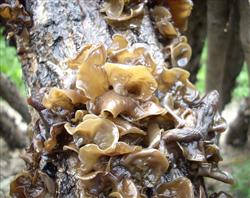
What are the methods for preventing and controlling "rotten logs" in black fungus (wood ear mushroom)?
How do you prevent and control "rotten logs" in black fungus (wood ear mushroom)? What causes "rotten logs" in black fungus? What methods can prevent and control it? We also ask netizens to help introduce methods. Zhongdi Network has compiled the causes and prevention methods of black fungus "rotten logs", listed below for netizens' reference. Causes of black fungus "rotten logs"...
-
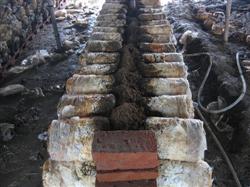
What are the methods for preventing and controlling pests and diseases of oyster mushrooms in summer?
How do you prevent and control pests and diseases of oyster mushrooms in summer? Please describe the methods. The following methods can be used to prevent and control pests and diseases when cultivating oyster mushrooms in summer: 1. Site disinfection. Spray the entire cultivation site with dichlorvos for disinfection, spread a layer of quicklime on the ground, and nail window screens over windows and ventilation holes to prevent pests from entering. 2. Substrate...
-
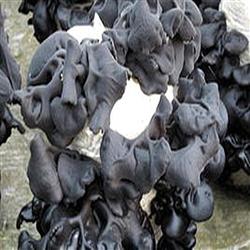
Methods for controlling contaminant fungi and pests in wood ear mushroom cultivation
How do you control contaminant fungi and pests when growing wood ear mushrooms? Please explain the methods. For growing wood ear mushrooms, you can refer to the following methods to control contaminant fungi and pests: 1. Cultivation site: choose a spot facing the sun, sheltered from the wind, with good ventilation and convenient drainage. The site should be cleaned and disinfected regularly; you can spray lime powder, 200x dichlorvos or trichlorfon...
-
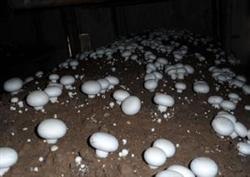
What are the methods for preventing and controlling the degeneration of Agaricus bisporus (button mushroom) spawn
Preventing spawn degeneration can increase yield, reduce the occurrence and development of pests and diseases, and cut down the amount of pesticides used, which is the foundation for producing organic button mushrooms. 1. The ambient temperature for culturing spawn must not exceed 28°C, and properly cultured spawn should not be stored at room temperature for more than half a month. 2. Properly master the time for mycelium to emerge from the substrate...
-
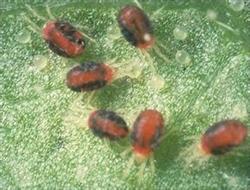
Eight Detailed Methods for Controlling Mites in Substitute-Material Wood Ear Mushrooms
Rapeseed cake powder trap method: take an appropriate amount of rapeseed (0,-5025.00,-100.00%) cake, grind it into powder, put it in a hot wok, and stir-fry over low heat until the powder gives off a rich oil fragrance, then remove from the wok. On the surface of the growing substrate or bed where the mushroom mites are causing damage, cover with a wet cloth, then lay a piece of gauze on top of the wet cloth, sprinkle the fragrant rapeseed cake powder onto the gauze, and wait...
-
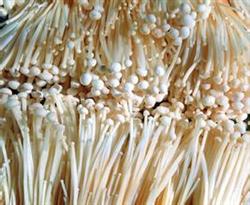
"Five Measures" for Effectively Controlling Black Head Disease in Enoki Mushrooms
Black head disease, also known as bacterial brown blotch disease, is caused by a Pseudomonas bacterium belonging to the phylum Schizomycophyta and the class Schizomycetes. The pathogen is rod-shaped, forms white colonies, and shows a negative reaction to Gram staining. 1. Conditions for occurrence: The internal cause of this disease is the variety's lack of disease resistance, while the external causes are high temperature, high humidity, or spraying unclean...
-
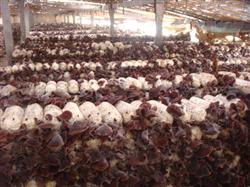
What are the methods for preventing and controlling pests and diseases in wood ear mushrooms?
Symptoms of green mold disease in wood ear mushrooms: After the spawn bags, spawn bottles, the area around the inoculation holes in log wood, and the fruiting bodies are infected by green mold, white slender hyphae first grow on the culture material, log wood, or fruiting bodies. After a few days, conidia can form. Once the conidia form in large numbers or mature, the colony turns green and powdery....
-

A Detailed Guide to Identifying and Controlling Common Pests of Shiitake Mushrooms
1. Mites, commonly known as fungus lice, are divided into two types: flour mites and straw itch mites. Straw itch mites are small and difficult to see with the naked eye; they tend to gather in clusters on the surface of the growing substrate. Flour mites are larger, white and shiny, do not form clusters, and appear powdery when numerous. On shiitake mushroom blocks infested by mites, the mycelium is gnawed on, and in severe cases the mycelium can be eaten completely. If mites occur in the spawn, a cotton plug dipped in 50% dichlorvos can be inserted to fumigate and kill them. If mites appear during the mycelium-running stage, they can be killed by spraying 0.5% dichlorvos, or by spraying a 2000-fold dilution of 25% permethrin-ester compound. If mites occur during the fruiting stage
-
Detailed Guide to Controlling Common Diseases of Oyster Mushrooms
On cloudy days, with insufficient light, high relative humidity inside the mushroom shed, and poor ventilation, oyster mushrooms are extremely prone to two concurrent diseases: soft rot and bacterial spot disease. So how can these concurrent diseases be prevented and controlled? Based on our practical experience, we hereby introduce the following integrated control methods to mushroom growers. 1. Select and breed disease-resistant varieties and cultivate vigorous mycelium to improve the disease resistance of oyster mushrooms. For example: Hebei Wubaozi, Jiangsu Yefeng, etc., whose mycelium grows snow-white, whose fruiting bodies have strong disease resistance, and whose yields are high. 2. Increase ventilation to purify the air environment. 3. Use the ditch water replenishment method
-
Methods and Technical Key Points for Controlling Pests and Diseases of Oyster Mushrooms
In oyster mushroom cultivation, pests and diseases are a stumbling block. Recognizing and promptly controlling them is of great significance for normal production. Once pests and diseases are discovered, if measures are not taken in time, they will seriously affect oyster mushroom yields and sometimes cause total crop failure. Therefore, superior and highly resistant strains should be selected, scientific management should be strengthened, and environmental conditions that favor the growth of the mushroom fungus while disfavoring the reproduction of pests and diseases should be created, so as to prevent trouble before it happens. The following are introductions to the control methods for some common pests and diseases: 1. Diseases. Diseases commonly fall into the following two categories: (1) During the cultivation process,
条件筛选