What are the methods for preventing and controlling "rotten logs" in black fungus (wood ear mushroom)?
How do you prevent and control "rotten logs" in black fungus (wood ear mushroom)? What causes "rotten logs" in black fungus? What methods can prevent and control it? We also ask netizens to help introduce methods. Zhongdi Network has compiled the causes and prevention methods of black fungus "rotten logs", listed below for netizens' reference. Causes of black fungus "rotten logs"...
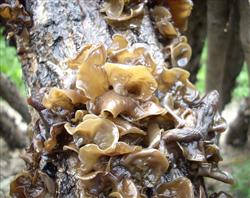 How do you prevent and control "rotten logs" in black fungus (wood ear mushroom)? What causes "rotten logs" in black fungus? What methods can prevent and control it? We also ask netizens to help introduce methods
Zhongdi Network has compiled the causes and prevention methods of black fungus "rotten logs", listed below for netizens' reference.
Causes of black fungus "rotten logs"
Cause 1, caused by improper selection of fungus spawn:
Mistakenly applying strains that perform well when cultivated on segment wood, without adaptability and mold-resistance testing, blindly to bag-cultivated black fungus. Because the spawn does not adapt to the environment, mycelial growth is slow, causing contamination by miscellaneous fungi and resulting in rotten logs.
Cause 2, caused by unsuitable cultivation season for black fungus:
1. The inoculation period for spring-cultivated black fungus is arranged too late, or the inoculation period for autumn-cultivated black fungus is arranged too early, causing overheating during the spawn-running period. The cytoplasm nutrient fluid in the mycelium flows out, and under the influence of environmental factors, the phenomenon of yellow water exudation appears. In cultivation bags showing yellow water exudation, the other mycelia in the bag are surrounded by mucus, physiological activity is restricted, the mycelia gradually die, and various miscellaneous fungi take the opportunity to infect under high temperature and high humidity conditions.
2. The cultivation season for autumn-cultivated black fungus is arranged too late, or the inoculation period for spring-cultivated black fungus is arranged too early. During the spawn-running period, the temperature is below 20°C, mycelial physiological activity is low, spawn running is slow, and it cannot rapidly colonize the culture material, causing contamination by miscellaneous fungi and leading to rotting of the logs.
Cause 3, triggered by inadequate management during the spawn-running period of black fungus:
In the early spawn-running stage, the room temperature where the black fungus logs are located is relatively low, causing the mycelia in some inoculation holes to die and become infected with miscellaneous fungi; in the late spawn-running stage, the temperature gradually rises, and together with the heat released by mycelial respiration, when the temperature exceeds 25°C, ventilation and cooling measures are not taken in time, resulting in the phenomenon of pile heating and mycelium suffocation; in addition, poor ventilation during the spawn-running period cannot effectively discharge carbon monoxide and other toxic gases from the culture room, blocking mycelial activity, lowering vitality, and causing contamination by miscellaneous fungi.
Cause 4, caused by failure to clean up the fungus shed and surrounding contamination sources:
Old fungus sheds are used in production; during harvesting, the culture medium, fruiting bodies, already infected plastic bags and other contaminants are not thoroughly cleaned up, and the fungus shed is not disinfected, becoming a culture medium for miscellaneous fungi to multiply; some fungus sheds are directly close to contamination sources or use contaminated water, directly producing miscellaneous fungi, causing rotting of the logs and resulting in economic losses.
Cause 5, caused by poor water management during the fruiting period:
During the primordium formation stage of the fungus, watering is done too early; the fungus primordium has not sealed the incision, and water flows or seeps into the incision, causing infection. During the primordium differentiation stage, the newly formed fruiting body primordium is in a spore state; the spores undergo cell rupture due to excessive water absorption, the mycelia at the incision stop growing and recede, and the formed fruiting body primordium loses the mycelial nutrient supply and stops growing, causing mold infection or streaming of the fungus.
Cause 6, caused by poor air circulation in the fungus cultivation shed:
Improper site selection of the fungus shed, or too thick covering materials on the shed roof and around the shed, or untimely ventilation, and other reasons cause oxygen deficiency inside the fungus shed, accumulation of carbon monoxide and other toxic gases, decline in the vitality of black fungus mycelia, slow or stopped growth of fruiting bodies, providing conditions for the reproduction and growth of miscellaneous fungi, resulting in the phenomenon of rotten or streaming fungus.
Cause 7, failure to harvest the fungus in time:
Black fungus fruiting bodies are rich in nutrients and gelatinous in nature. If not harvested in time, the fruiting bodies age and become thin, losing elasticity. Not only is the quality poor, but they are also extremely prone to mold, causing streaming and rotting of the fungus.
Prevention and control methods for fungus "rotten logs"
Method 1, select good fungus spawn:
Select black fungus spawn with a spawn age of 35-45 days, good spawn running, white mycelia, robust growth, strong resistance to miscellaneous fungi, high yield, large, thick and deeply colored fungus caps.
Method 2, reasonably arrange the cultivation season for black fungus:
Black fungus cultivation is divided into spring cultivation and autumn cultivation. The inoculation period for autumn cultivation is generally arranged in August-September, inoculating when the temperature is below 30°C. The inoculation period for spring cultivation is generally arranged 60-65 days before the ten-day average temperature rises to 20°C. Different regions should appropriately advance or postpone according to different altitudes.
Method 3, control the temperature well during the spawn-running period of black fungus:
Black fungus mycelia need to run spawn under completely dark conditions. The spawn-running temperature is between 5°C and 36°C, with the optimum temperature being 24°C-28°C. For autumn-cultivated black fungus in the early spawn-running stage and spring-cultivated black fungus in the late spawn-running stage, when the temperature exceeds 25°C, the culture room should be ventilated at least 2-3 times a day, and ventilation on sunny days must be done in the morning and evening. In addition, for spring-cultivated black fungus in the early spawn-running stage, when the temperature is below 20°C, the culture room should be heated so that the culture room temperature reaches 22°C-24°C.
Method 4, scientific and reasonable management:
Black fungus has different requirements for temperature, humidity and ventilation at different growth stages. During the primordium formation stage of the fungus, maintain relative humidity at about 80% and ventilate moderately; during the primordium differentiation and formation stage, the coral-like fungus buds are quite tender, maintain relative humidity at 80%-90%. At this time, if the humidity is too high, immediately stop spraying water for 3-5 days, and water again after the fungus base is slightly dry. During the fruiting body growth stage, to promote rapid growth of the fungus caps, adhere to the principle of three dry and seven wet, increase ventilation, with clear distinction between dry and wet, and maintain relative humidity between 90% and 95%.
Method 5, harvest black fungus in time:
Harvest when the fruiting body caps are fully expanded, the edges become thin, the fungus base shrinks, and at eight-tenths maturity. When harvesting, hold the fungus log with one hand and pinch the fungus base with the other, gently rotating. Do not leave fungus stubs on the fungus log, to avoid causing contamination by miscellaneous fungi.
Click to get more black fungus cultivation techniques
Click to get more edible fungus cultivation techniques