-
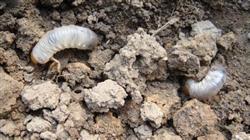
How to choose the right spring corn fertilization plan for you?
Seed treatment When planting spring corn, use seed coating agents such as carbosulfan, imidacloprid, chlorpyrifos, etc. for seed dressing to prevent underground pests from damaging the sown corn seeds. When applying pesticide and sowing, evenly broadcast diazinon granules, or chlorpyrifos granules, or phoxim granules around the corn seeds, 6~... per mu.
-
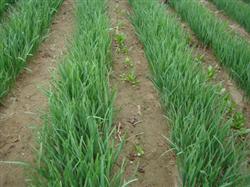
How to manage garlic chives after the Start of Autumn? Get these points right
How to manage garlic chives well after the Start of Autumn? Please provide guidance on management methods. When growing garlic chives, management after the Start of Autumn can follow the seasons as below: At the "Start of Autumn," apply fertilizer and water together. Garlic chives like a cool climate. After the Start of Autumn, temperatures gradually drop and the difference between day and night temperatures is large. Strengthening management at this time helps garlic chives grow rapidly and accumulate nutrients. First, along...
-
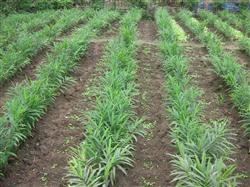
How to water ginger seedlings? Master the right method to grow strong seedlings
How should ginger seedlings be watered? Please provide guidance. Ginger has different watering requirements at different growth stages. When sowing, the soil must be watered thoroughly with bottom water; usually, the first watering is not started until about 70% of the seedlings have emerged. After this watering, the soil needs to be kept moist frequently to prevent the soil surface from crusting, which would affect seedling emergence. Young seedlings...
-
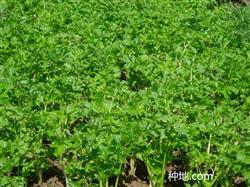
How to fertilize celery scientifically? Mastering the right method is key
How should celery be fertilized scientifically when grown? 1. Nutrient requirements: For autumn-sown celery, nutrient uptake is high during the peak period of vegetative growth; during this period, the uptake of the five elements nitrogen, phosphorus, potassium, magnesium and calcium accounts for more than 84% of total uptake. Celery has the highest demand for nitrogen, followed by calcium and potassium, and the least for phosphorus and magnesium. Celery also has a substantial requirement for boron...
-
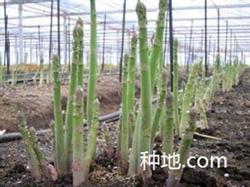
How do you grow asparagus? All the detailed growing methods are right here
Request: Asparagus growing methods, the more detailed the better. Is there anyone who can provide technical guidance? Asparagus is currently one of the highly efficient cash crops, ranking first among the world's top ten famous vegetables, and enjoys the reputation of "King of Vegetables" on the international market. Asparagus is rich in albumin and various amino acids that can inhibit the growth of cancer cells, and is an anti-fatigue...
-
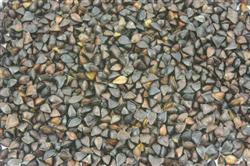
Buckwheat sowing time matters, choosing the right season is key
Buckwheat emerges with its leaves, so emergence is relatively difficult and sowing should not be too deep. Sowing depth directly affects the uniformity of emergence and is the key to full stands. To get sowing depth right, first look at soil moisture: sow shallow when moisture is sufficient, deep when moisture is lacking; second, look at the sowing season: spring buckwheat should be sown deep, summer buckwheat slightly shallow; third, look at soil texture: sandy...
-
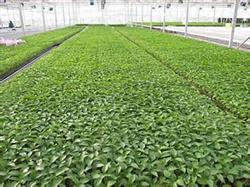
Pepper Fertilization Ratios Matter: The Right Balance Is Key
1. Seedbed selection. For raising pepper seedlings, choose loose soil on high, dry ground with good drainage, good ventilation and light, and rich organic matter. The soil should not have grown solanaceous vegetables within 1-2 years to prevent disease transmission. For seedling raising, reserve enough seedbed at a ratio of 1:20. Plow the seedbed soil 1 week before sowing, and apply high-efficiency compound fertilizer per mu...
-

Key points of Chinese cabbage transplanting techniques: master the right time and method
Key points of Chinese cabbage transplanting techniques
-

What are the excellent varieties of water dropwort? Growing water dropwort well starts with choosing the right variety
Water dropwort varieties are divided by leaf shape into two types: sharp-leaf cress and round-leaf cress. Sharp-leaf varieties have pointed leaves and taller plants, suitable for deep-water cultivation. Round-leaf varieties have nearly round leaves and shorter plants, suitable for shallow-water cultivation or dryland cultivation. The excellent water dropwort varieties commonly used in production include: Yuqi Large Yellow Leaf-head Cress, a local variety of Yuqi Town, Xishan District, Wuxi City. It is grown more extensively in Wuxi, Changzhou and Yixing. Plant height 60-70 cm. Petiole length about 50 cm, light green. Leaflets ovate, leaves green. The upper part of the stem is green, the lower part white-green. The stem is thick,
-
Winter is the idle season, and it is the right time to plant scallions in the greenhouse
Using a fixed greenhouse to grow a crop of scallions during the winter idle season can improve the greenhouse's utilization rate and economic benefits, and also allows crop rotation, which not only creates a good preceding crop for the next crop but also does not affect the planting of early spring fruits and vegetables. Planting method: when the late autumn vegetable production in the greenhouse has ended, along with careful land preparation, apply 3000-4000 kg of high-quality organic fertilizer per mu, then open furrows and plant the scallions. Row spacing 25-30 cm, plant spacing no more than 1 cm, planting depth about 3 cm. The scallions to be planted can be selected from smaller plants among the autumn scallions.
条件筛选