-

Revision of the Land Administration Law is being pushed forward, and the Ministry of Land and Resources says there are three major difficulties
The State Council Information Office held a news briefing on March 29, at which relevant officials from the National Development and Reform Commission, the Ministry of Human Resources and Social Security, the Ministry of Land and Resources, the Ministry of Housing and Urban-Rural Development, and the Ministry of Agriculture briefed on the situation regarding China's urbanization development. At the press conference, the Ministry of Land and Resources
-
Is the GMO labeling system in need of revision? The Ministry of Agriculture is studying it
The Ministry of Agriculture is studying the question of whether the GMO labeling system needs to be revised. Yesterday afternoon, at the fourth media reporters' GMO training workshop, He Yibing, director of the Science and Education Department of the Ministry of Agriculture, revealed this information, and he also stressed that GMO labeling has no
-
Detailed Explanation of the Three Most Important Changes in the Seed Law Revision
The revision of the Seed Law is mainly reflected in three aspects: variety approval for major crops, registration for non-major crops, and protection of new plant varieties. At present, China's seed industry is still in its primary stage of development, and the conditions for completely abolishing the approval system are not yet mature. Therefore, this Seed
-
China's 2015/16 corn production estimate revised downward
The relevant agency has revised its forecast for China's 2015/16 corn production downward to 229 million tons, 3 million tons lower than the earlier forecast, due to drought affecting some production areas in Northeast China. However, even after the downward revision, corn production still set a record high, up from the previous year's output
-
What are the main features of the Seed Law revision?
Main contents of the Seed Law revision. Chapters: the new law has 10 chapters in total, 1 fewer than the original law. The revised law merges the original law's seed production, seed operation and seed use into seed production and operation, and merges the original seed quality and seed administration into seed supervision and management.
-
Briefing and Study Session on the Newly Revised Seed Law Held in Ji'an City
On January 8, the briefing and study session on the newly revised Seed Law of Ji'an City was held in Xingan County. Attendees included relevant officials from the Provincial Seed Bureau and other members of the briefing group, officials from the Municipal Seed Bureau, heads of the seed bureaus (stations) of each county (city, district), and some seed dealers.
-
What changes have occurred in market order after the revision of the Seed Law?
The draft revision of the Seed Law deliberated this time has strengthened the protection of intellectual property rights and introduced the concept of "essentially derived varieties" to protect the lawful rights and interests of the holders of the original plant variety rights. In the market circulation link, it has also increased the penalties for illegal infringements
-
Revision of the format of the agricultural product inspector certificate, what are the regulations on agricultural product labeling?
What are the buffer period regulations for product labeling after the revision of the format of Taiwan, China organic agricultural product verification certificates? Let's take a look together. 1. On August 24, 2018 (the 107th year of the Republic of China), the Council of Agriculture, Executive Yuan amended the specifications for the organic agricultural product label stipulated in Article 3 of the Regulations on the Administration of Agricultural Product Labels
-
Revised guidelines for humane egg production: increased space in poultry houses, no forced molting for egg production
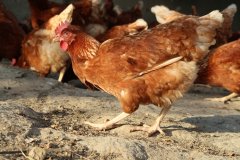
The Agriculture Committee of Taiwan, China recently revised and circulated the "Definition and Guidelines for Humane Egg Production Systems." The biggest differences before and after the revision are lowering the stocking density for free-range and floor-rearing, prohibiting forced molting, stipulating that low-yielding hens after culling must not enter non-humane production system farms for continued rearing, and raising the conditions for enriched cages to EU standards.
-
条件筛选