Agricultural insurance regulation revision removes the one-year farming requirement; Agricultural Land Bank lease contracts can be insured without notarization
The Council of Agriculture recently gave advance notice of amendments to the regulations governing the review of farmers' qualifications for joining farmers' insurance. Besides removing the requirement that a person must have farmed for a full year before becoming eligible for farmers' insurance, the amendments also relax the rules so that people engaged in farming need only complete a land lease through the Farmland Bank, have the farmers' association confirm that the lease exists, and report it to the county or city government for reference; then they can apply for and obtain farmers' insurance eligibility without going through notarization.
In addition, for farmers who lease farmland from government agencies, public schools or public enterprises for lawful agricultural production, or for farmers who are brought under guidance by a unit designated by the competent agricultural authority and whose lease contracts are filed with the competent agricultural authority for reference, their leases likewise no longer need to go through notarization before they can obtain eligibility to apply for farmers' insurance.
However, most private farmland leases are oral contracts, and few matches are successfully made through the Farmland Bank, so after the legal amendment farmers with oral contracts still cannot apply for farmers' insurance.
Removal of the rule that one must farm for a full year before applying for farmers' insurance
On the 13th of this month, the Council of Agriculture gave advance notice of a draft amendment to certain articles of the Standards for Recognition and Qualification Review Procedures for Farmers Engaged in Agricultural Work Applying to Join Farmers' Health Insurance. Last year, in order to ferret out fake farmers, the Council of Agriculture stipulated that a person must have continuously operated agricultural work for a full year before becoming eligible to apply for farmers' insurance, which drew public criticism: laborers can enjoy labor insurance from their first day of work, yet farmers must wait until a year has passed before enjoying farmers' insurance, which is plainly discriminatory, and if an accident occurs during that period of farming, there is no protection at all.
After review, the Council of Agriculture concluded that farmers' actual engagement in agricultural work is already subject to on-site inspection by the farmers' association, confirming whether the parcel of farmland is under agricultural operation and whether the applicant is steadily engaged in agricultural work that produces expected economic value; therefore, in the newly revised draft, the requirement that applicants for farmers' insurance must "lawfully engage in agricultural work and continuously operate for a full year" was deleted.
Those who lease farmland through the Farmland Bank or public agencies can obtain insurance eligibility without notarization
Because many cultivators are not landowners, the Council of Agriculture relaxed Article 2 of the Standards for Recognition and Qualification Review Procedures for Farmers Engaged in Agricultural Work Applying to Join Farmers' Health Insurance, providing that as long as one lawfully uses agricultural land belonging to government agencies, public schools or public enterprise institutions, with an average area per person of 0.4 hectares or more for forest land and an average area per person of 0.2 hectares or more for other agricultural land, and presents documents proving lawful use rights and agricultural operation, one can obtain eligibility for farmers' insurance.
For example, if a farmer manages land in the National Taiwan University Experimental Forest, as long as the person obtains a bamboo forest custody permit issued by National Taiwan University and presents relevant documents proving the fact of engaging in forestry management and producing forest products, then after confirmation by National Taiwan University, the person can obtain eligibility for farmers' insurance.
The legal amendment still cannot solve the insurance problem for farmers with oral contracts
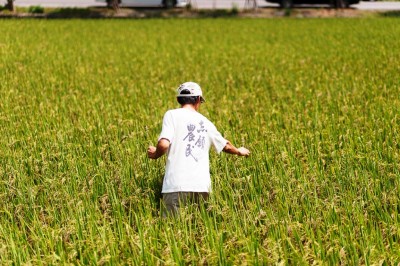

Although the draft amendment relaxes the rules so that farmers who successfully match a land lease through the Farmland Bank operated by the farmers' association, and whose contract is verified as genuine by the farmers' association and reported by letter to the county or city government for reference, can obtain farmers' insurance eligibility without notarization, currently there are not many cases of farmland leased through the Farmland Bank for agricultural purposes, and because older farmers have the "shadow of the 37.5% rent reduction," they are mostly willing only to rent out land under oral contracts, leaving the tenant farmers unable to insure under farmers' insurance. Lai Ching-sung, who once served as a spokesperson for the Council of Agriculture's "Wandering Bird Program," has to this day been unable to obtain farmers' insurance because of an oral contract.
Chang Chih-sheng, director of the Council of Agriculture's Guidance Office, said that in view of the fact that most farmers are unwilling to go to court, the rule exempting farmland leased through the farmers' association's Farmland Bank from notarization is expected to be more convenient for the public. However, he admitted candidly that after the legal amendment it is still impossible for farmers who lease farmland under oral contracts to join farmers' insurance, because insuring under farmers' insurance requires a clear basis; even through the Farmland Bank, the farmers' association still has to play the role of an impartial third party to verify whether the lease truly exists, otherwise fake farmers could still exploit loopholes.
Lai Ching-sung believes that agriculture differs from ordinary occupations. Ordinary occupations rarely allow side jobs and are tied down more rigidly, whereas agriculture is very free: this year one may be a farmer, and next year one may not be. Moreover, because income is unstable, many people may take side jobs elsewhere, so it is really very hard to define who is a farmer.
Wu Chia-ling, a young farmer who likewise rents land in Yilan, believes that as long as there is a fact of farming, one should be able to insure under farmers' insurance. The Council of Agriculture can use shipping receipts, rice-drying center certificates, purchase and sale receipts, etc., to determine whether an applicant is truly farming. Nowadays many farmers cannot afford to buy farmland, and those who successfully lease farmland through the Farmland Bank are fewer still; the Council of Agriculture should consider recognizing farmers' insurance eligibility through farmers' actual production behavior.
The Council of Agriculture stated that the draft amendment to certain articles of the Standards for Recognition and Qualification Review Procedures for Farmers Engaged in Agricultural Work Applying to Join Farmers' Health Insurance has already been posted online for advance notice, and anyone with opinions or suggested amendments may report them to the Council of Agriculture's Guidance Office.