Revised guidelines for humane egg production: increased space in poultry houses, no forced molting for egg production
The Agriculture Committee of Taiwan, China recently revised and circulated the "Definition and Guidelines for Humane Egg Production Systems." The biggest differences before and after the revision are lowering the stocking density for free-range and floor-rearing, prohibiting forced molting, stipulating that low-yielding hens after culling must not enter non-humane production system farms for continued rearing, and raising the conditions for enriched cages to EU standards.
The Agriculture Committee of Taiwan, China recently revised and circulated the "Definition and Guidelines for Humane Egg Production Systems." The biggest differences before and after the revision are lowering the stocking density for free-range and floor-rearing, prohibiting forced molting, stipulating that low-yielding hens after culling must not enter non-humane production system farms for continued rearing, and raising the conditions for enriched cages to EU standards.
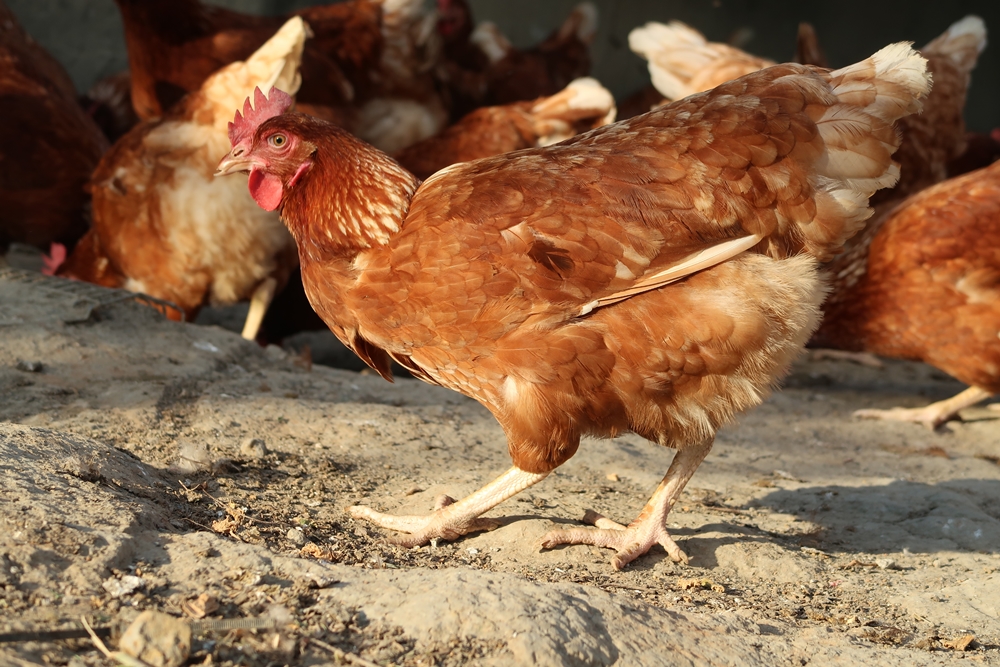
The Agriculture Committee has been promoting the welfare of economic animals. In July of the 105th year of the Republic of China (2016), it implemented the "Definition and Guidelines for Humane Production Systems for Welfare Eggs." Although it does not require that laying hens be raised according to the guidelines, only those that comply with the humane egg production guidelines may be labeled and sold as humane eggs. In the 5 years since implementation, more and more humane egg products have appeared on the market. In late April of this year, the Department of Animal Industry revised and implemented the "Definition and Guidelines for Humane Egg Production Systems" as a reference for operators interested in entering humane egg production systems.
According to the revised guidelines, humane egg production systems are divided into free-range, floor-rearing, and enriched cage systems. An important change in the basic principles is that overage low-yielding hens must not be induced or forced to molt. In general laying hen rearing, forced molting can bring laying hens into the next laying cycle as quickly as possible and can also extend the usable period of laying hens, but forced molting does not conform to the animal welfare of laying hens, so it is prohibited in humane production systems. At the same time, a new provision states that farms should have appropriate places for raising injured birds so that injured and seriously ill chickens can receive appropriate care.
⟦NL>
For laying hens raised in a free-range manner, a chicken house must also be provided. The stocking density in the chicken house is reduced from 12 birds per sq m to 10 birds. Lowering the stocking density can avoid stress that harms animal welfare. For perch installation standards, a new requirement was added that the horizontal distance from walls or nest boxes must be at least 20 cm or more.
A new provision states that chicken houses should be covered with litter, and the litter floor area available to each chicken must be at least 250 sq cm or more. The entrances and exits of chicken houses were originally required only to be at least 45 cm high and at least 1 m wide. A new provision requires that for every 1,000 chickens, entrances and exits with a total width of at least 2 m be provided. The outdoor activity area for laying hens must provide shelter equipment. Specific provisions for shelter facility standards were newly added, namely that for every 100 chickens there should be 8000 sq cm of shade or shelter facilities.
Free-range means providing chickens with free movement on the ground both indoors in the chicken house and outdoors. Floor-rearing means providing chickens with free movement on bedding or on the ground inside the chicken house or outdoors. The chicken house area, nest boxes or laying areas, perch installation requirements, and litter area are all revised by reference to the free-range baseline.
As for enriched cages, a new minimum cage height and provisions for free feeding and drinking were added, by reference to EU standards, so that even when laying hens are kept in cages, they can still move freely and facilities needed to satisfy their behavioral needs are provided. The new provisions include that the minimum height inside the cage must be at least 45 cm or more, chickens can drink and feed freely, linear feed troughs provide 12 cm of feeding space per chicken, and each chicken must have access to at least 2 nipple drinkers.
The domestic humane egg production system guidelines retain the cage-rearing item. The Taiwan Animal Society Research Association believes that even enriched cages can only be regarded as a transitional period, and from the perspective of animal welfare, they still cannot satisfy the natural instincts of hens. Jiang Wenquan, deputy director of the Department of Animal Industry of the Agriculture Committee, stated that the current mainstream rearing method for humane laying hens in Europe is still enriched cage rearing. In Taiwan's humane egg production systems, more farmers adopt the floor-rearing method, but if compared by output, enriched cage rearing produces more eggs.