-

What are the guidelines and precautions for placing flowers in the home
Keeping flowers at home not only beautifies the environment and improves the quality of living, but it is not simply a matter of placing them anywhere; there is much to consider. The placement of flowers in particular requires careful thought. Today, let's talk about the "four don'ts" to avoid when keeping flowers at home; even expert growers are well aware of
-
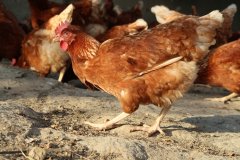
Revised guidelines for humane egg production: increased space in poultry houses, no forced molting for egg production
The Agriculture Committee of Taiwan, China recently revised and circulated the "Definition and Guidelines for Humane Egg Production Systems." The biggest differences before and after the revision are lowering the stocking density for free-range and floor-rearing, prohibiting forced molting, stipulating that low-yielding hens after culling must not enter non-humane production system farms for continued rearing, and raising the conditions for enriched cages to EU standards.
-

Guidelines on Animal Epidemic Prevention Measures and Disease Prevention and Control Techniques for Flood Disasters
Since the start of summer in the south, many places have been hit by heavy rain and flood disasters, and epidemics, especially among animals, tend to occur after flooding. So what are the animal epidemic prevention measures for flood disasters? Please keep this disease prevention and control technical guide handy! Flood disaster animal
-
What are the key points of production management for sea cucumber pond aquaculture? The Ministry of Agriculture and Rural Affairs has issued the latest guidelines!
Agriculture and Rural Affairs Departments of Hebei, Liaoning, Jiangsu, Zhejiang, Fujian, Shandong, Guangdong, and Hainan Provinces; Fujian Provincial Bureau of Ocean and Fisheries; Agriculture and Rural Affairs Bureaus of Dalian, Qingdao, and Ningbo Cities; Qingdao Municipal Bureau of Ocean Development:
-
Shandong Provincial Department of Agriculture Issues the 2017 Summer Corn Production Technical Guidelines
In order to optimize the corn planting structure, vigorously promote key corn production technologies, promote the integration of agricultural machinery and agronomy, improve production efficiency, achieve cost savings and efficiency gains, and ensure the stable and sustainable development of corn production, the Provincial Department of Agriculture organized relevant experts to research and formulate the "20
-
When and How to Plant Corn in Northeast China in 2018, with Technical Guidelines for Promoting Growth and Development
Due to the severe drought encountered in Northeast China during the spring planting period recently, corn has shown missing seedlings, broken rows, and uneven seedling sizes. For this reason, the Corn Expert Steering Group of the Ministry of Agriculture and Rural Affairs has proposed guidelines for corn growth and development to promote rapid corn growth. So in the Northeast region
-
Expert Group of the Ministry of Agriculture and Rural Affairs: 2019 Spring Crop Scientific Fertilization Guidelines
The Department of Crop Production Management of the Ministry of Agriculture and Rural Affairs, the National Agricultural Technology Extension Service Center, and the Scientific Fertilization Guidance Expert Group of the Ministry of Agriculture and Rural Affairs present the 2019 Spring Crop Scientific Fertilization Guidelines. I. Wheat (1) Irrigated winter wheat region of the North China Plain. This includes all of Shandong and Tianjin
-
Is Aikaman highly toxic to humans? Pesticide safety use guidelines
Aikaman is somewhat toxic to humans, and it is best to wear a mask when using it. Its toxicity to humans depends on the dose; if the concentration is too high, the effect on humans is relatively great. I. Introduction to Aikaman Aikaman is a new-generation acaricide, whose active ingredient is bifenazate
-
Technical Guidelines for Post-Typhoon Lekima Recovery for Rice, Soybean and Corn Growers
Recently, due to the impact of Typhoon Lekima, rainfall in Northeast China has brought severe damage to crops. In response, the expert steering group of the Ministry of Agriculture and Rural Affairs, together with the National Agricultural Technology Extension and Service Center, has put forward technical guidelines for production to combat waterlogging and prevent low-temperature damage.
-
Technical Guidelines and Rearing Management Points for Raising Chickens Under the Forest
Summary Selecting the breeding site: Raising chickens under the forest requires choosing a ventilated, sunny woodland with convenient drainage and easy transportation. Building the chicken coop: The coop needs to be divided into a chick room, a laying room, and a hatching room, and only simple construction is needed. Selecting the breed: Choose chicken breeds with strong environmental adaptability. Daily
条件筛选