-

Intercropping honeysuckle yields well, with high returns from multiple harvests on one plot
Honeysuckle is a commonly used bulk Chinese medicinal herb, with wide uses and high value. It is currently in short supply on the market, and there is even a phenomenon of a price with no goods available. According to the growth characteristics of honeysuckle, adopting a high-efficiency intercropping model of widening rows and reducing plant spacing, rational close planting, intercropping medicinal herbs, and using "medicinal herbs" to support "flowers" can achieve the effect of "planting flowers in the current year, seeing results in the current year." Scientific close planting increases yield and income 1. Field cultivation. In autumn, winter or early spring, on the selected plot, apply 5000 kg of organic fertilizer, 100 kg of superphosphate, and 30 kg of sulfur
-
Raising cotton seedlings in foam tray substrate with hydroponics gives higher returns
The widely promoted F1 hybrid cotton variety Ezamian No. 10 was selected to compare the cultivation effects of plastic soft-tray substrate seedling raising, foam tray substrate hydroponic seedling raising, and fertile-soil nutrient bowl seedling raising. The results showed that on alluvial fluvo-aquic soil in the Wuhan area, with cotton planted in continuous cropping with rapeseed, the net income per unit area was highest with foam tray substrate hydroponic seedling raising, followed by plastic soft-tray substrate seedling raising. Therefore, matching cotton varieties with simplified, light-labor cultivation techniques selected according to local conditions and promoting them together can improve the profitability of cotton growing.
-
The integrated fish-goose farming model can increase economic returns by 30%.
Integrated fish-goose farming is a three-dimensional ecological farming model that combines poultry rearing with fisheries management. According to comparisons, under the same conditions, integrated fish-goose farming increases economic returns by about 30% compared with raising fish or geese separately. 1. Benefits of integrated fish-goose farming. 1. Geese are fully automatic, energy-saving and highly efficient aerators for fish ponds. In integrated fish-goose farming, farmers do not need to worry about oxygen depletion in the water caused by weather changes, because whenever the weather changes, the geese will scramble to jump into the water to bathe and chase each other, churning up splashes, which has a particularly good oxygenating effect on the fish pond.
-
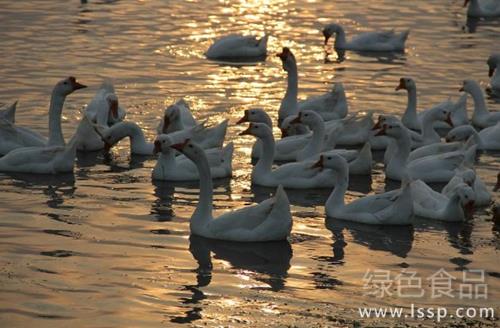
Master the key technical points of winter goose fattening, get good returns by marketing before the Spring Festival
Good returns from marketing winter geese before the Spring Festival; key technical points of winter goose fattening
-
Cotton Harvesting Techniques: Careful Picking Brings Higher Returns
I. Cotton should be harvested at the right time. Cotton harvesting is the last step in cotton production and the key to ensuring a high-yield, high-efficiency harvest. Because cotton is an indeterminate inflorescence crop, it successively forms buds, flowers, bolls and maturity, and requires multiple harvests. Therefore, after the cotton boll matures, the third stage of fiber development still has to be completed during the cracking process, namely the fiber dehydration and convolution period, about 7 days or so. The moisture content of the cotton boll shell drops from 80% to 30%, and the moisture content of the cotton pulp drops from 57% to 18%. The fiber further dehydrates and matures, forming convolutions, and at the same time, due to cellulose deposition, fiber strength continues to increase.
-
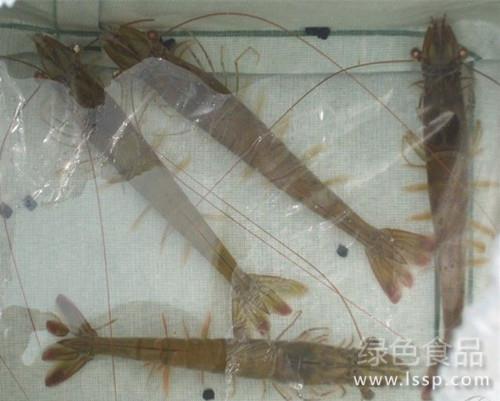
8 key points for the safe overwintering of broodstock shrimp: raise them well and get high breeding returns
Raise broodstock shrimp well for high breeding returns: 8 key points for safe overwintering of broodstock shrimp
-
Schisandra intercropping pattern offers good returns
Northern Schisandra is derived from the mature dried fruit of Schisandra chinensis of the genus Schisandra in the family Magnoliaceae. The plant is a perennial deciduous woody climbing vine, with woody stems reaching 8-10 m long. It grows wild in forests and forest margins, climbing trees. It flowers from May to July each year, and the fruit ripens from August to early October. The ripe red spike-like berries are picked for medicinal use. Schisandra cultivation techniques (1) Suitable growing environment for Schisandra. Schisandra prefers a cool, moist living environment and is shade-tolerant, with a suitable shading level of about 20%. The first
-
Garlic-Ginger Intercropping Brings Good Returns: A Full Analysis of the Planting Advantages
In the history of Zhucheng City, Shandong Province, ginger was mostly grown as a sole crop. Trials and demonstrations of garlic-ginger intercropping began in the 1980s and achieved relatively good economic returns. However, because the intercropping techniques were not fully matched, for example no intercropping rows were left, the intercropped ginger bulbs became smaller, and some even failed to meet export standards, which dampened ginger growers' enthusiasm for intercropping. In order to explore the cultivation techniques for garlic-ginger intercropping, the author carried out multiple trials and survey analyses from 1992 to 1995 in Chengguan Town, Lubiao Township and other places, and summarized a matched set of techniques suitable for local garlic-ginger intercropping. After extension, a double
-
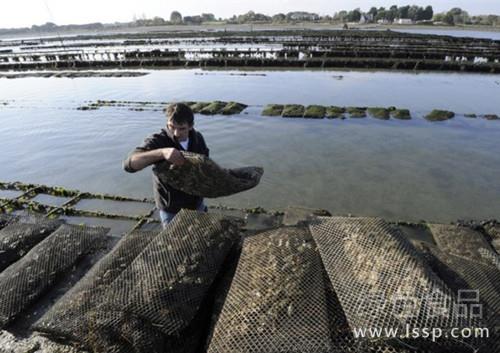
Oyster mudflat farming has good returns, key points for high-yield vertical farming
Oyster mudflat farming has good returns; key points for high-yield vertical oyster farming
-
Overwintering fennel greenhouse cultivation techniques to help you increase economic returns
Increasing economic returns: overwintering fennel greenhouse cultivation techniques
条件筛选