-
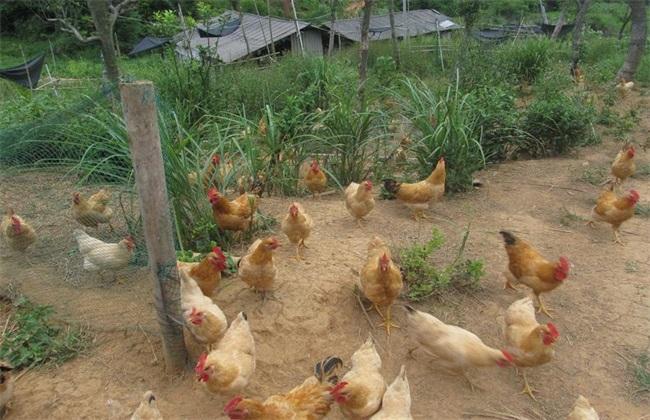
Management Techniques for Free-Range Chickens: Scientific Farming Brings High Returns
Management Techniques for Free-Range Chickens
-

A young man from a rural village returns home to farm bamboo rats, and stumbles onto the road to prosperity
After graduating from university, Xiao Mo worked as a courier, slogged on construction sites, and did many other jobs, but his wallet never got fatter, and his original dream gradually faded away, leaving him physically and mentally exhausted...
-
Bamboo rat farming delivers high returns, earning 200,000 yuan a year
Bamboo rat farming In recent years, Liucheng County has vigorously developed bamboo rat farming projects, and it has now begun to take shape. What makes money in farming? Across the county, 1,800 farming households raise 4... breeding bamboo rats
-

High economic returns from raising adult crabs as a supplementary crop in fingerling ponds
Raising adult crabs as a supplementary crop in fingerling ponds, relying on high density for success, practicing ecological farming, and replacing concentrated feed with coarse feed, is a new low-input, high-output farming model that the author has summarized from years of practice. Last year, in a pond of two mu, the author invested a total of 1,000 yuan in fingerling costs and feed costs. The result was an output of 70,000 "huopian" fingerlings worth 3,000 yuan, 20,000 one-year-old fingerlings worth 4,000 yuan, and 40 kg of adult crabs worth 1,000 yuan, for a total output value of 8,000 yuan. After deducting costs, the per-mu
-
Raising red worms as feed for turtles and soft-shelled turtles delivers high economic returns
In turtle and soft-shelled turtle breeding ponds, small red worms often appear, swimming in clusters and sheets on the pond surface and in the corners, forming a layer of red water bloom on the water surface. The real name of the red worm is Cladocera, and it is a type of zooplankton in water bodies. It is composed of many planktonic flea species, with an average body length of about 1 mm. The normal body color of Cladocera is grayish white; it turns red only when the water is lacking oxygen, which is why red worms are mostly found in foul ditches. When large numbers of red worms are found in a turtle or soft-shelled turtle pond, it indicates that the pond water has begun to deteriorate,
-
High returns from the grid-pool fish-lotus polyculture model
The grid-pool fish-lotus polyculture technique involves partitioning a hardened lotus pool with roof tiles, hard boards and the like into small grids of 2-4 sq m each, planting lotus within the grids, yielding an average of 0.5 wan kg of lotus and 400-450 kg of fish per mu of water surface, with a net return of over 10,000 yuan per mu. This technique can make use of waste pits, wasteland, river beach land and scattered corner plots to build grid-pool fish-lotus polyculture systems; it features small investment, low cost, quick returns and high benefits, is suitable for vigorous development by countless rural households, and has very broad prospects for extension.
-
Keeping mountain bees brings high returns and is a good path to increasing income and becoming better off
The mountain bee is a wild economic insect. The honey it makes from the nectar of the many flowers in nature is a fine grade of honey, and its market price can reach 30-40 yuan per kg. Generally, one bucket of mountain bees can yield about 25 kg of honey per year. If the colony is strong, the nectar source is good and the climate is suitable, each colony can produce 40-50 kg of honey. Right now is the peak period for mountain bee colony division, and bringing mountain bees home to raise them is a good project with low investment and quick results. Making and placing the bee bucket. The bee bucket is made up of a bottom bucket, an extension bucket, a bucket bottom and a bucket cap (lid)
-
Scientific and technological leadership brings high returns in silver carp farming
Grow-out fish (market-size commercial fish) farming is the ultimate goal and purpose of fish farming. In recent years, although special aquatic product farming has become "hot" across the country, the traditional farming and consumption of silver carp and bighead carp remain bulk commodities, and the economic returns are still considerable. They have the advantages of small investment, quick results, easy operation, abundant seed sources, and mature production, and are very popular among fishermen. The production process and technical key points mainly use the intensive culture method of "water, seed, feed, density, polyculture, rotation, prevention, and management." 1. Pond conditions: area 0.3-1.4 hectares, clay or loam bottom soil is preferable
-
Mixed farming of turtles and earthworms in the same pond yields high economic returns
Under micro-flowing water conditions, amphibious turtles and aquatic earthworms are co-cultured in one pond, with the aquatic earthworms serving as the main feed or supplementary feed for the turtles. This can make the turtles strong and healthy, grow faster, shorten the breeding cycle, reduce feeding costs, and more than double economic returns. Moreover, throughout the entire rearing process, contamination of the product by hormone drugs is avoided, meeting the basic requirements for pollution-free food and making it more popular with consumers. The main technical points are introduced as follows: 1. Pond construction: choose a site with abundant water sources and good water quality
-
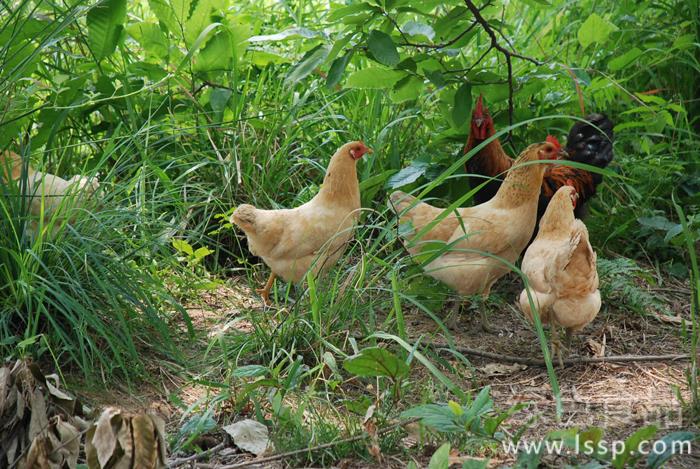
Free-range chickens are more popular than feedlot chickens, and new techniques bring high returns in raising them
Free-range chickens are more popular than feedlot chickens; new techniques bring high returns in raising free-range chickens
条件筛选