-

Growing potatoes in idle winter fields yields good returns
1. Choose good field plots and sow at the right time. Choose double-cropping rice areas below 100 m altitude, with little or no frost in winter and an average annual temperature above 19°C, requiring paddy fields with deep topsoil, loose texture, medium-to-upper fertility, and convenient drainage and irrigation; at the same time, arrange the sowing period reasonably. After the double late rice is harvested in mid-November, immediately plow deep and sun-bleach the soil, sow in early to mid-December, and harvest from late March to early April the following year. 2. Prepare the land finely and make deep furrows and high ridges. Potatoes grown in paddy fields in winter are most afraid of waterlogging, so fine land preparation should be advocated, with deep plowing and high-ridge cultivation, and planting
-
How to Grow Black Potatoes for High Returns? A Detailed Guide to Cultivation Techniques
I. Characteristics and Traits The seedlings are upright, the plant clump is lush, the plant type is tall, and the growth vigor is strong. Plant height is 60 cm, stem thickness is 1.37 cm, the stem is dark purple, and the cross-section is triangular. The main stem is well developed, with fewer branches. Leaf color is dark green, the petiole is purple, the corolla is purple, and the petals are dark purple. The tuber body is long oval, the skin is smooth, and it is black-purple, glossy black and shiny, and rich in luster. The tuber flesh is dark purple and tightly dense. The appearance color is highly attractive. Starch content is 13%-15%, and the taste is fragrant and mealy with good quality. The eyes are shallow, and the number of eyes is medium. Tuber set is concentrated, with 6-8 tubers per plant,
-
Master the Three Earlies and Three Skills for Spring Potato Planting to Achieve High Returns
Three Earlies: Choose early-maturing varieties. Practice has proven that selecting high-yielding, high-quality, virus-free potato varieties with a growth period within 70 days (from emergence to harvest) is the key to achieving high, stable yields and quality in spring-planted potatoes. Currently ideal varieties include Holland No. 7, Holland No. 15, Zhengshu No. 6, etc. Start sprouting early. Using a sunny cold frame before planting to pre-sprout can make potatoes emerge early and uniformly, with complete and strong seedlings, promoting early plant development and early tuber formation - this is an important yield-increasing measure. The key points of sprouting technique are: before planting
-
Deep processing of sweet potatoes brings good returns, giving farmers a new way to increase their income
I. Crispy rice crust 1. Raw material preparation. Select 10 parts of fresh sweet potatoes with a high dry matter content, cut off the roots and stems, and wash them with water. Separately select 1 part of highly sticky glutinous rice, soak it in water and wash it for 30 minutes, then drain off the water. Next, put the sweet potatoes and glutinous rice into separate pots, add water, and steam them thoroughly over high heat for later use. Then put the mashed cooked sweet potatoes and glutinous rice, while still hot, into a bucket, and quickly pound them with a thick stick into a paste. At the same time add a small amount of white sugar water to increase sweetness and flavor. 2. Spreading the paste. Take a clean cloth sheet and spread it flat on a sun-drying mat,
-
Sweet potato starch is in high demand in the market, and timely processing yields high returns.
Sweet potato starch occupies an increasingly important position in people's daily diet. Potato-based chemical products have now become the main raw materials for chemical products such as lactic acid, citric acid, disposable tableware and degradable agricultural mulch film. It is understood that the current price of refined white potato starch has risen by nearly 10% compared with last year, and the reason for this price trend is undoubtedly the supply-demand gap for sweet potato starch. Relevant data show that at present, the demand for sweet potato starch in the domestic market alone is more than 1 million tons, while the production volume is far less than this number.
-
Garlic-Ginger Intercropping Brings Good Returns: A Full Analysis of the Planting Advantages
In the history of Zhucheng City, Shandong Province, ginger was mostly grown as a sole crop. Trials and demonstrations of garlic-ginger intercropping began in the 1980s and achieved relatively good economic returns. However, because the intercropping techniques were not fully matched, for example no intercropping rows were left, the intercropped ginger bulbs became smaller, and some even failed to meet export standards, which dampened ginger growers' enthusiasm for intercropping. In order to explore the cultivation techniques for garlic-ginger intercropping, the author carried out multiple trials and survey analyses from 1992 to 1995 in Chengguan Town, Lubiao Township and other places, and summarized a matched set of techniques suitable for local garlic-ginger intercropping. After extension, a double
-
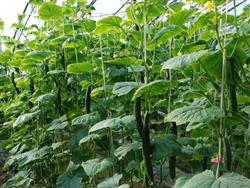
High returns from using the five-change planting method for overwintering cucumbers
Change dense planting of seedlings to rational sparse planting. In winter, temperatures are low and light is weak, so crop photosynthesis is relatively poor, and only rational sparse planting can achieve high yields. If plants are too dense, they will also grow tall and spindly as they compete for light, and the fruit-setting rate will decline. Poor ventilation also makes them prone to infection by multiple diseases, and dense leaves make spraying difficult. Once the disease spreads, it is very hard to cure completely. Flat beds...
-
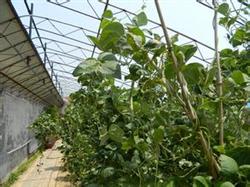
For kidney beans, remove leaves first, then pinch the growing tips: earlier harvest brings higher returns
Currently, greenhouse-cultivated kidney beans are in the vine-extension and flowering stage. How can you ensure a bumper harvest? Here, the reporter suggests that vegetable growers grasp the following key measures for management. First, pinch the tips at the right time. Greenhouse kidney beans and open-field kidney beans have different cultivation environment conditions. Because the temperature inside the greenhouse is higher, the growth rate...
条件筛选