Overwintering fennel greenhouse cultivation techniques to help you increase economic returns
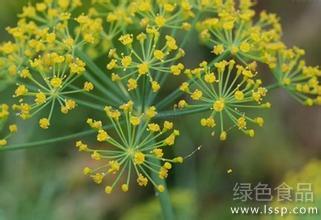
Growing fennel
Autumn-delayed greenhouse vegetables are generally pulled up in mid-to-late November, and after the growing period ends the stubble is cleared; then in January fennel is planted in the greenhouse for overwintering cultivation, finishing in March of the following year, as the preceding crop for greenhouse spring cucumbers, spring tomatoes and other fruit vegetables. This high-efficiency cultivation model has been promoted in Qingxian for many years, increasing economic returns by an average of 4000-5000 yuan per mu, with the highest reaching 6000 yuan. Its cultivation techniques are as follows:
I. Sowing time
Generally sowing can be done from early to late January.
II. Variety selection
Choose varieties with fast growth, cold tolerance, disease resistance and high yield, such as Inner Mongolia large fennel and the local variety flat-seed small fennel.
III. Seed treatment
1. Rubbing the seeds. Fennel seed is a schizocarp containing two seeds, and the seeds should be rubbed apart before sowing.
2. Soaking and sprouting. Fennel generally does not need sprouting; for late sowing, sprouting can be done to speed up emergence. First soak the seeds in clean water at 18°C-20°C for 24 hours, then wrap the seeds in a wet cloth and place them in a 20°C-22°C environment to sprout, rinsing once a day with clean water and turning them once every 4-6 hours. When 80% of the seeds have “white tips” they can be sown. If sowing cannot be done in time, store them at 10°C.
IV. Preparation before planting
1. Preceding crop. It should be a non-Umbelliferae vegetable.
2. Land preparation and fertilization. Deep plow and harrow finely; in combination with land preparation, apply 3000 kg of high-quality organic fertilizer, 6 kg of phosphate fertilizer (equivalent to 50 kg of superphosphate) and 5 kg of potassium fertilizer (equivalent to 10 kg of potassium sulfate) per mu.
3. Making beds. Make beds 1.2 m wide, break up clods of soil and rake the bed surface level.
V. Sowing
Water the bottom thoroughly, and after the water seeps in cover with a layer of fine soil (or medicated soil), then broadcast sow. To achieve even sowing, broadcasting can be done twice; after sowing cover with 1 cm of soil and set up a small arch tunnel.
VI. Field management
1. Hanging an inner canopy. After sowing, hang another layer of plastic film inside the greenhouse 30-40 cm from the outer greenhouse film, with a film thickness of 0.01-0.012 mm, which can raise the temperature inside the greenhouse by 2°C-4°C.
2. Temperature management. From sowing to emergence, keep the greenhouse closed to preserve heat and prevent cold. After fennel emerges, start ventilating when the seedlings are 7-8 cm tall; generally ventilate when the temperature exceeds 22°C in the morning and close the vents when it falls below 20°C in the afternoon; in the middle growth stage ventilate at 8-9 am and keep ventilating until the temperature reaches 20°C in the afternoon, then close the vents; in the later stage, when the minimum outdoor temperature exceeds 3°C, ventilate day and night, with large vents during the day and small vents at night; the daytime maximum temperature must not exceed 24°C, otherwise fennel is prone to tip drying.
3. Water and fertilizer management. When the seedlings are about 20 cm tall, water once with a moderate amount of water, and together with watering apply 10-15 kg of urea per mu.
VII. Pest and disease control
Early spring greenhouse fennel generally does not suffer insect damage; the main disease is fennel sclerotinia rot. In the early stage of the disease, spray with 50% Limeikang wettable powder at 800 times dilution or 40% Shijiale suspension concentrate at 1000 times dilution for control.
VIII. Harvest
Harvest all at once when the seedlings are about 30 cm tall.