-
Production Technology for Drought Resistance and Early Maturity Promotion of Soybean During the Summer Hoeing Period
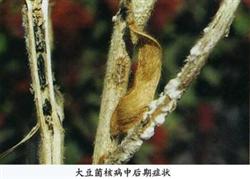
1. Symptoms: When infected at the seedling stage, the stem base turns brown and becomes water-soaked; under high humidity, cottony white mycelium grows; later the diseased part shrivels, turns yellow-brown and dies, and the seedlings lodge and die. Symptoms at the adult plant stage: Infection at the adult plant stage mainly affects the soybean (4458,-23.00,-0.51%) stem, and the upper leaves of plants in the field turn brown and die. Pods...
-

Sweet potato drought-resistant cultivation tips: grow well even in dry weather
Three-leaf method: take sweet potato slips with 6-7 nodes, keep only the top 3 unfolded leaves when planting, and bury all the rest, including the leaves, in the soil; the buried part should be covered firmly and leveled flat. Buried-tip method: sandy soil absorbs heat quickly and has high temperatures, so when planting sweet potato slips, cover the tips and leaves exposed above the ground with soil to a depth of more than 3 cm...
-
What are the effective methods for increasing cotton yield and disease resistance?
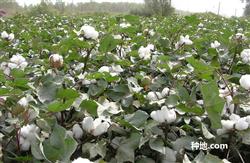
How can cotton be made to increase yield and resist disease? What are the tricks? Surveys conducted in some cotton-growing areas found that only about 45% of cotton growers apply nitrogen, phosphorus and potassium compound fertilizer; most farmers apply ammonium bicarbonate, urea and superphosphate, and about 15% of them use only phosphate fertilizer as a base dressing. This situation shows that in...
-
Detailed Explanation of Key Points for Drought-Resistant Cultivation Techniques of Spring-Sown Corn
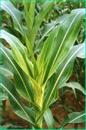
In recent years, as the area of spring-sown corn has increased, corn dwarf mosaic virus disease has also shown a worsening trend and has become a major disease of spring-sown corn. 1. Symptom identification: Corn dwarf mosaic virus disease can infect corn throughout the entire growth period, with damage being most severe at the seedling stage. Symptoms can appear as early as the three-leaf stage of corn, initially on...
-
Zinc supplementation for rice boosts disease resistance and high yields, making rice plants healthier
When rice enters the jointing and panicle elongation stage, it is an important period of transition from vegetative growth to reproductive growth, and also a critical period that determines yield. Doing a good job of field management in the middle and late stages of rice is crucial for ensuring sufficient panicles, developing large panicles, shaping a high-yield plant type, and building a good framework for a bumper harvest. I. Seedling characteristics According to a survey on July 21...
-
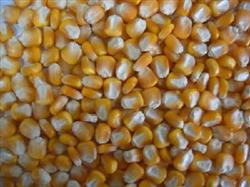
How should spring corn seeds be treated before drought-resistant sowing?
Before sowing, select and sun-dry the seeds. Choose uniform, consistent seeds and sun them for three days on a sunny day to improve germination vigor, disease resistance, and seedling uniformity. Conduct a germination test before sowing. The purity of the selected seeds should be no less than 96%, the cleanliness no less than 98%, and the germination rate no less than. Seed coating. Use a drought-resistant compound seed coating agent on...
-
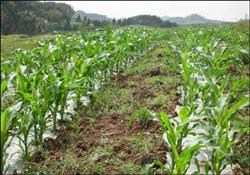
How to sow spring corn in drought-resistant conditions? Detailed explanation of planting key points
1. Base fertilizer: Spring corn should be fertilized according to the basic principles of base fertilizer as the main part and topdressing as the supplement; farmyard manure as the main part and chemical fertilizer as the supplement; nitrogen fertilizer as the main part and phosphorus fertilizer as the supplement; ear fertilizer as the main part and grain fertilizer as the supplement. Base fertilizer should generally account for about 70% of the total fertilization amount, and most phosphorus fertilizer should also be applied together with the base fertilizer, generally applied in the previous year combined with autumn plowing....
-
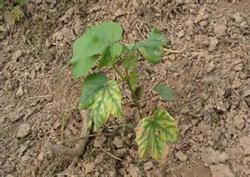
What to Do When Insect-Resistant Cotton Gets "Cancer"? A Full Analysis of Mitigation Methods
Cotton fusarium wilt is what farmers habitually call "cancer." In any field where this disease has appeared, planting cotton again often easily brings the "cancer" back, and it may even become more severe year after year. This is because once such pathogens lurk in the soil, they are difficult to eradicate, and when suitable climatic conditions occur, they easily flare up again....
-
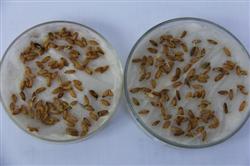
Detailed Explanation of Rice Blast Resistance Breeding Techniques
The main diseases transmitted by rice seeds include bakanae disease, rice blast, rice false smut, bacterial leaf blight, and striped virus disease transmitted by the small brown planthopper at the seedling stage. Currently, it is time for soaking rice seeds in Qilin District. When soaking rice seeds, all demonstration households must insist on soaking seeds with fungicides, the main purpose of which is to kill the pathogens carried by rice seeds...
-
Disease- and pest-resistant japonica rice successfully bred in Jiangsu
A breakthrough has been achieved in the "Breeding of New Multi-Resistant, High-Yield and High-Quality Japonica Rice Varieties" carried out through cooperation between the Bokun Agricultural Research Institute of Yixing City, Jiangsu Province, and the China National Rice Research Institute and other institutions. New high-yield, high-quality japonica rice lines such as 4701 and 4714 have been successfully bred with resistance to brown planthopper, rice blast and other pests and diseases. It is reported that the bred high-yield, high-quality japonica rice lines combine genes for resistance to brown planthopper, white-backed planthopper, rice blast and stripe leaf blight, as well as specific genes for high yield and high quality. Testing has shown that these high-quality japonica rice lines are resistant to brown planthopper,
条件筛选