-

Ten observations for silkworm disease prevention and control: remember these ten key points when raising silkworms
1. Observe the development of the colony. When the ants are collected, the hatching is uneven, the ant silkworms are uneven in size, with big heads and small tails, spin a lot of silk, and crawl around the rearing seat, indicating a weak constitution. During rearing, touch the silkworm body with your hand or lift the silkworm up; if the silkworm contracts and resists, it is healthy; if it has no reaction, it indicates a weak constitution. In the large silkworm stage, touch the silkworm body flatly with the back of your hand; if it feels cold, it is a healthy silkworm; if it feels damp and hot, it indicates that the constitution is not strong. 2. Observe the posture before and after molting. When a healthy silkworm is about to molt, its head and thorax are raised, and molting is uniform. If it does not enter sleep for a long time, and after entering sleep its head
-
Lessons to Remember After Losing Out by Not Applying Organic Fertilizer to Jujube Trees
This year, the selling prices of jujubes varied greatly. The price differences were mainly due to differences in sweetness and crispness, and apart from varietal characteristics, the main reason for the differences in sweetness and crispness was the different types of fertilizer applied. Currently, it is the second root development period for jujube trees. The first root growth peak occurs from late May to early June after new shoots stop growing, and the second root growth peak occurs from after fruit harvest to early November. From surveys of jujube growers, many farmers are only accustomed to fertilizing fruit trees in spring,
-
How to dry Tianzhu chili peppers? Remember these key points
Tianzhu chili peppers are grown on a fairly large area in our province. Throughout the entire production process, field management cannot be neglected, and likewise, scientific drying is also a very important step. Right now, Tianzhu chili peppers are about to be harvested. Below is a brief introduction to the drying methods, for the reference of the vast number of pepper growers. Timely harvesting requires that the fruits all turn deep red before harvesting. In North China, harvesting generally takes place from Cold Dew to Frost's Descent. If grown in small arched sheds or with plastic film mulching, harvesting can be done appropriately earlier; if planted later, the harvest period can be slightly postponed, but harvesting must be completed before Frost's Descent arrives
-
How to harvest garlic scapes? Remember these four tips
In recent years, many garlic farmers have changed the past cultivation method of growing green garlic and digging up green garlic for market into the cultivation method of harvesting garlic scapes and digging up garlic bulbs for market. Among them, quite a few farmers, because they do not know how to harvest garlic scapes scientifically, end up with poor-quality garlic scapes, low yields, small garlic bulbs, and large reductions in output. To help garlic farmers both harvest high-quality, high-yield garlic scapes and achieve the good benefit of a bumper garlic bulb harvest, here are four "tips" for scientifically harvesting garlic scapes. 1. Choose the right harvest time when the "scape tip" bends nearly a full circle. When harvesting garlic scapes, you must
-
How to grow Tricholoma lobayense for high yield and quality? Remember these six keys
Tricholoma lobayense, also known as Tricholoma lobayense Heim and giant white tricholoma, called white matsutake in Japan, is a rare edible mushroom that dominates the summer market. Its fruiting bodies grow in clusters, are thick and elongated, fresh white in color, with crisp and tender flesh, excellent flavor, and rich nutrition. It is praised as the outstanding one among mushrooms for both taste and quality; moreover, it comes to market during the summer when mushrooms are scarce, making it especially favored. In Shanghai, Guangzhou, Hangzhou and other places, fresh mushrooms sell for 14 to 18 yuan per kilogram, with very considerable returns, making it a rare mushroom species with great development prospects. Below is an introduction to the "six keys" for high-yield and high-quality cultivation of Tricholoma lobayense
-
How to manage garlic under plastic mulch after it turns green again? Remember these key points
1. Topdressing and watering. From late February to early March, temperatures rise and garlic under plastic mulch begins to turn green again. Because plastic mulch has a heat-preserving and moisture-retaining effect on the soil, generally, when garlic under plastic mulch has been watered thoroughly before winter for overwintering, it should not be watered early in spring, to prevent the soil temperature from dropping. If there is a spring drought and the soil lacks water, water once in early to mid-March. Remove the mulch in April, weed, loosen the soil, apply topdressing, and water. Apply 15-20 kg of urea or 30-40 kg of ammonium bicarbonate and 10-15 kg of potassium sulfate per mu. After fertilizing, irrigate once thoroughly. Appropriately control watering in the later stage. Keep the field
-
How to harvest garlic scapes? Remember these four tips
In recent years, many scape farmers have changed the old cultivation method of growing green garlic and digging up green garlic for market into the cultivation method of harvesting garlic scapes and digging up garlic bulbs for market. Among them, many farmers, because they do not know how to harvest garlic scapes scientifically, either end up with poor-quality garlic scapes and low yields, or with small garlic bulbs and heavy yield reductions, and cannot achieve the best results in increasing production and income. To ensure harvesting high-quality, high-yield garlic scapes while also getting a bumper harvest of garlic bulbs, I will introduce to everyone the four "secrets" of scientifically harvesting garlic scapes. 1. Choose the right harvest time when the "scape tip" curves nearly a full circle. Garlic scapes must be harvested at the right time. Harvesting too early will
-
How to prevent and control mushroom wilting disease? Remember these eight key points
1. Early prevention in the substrate mix. When using corncobs, wheat straw, or rice straw as the main material, add 5% wheat bran or 4% fermented and decomposed livestock and poultry manure at the bottom; when using nitrogen-rich cottonseed hulls as the main material, no nitrogen source needs to be added, but attention must be paid to controlling mite damage, and spraying an 800-fold dilution of trichlorfon when mixing the substrate works very well. 2. Moderate acidity and alkalinity. The amount of lime added when mixing should reach 5%, and after each mushroom harvest, spray 1% lime water or 4% plant ash water to raise the pH. 3. Ventilation and air
-
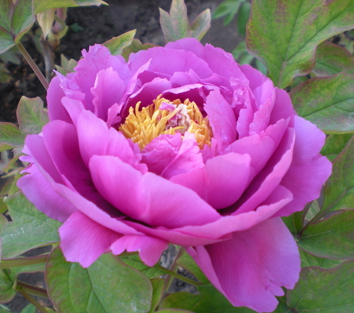
How to Tell Peonies and Herbaceous Peonies Apart? Remember These Four Looks
It is said that neither tree peonies nor herbaceous peonies are flowers of the mortal world. In a certain year, when a plague struck the human realm, a jade maiden or the flower goddess stole the Queen Mother of the West's elixir and scattered it over the earth to save the people. As a result, some turned into the woody tree peony, and others into the herbaceous peony. The tree peony and the herbaceous peony are sister flowers similar in appearance, and through the ages they have been jointly called the two peerless flowers.
-
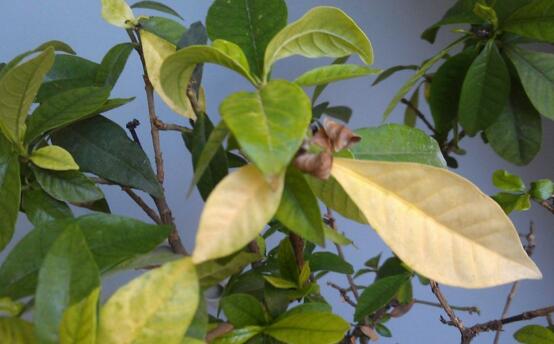
What to do when gardenia leaves turn yellow? Just remember these 7 points
Gardenia has a pleasant fragrance and lovely white flowers, making it a favorite of many gardeners. However, problems often arise during cultivation, such as yellowing leaves. So what should you do when gardenia leaves turn yellow? Outdoors, nature provides the best growing environment for gardenias, but indoors, we have to create it artificially.
条件筛选