-

Pig disease rhymes are easy to remember and practical; a veteran veterinarian of 20 years summed up 7 of them
7 pig disease rhymes summed up by a 20-year veteran veterinarian, not only easy to remember but also practical!
-

Sure-fire tricks for treating sows that don't come into heat, remember to save this after reading!
Sure-fire tricks for treating sows that don't come into heat, remember to save this after reading!
-
How to Tell Wild Crucian Carp from Farmed Crucian Carp? Remember These Points
How to tell the difference between wild crucian carp and farmed crucian carp? 1. Look at the fish's size Wild crucian carp tend to be fairly small, with short, compact, sturdy bodies, while farmed...
-

How do you identify centipede farming scams? Remember these five steps
Half of the companies running centipede farming scams claim in their promotional materials that investors only need to buy breeding stock and need almost no other investment. But in fact, investors...
-

What are the precautions during the lamb suckling period? Sheep farmers must remember them
Precautions for lamb suckling
-
Healthy crab eating has its rules, seven "don'ts" to remember well
Although crabs are delicious and have certain medicinal value, some people experience symptoms such as abdominal pain, diarrhea, nausea and vomiting after eating them. The main cause is food poisoning due to poor hygiene. Therefore, when eating crabs, you should pay attention to the following "seven don'ts": Little knowledge about eating crabs -- Since ancient times, crab has been said to have "four flavors." The "thigh meat" has short, slender fibers and tastes like dried scallop; the "leg meat" has long, tender fibers and is as fine as whitebait; the "body meat" is white and crystalline, even better than white fish; the "crab roe" contains a large amount of
-
How do you identify sheep diseases? Remember these eight points to observe
With the adjustment of the structure of livestock breeds, Boer goat farming has become the first choice for farmers to get rich and reach a moderately prosperous life. Boer goats are an introduced breed, few in number and expensive. In addition to strengthening feeding management, the growth and activity of Boer goats should be observed frequently to ensure timely treatment in the early stage of illness and reduce losses. Generally, the following aspects are carefully observed and comprehensively judged to determine whether they are sick. 1. Look at the demeanor. Healthy Boer goats are full of energy, move agilely, and have bright eyes. Sick goats are sluggish, prefer to lie down, hang their heads, shed tears, and are afraid of light. 2. Look at feed
-
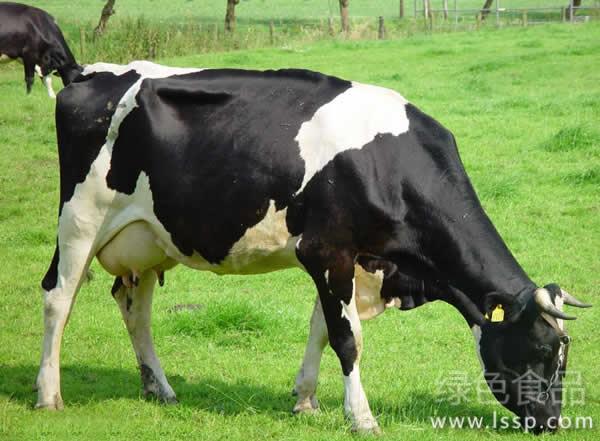
Dairy cows are prone to heat stress in high temperatures: five heat-relief and cooling measures to remember
Dairy cows easily suffer heat stress in high temperatures: five measures for heat relief and cooling in dairy cows
-
What are the pond-clearing methods? Remember these five before stocking fish fry
Before stocking fish fry, the aquaculture pond must be cleared to kill various predatory small wild trash fish, harmful aquatic animals and plants, parasite eggs, pathogenic bacteria, etc., creating a good environment for the growth of adult fish. The following five pond-clearing methods are introduced: 1. Clearing the pond with quicklime. When carrying out drainage pond clearing (that is, draining the pond water to a depth of 5-10 cm of remaining water before clearing), use 60-70 kg of quicklime per mu of pond; when clearing without draining, use 125-150 kg per mu of pond for every meter of water depth (200 ppm).
-
Ten observations for silkworm disease prevention and control: remember these ten key points when raising silkworms
1. Observe the development of the colony. When the ants are collected, the hatching is uneven, the ant silkworms are uneven in size, with big heads and small tails, spin a lot of silk, and crawl around the rearing seat, indicating a weak constitution. During rearing, touch the silkworm body with your hand or lift the silkworm up; if the silkworm contracts and resists, it is healthy; if it has no reaction, it indicates a weak constitution. In the large silkworm stage, touch the silkworm body flatly with the back of your hand; if it feels cold, it is a healthy silkworm; if it feels damp and hot, it indicates that the constitution is not strong. 2. Observe the posture before and after molting. When a healthy silkworm is about to molt, its head and thorax are raised, and molting is uniform. If it does not enter sleep for a long time, and after entering sleep its head
条件筛选