-

Rural land reform needs holistic design: three basic recommendations for reference
Rural land system reform faces three most important aspects: market entry of collective operational construction land, paid withdrawal from homestead land, and narrowing the scope of land expropriation. From the current situation, institutional design shows a tendency toward fragmentation, and the three should be designed holistically and integrated into one.
-
How to Prevent Risks in Rural Land Transfer? A Few Suggestions for Reference
Guiding the transfer of rural land management rights is an important means of promoting large-scale agricultural operations, developing modern agriculture, and enhancing agricultural competitiveness, and is an important part of comprehensively deepening rural reform. As rural land transfer advances step by step, the scale of transfer has expanded year by year,
-
How to build a new type of agricultural management system? Three suggestions for reference
As a grassroots rural worker, I have long been puzzled by this: we must both consolidate national food security and raise the comparative returns of farming and farmers' incomes, so where is the way? We must both uphold the long-term stability of the two-tier management system that combines unified and separate operations, and solve the problems brought by household-based operation, such as poor circulation of agricultural products, the quality and safety of agricultural products, and agricultural non-point source pollution, so where is the way out?
-
Grain Moderate-Scale Operations Receive Preferential Support Through Three Subsidies
The Ministry of Finance and the Ministry of Agriculture decided that starting from 2015, they would adjust and improve three subsidy policies - the crop improved seed subsidy, the direct subsidy to grain farmers, and the comprehensive agricultural input subsidy (hereinafter referred to as the agricultural "three subsidies"). To actively and steadily advance this work, the Ministry of Finance and the Ministry of Agriculture proposed
-
What preferential policies are there for the rabbit farming industry? A quick guide to the support measures
Notice of the Ministry of Agriculture on the Issuance of the 2008 Fiscal Projects (Nong Cai Fa [2007] No. 99). In the application requirements for the One Village One Product characteristic industry project, it states: 1. Project objective: To support the development of the One Village One Product characteristic industry, in accordance with the requirements of the Scientific Outlook on Development, centering on the building of a new socialist countryside, deepening the adjustment of the agricultural structure, actively developing agricultural products with high added value, distinctive features and excellent quality, and promoting increases in farmers' income;
-
How can family urbanization be advanced? Five suggestions for reference
China's urbanization differs from the family-led population migration of other market economy countries; instead, it is rural migrant workers working and integrating into cities. Although the large number of rural people who have entered cities are statistically counted as urban population, society "takes without giving" to the rural population, enterprises "use without supporting" the rural population, and migrant workers themselves "move without migrating," resulting in the "semi-urbanization" phenomenon in China's social development.
-
Current Problems in the Preferential Value-Added Tax Policies for Agriculture, Rural Areas and Farmers and Suggestions for Improvement
There are currently many, many preferential tax policies concerning agriculture, rural areas and farmers (agriculture, rural areas, farmers), such as the exemption of value-added tax on agricultural products sold by agricultural producers from their own production, certain agricultural production materials, qualifying grain and edible vegetable oil, farmers' professional cooperatives, and vegetables in the circulation stage
-
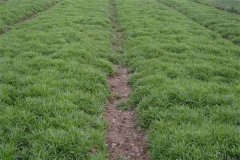
Key Points for Organic Cultivation of Ryegrass as Green Manure
Ryegrass (referring to Italian ryegrass) is a biennial herbaceous forage grass, generally with a growth period of 1 to 2 years. It has well-developed fibrous roots, grows in clumps at the base, and reaches a plant height of 90 to 130 cm. The leaves are long and relatively wide, dark green and glossy, drooping in an arc. Ryegrass prefers a mild and humid climate and fertile soil, and is also suitable for clay soil and red soil. The most suitable soil pH is 6 to 7.
-
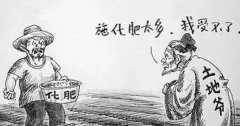
A detailed explanation of the definition, methods and significance of rational fertilization
How do you carry out rational fertilization? Do you know? Do not fertilize randomly, wasting fertilizer and preventing crops from absorbing it well. So let us take a look together. For a long time, under the public fertilizer production and marketing system, a low fertilizer price policy was adopted to reduce the burden on farmers, especially
-
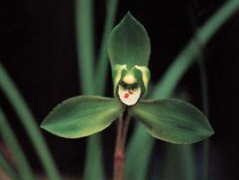
How to grow the Cymbidium goeringii variety Tongle Mei orchid? With price reference
The Cymbidium goeringii Tongle Mei was selected by Lu Yongsheng in Shanghai in 1914, and is also known as Caiyun Tongle Mei. Its characteristics are that the outer three petals of the orchid are lotus-shaped, the petal texture is glutinous and thick, with silkworm-moth-shaped column, and a large spread lip. The flower color is green, the shoulders are level, and the leaves are semi-drooping. So how do you grow it? Let's take a look.
条件筛选