-

What kind of pot is best for Phalaenopsis orchids? Suggestions for choosing between nursery cups and root-control pots
The Phalaenopsis orchid (Phalaenopsis spp.) is a beautiful epiphytic orchid, and its growing environment and pot choice are especially critical. Regarding the question "Is a nursery cup or a root-control pot better for Phalaenopsis?", as well as "What pots are suitable for growing Phalaenopsis?", the Phalaenopsis likes an airy, moist environment with a certain amount of light, so when choosing a pot,
-

What are some rationalized suggestions for the cultivation and management of Dongshi early pomelo?
1) Soil management. In young orchards, attention should be paid to intercultivation and weeding, interplanting green manure crops, soybeans, peanuts, etc., deep plowing to improve the soil, and cleaning the orchard soil. ① Intercultivation and weeding can prevent surface compaction, loosen the soil, eliminate weeds, and reduce the occurrence of pests and diseases. Intercultivation and weeding
-
How to advance agricultural industrialization? A summary of countermeasures and suggestions
1. Formulate a policy system for agricultural industrialization. Use policies to create a social environment, implement a new economic system, and invigorate the industrialization management mechanism. This includes reform of the property rights system, expansion of investment and financing channels, strengthening technological innovation and cooperation, and cultivating core competitiveness.
-
Hangzhou White Chrysanthemum for Tea: Benefits of Drinking It Steeped in Water, Whether You Can Drink It Every Day, and Pairing Suggestions
Hangzhou white chrysanthemum, also known as tai ju (bud chrysanthemum), is a common chrysanthemum variety used for tea. Because it has anti-inflammatory, health-strengthening, blood pressure-lowering and lipid-lowering effects, it is widely used to make tea. So what are the benefits of drinking Hangzhou white chrysanthemum steeped in water? Can you drink it every day? What is good to steep it with? 1.
-
Tibetan Mastiff Calcium Supplementation Requires Care: A Few Points Breeders Should Know
Calcium supplementation is an issue that cannot be ignored. If you want your beloved mastiff to grow healthy and imposing, with a beautiful physique and strong, agile limbs, you must supplement calcium at the right time and in the right amount. The following suggestions are for reference only: When is calcium supplementation needed? For large dogs like the Tibetan Mastiff, the larger the breed, the faster it grows, and the greater its calcium requirement. For puppies, the calcium contained in ordinary puppy food can hardly meet their growth needs. If you feed your mastiff homemade food, then you should pay even more attention to supplementing calcium in a timely manner. In addition, if your mastiff has long been eating animal liver or has meat as its staple food, then it should also be given an appropriate amount of calcium supplementation. This is because such foods not only have a very low calcium content, but also contain high concentrations of vitamin A. Long-term intake of high concentrations of vitamin A by dogs can inhibit calcium absorption. Therefore, you should immediately stop the long-term habit of feeding liver and promptly supplement calcium for it. After a mastiff enters adulthood, if it is fed dog food, there is no need for separate calcium supplementation. This is because during this period, the growth and development of the dog's bones and other organs have basically stopped, and its calcium requirement is very small. If it is a stud dog or a female dog during pregnancy and lactation, it still needs a large amount of calcium supplementation, because semen, fetuses during the embryonic stage, and milk will all cause a large amount of calcium to be lost from the body. If it cannot be replenished in time, calcium from the body's calcium pool will be drawn upon, causing osteoporosis. How should calcium be supplemented for mastiffs? There is no obvious difference between the methods of calcium supplementation for dogs and for people. Generally speaking, calcium products for human use are also suitable for dogs. In addition, drinking more milk or eating some dairy products and cartilage foods in daily life, and reducing the intake of foods high in vitamin A such as liver, are also beneficial for calcium supplementation. If a mastiff has already shown symptoms of calcium deficiency, then medication should be used. It is recommended to choose relatively inexpensive calcium carbonate and calcium lactate while injecting vitamin D3 and orally taking vitamin D2 and vitamin D3. Of course, if conditions permit, you can also choose some imported-brand pet calcium products, because these products are relatively more professional. Methods for supplementing calcium for young mastiffs Some people believe that feeding all meat can make puppies grow strong, but this is actually the wrong approach. Eating only meat not only cannot make puppies strong, but instead, due to indigestion and difficulty absorbing it, can cause most puppies to develop diarrhea. Although meat contains a lot of protein, it has relatively little vitamin A, vitamin D, vitamin E, and iodine. At the same time, meat has little calcium and much phosphorus. Long-term meat eating can easily cause an imbalance in the calcium-to-phosphorus ratio in puppies' bodies, resulting in skeletal disorders and making lameness likely. For large dogs, it is even more inadvisable to feed large amounts of meat too early, otherwise it may cause the front limbs to become bent. Puppies' feed should be supplemented with calcium powder and vitamins, which are necessary for the growth of teeth and bones. Especially for purebred dogs with larger frames, calcium is even more needed during the puppy stage. Usually, for growing puppies under one year old, the daily amount of calcium powder supplementation is about one teaspoon per 2 kg of body weight. As age increases, the amount of calcium powder and the dosage should be increased proportionally. After one year of age, because the puppy has entered maturity and the growth of teeth and bones has stabilized, the required amount of calcium powder is relatively reduced, and the dosage is about one teaspoon per 15 kg of body weight. However, there should be an appropriate amount of outdoor exercise every day, with exposure to ultraviolet rays, so as to facilitate calcium absorption.
-
How to Raise Chicks Without Them Dying? Master the Key Points of Brooding
Summary Self-breeding and self-raising: It is recommended that farmers hatch and raise chicks themselves. Temperature control: The temperature needs to be kept above 30°C for one week after hatching, and after one month it can be kept at around 20°C. Light control: Choose a relatively dim environment, and also avoid wind blowing directly onto the chicks.
-
Several Suggestions for the Comprehensive Utilization of Spent Mushroom Substrate
Several Suggestions and Recommendations for the Comprehensive Utilization of Spent Mushroom Substrate
-
-
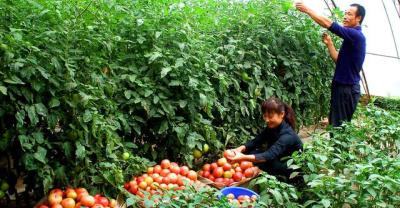
The most complete vegetable planting schedule is here, with sowing time suggestions for all four seasons worth saving
No matter what you do, there is an order of priority, and vegetable planting is the same. Some vegetables should be planted in spring, some should be planted in winter, and some...
-

Analysis of the Current Status of Carp Farming and Countermeasure Suggestions
1 Morphology and Characteristics of Carp Carp belongs to the family Cyprinidae. The carp body is laterally compressed and thick, forming a spindle shape, with a body length of up to 120 cm. Body color varies among different varieties, ...
条件筛选