Key Points for Organic Cultivation of Ryegrass as Green Manure
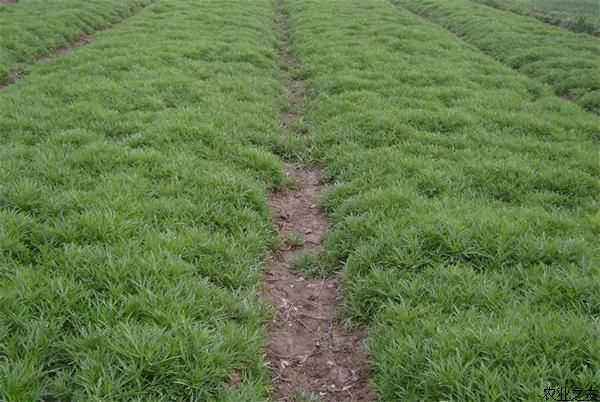
Ryegrass (referring to Italian ryegrass) is a biennial herbaceous forage grass, generally with a growth period of 1 to 2 years. It has well-developed fibrous roots, grows in clumps at the base, and reaches a plant height of 90 to 130 cm. The leaves are long and relatively wide, dark green and glossy, drooping in an arc. Ryegrass prefers a mild and humid climate and fertile soil, and is also suitable for clay soil and red soil. The most suitable soil pH is 6 to 7.
Ryegrass has excellent quality and good palatability. Not only do cattle, sheep, pigs, rabbits, geese, chickens and other livestock and poultry enjoy eating it, but it is also a good feed for grass carp. Ryegrass has great yield potential. Under conditions of good water and fertilizer and relatively early sowing, fresh grass yield per mu can reach about 10,000 kg. Under ordinary fertilization and management levels, the yield per mu is also around 5,000 kg.
Sowing period: Ryegrass can be sown in both spring and autumn. Autumn sowing allows more harvests and higher total yield; spring sowing can extend the harvest period and the grass is fresh and tender, but the total yield is lower. The sowing period for autumn sowing is from early September to mid-to-late November, and for spring sowing it is in early February.
Sowing operation: Before sowing, apply 1,000 to 1,500 kg of pig pen manure per mu. If there is no pig pen manure or other organic fertilizer, 25 to 30 kg of calcium magnesium phosphate fertilizer per mu can be applied as base fertilizer. After fertilizing, plow and prepare the land into beds. Ryegrass seeds are relatively small, so the bed surface is required to be level without large clods of soil. Sowing can be done in rows or by broadcasting, but for ease of management, row sowing is preferable. The seeding rate is about 1.5 kg per mu. If there is little rain during the sowing period or the soil is relatively dry, the seeds can first be soaked in clean water for 2 to 4 hours to promote germination and increase the seedling survival rate.
Management: During the seedling stage of ryegrass, timely cultivating and weeding should be carried out. After the peak tillering stage, when the rows have closed and shaded the ground, weeding can be stopped. After each harvest, a small amount of nitrogen fertilizer should be applied to accelerate regrowth and increase yield. During the seedling stage, attention should be paid to damage from cutworms and mole crickets. If found, use “Dusiben” pesticide for control.
Harvesting: The grass layer height for harvesting ryegrass is about 30 cm. The timing, frequency and yield of harvest are related not only to fertilizer and water management conditions but are also greatly affected by the sowing period. For early autumn sowing, 1 to 2 cuts can be made within the year, and about 4 cuts can be made from the Beginning of Spring to Grain Full the following year. For October sowing, with good management, 1 cut can be made within the year and 2 to 3 cuts after the new year. For spring sowing, 3 cuts can be made by early June. Farmers can reasonably arrange the sowing period according to their livestock and poultry raising situation.