A detailed explanation of the definition, methods and significance of rational fertilization
How do you carry out rational fertilization? Do you know? Do not fertilize randomly, wasting fertilizer and preventing crops from absorbing it well. So let us take a look together.
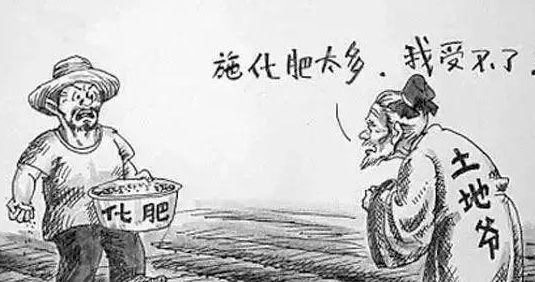
For a long time, under the public fertilizer production and marketing system, a low fertilizer price policy was adopted to reduce the burden on farmers, especially since the mid-1970s, when fertilizer resources became abundant and private fertilizer entered the market to compete, so farmers could freely choose the fertilizer they bought. In addition, because of the shortage of rural labor and high wages, in order to save on fertilization labor costs, surface broadcasting and the practice of applying fertilizer in few applications but large amounts led to relatively high fertilizer use and waste, and also had negative effects on environmental protection, arousing widespread public concern.
In order to reduce farmers' fertilization costs, the government promoted rational fertilization measures at the technical level, educating and advising farmers to fertilize rationally according to the fertilizer application rates and methods recommended by the fertilizer requirement diagnosis services of agricultural technology units, so as to reduce fertilization waste and curb the costs increased by fertilizer price rises. According to years of trial and demonstration results from various agricultural experiment and improvement stations, fertilizing according to the recommended rates from fertilizer requirement diagnosis has no effect on yield and quality, and may even have the benefit of increasing yield or improving quality.
Crops absorb various nutrient elements from the soil in differing amounts. Those needed in larger amounts include nitrogen, phosphorus and potassium, which are called the three essential elements. Because the three essential elements have an enormous impact on crop production and product quality, and also account for the largest part of fertilization costs, the application rate of the three essential element fertilizers, the application methods and the choice of fertilizer types are important topics in crop fertilizer management. Generally speaking, short-term crops can have fertilizer element application rates recommended based on soil analysis and measurement, while long-term crops still require plant (leaf) analysis and diagnosis before reasonable fertilization rates can be recommended.
Silicon, magnesium and calcium, which are needed in smaller amounts, are called secondary elements, and their use often needs to be selective according to crop and soil characteristics. According to soil reaction measurement results, in acidic soil the use of calcium- and magnesium-containing lime materials is quite important, but some acid-loving crops such as tea and pineapple do not need it except in extremely strongly acidic soil (pH below 4.5); acidic paddy fields need silicon-containing fertilizers, such as calcium silicate slag.
Iron, manganese, copper, zinc, molybdenum, boron and others, which are needed in very tiny amounts, are "trace elements." In general, their content in soil should be sufficient, but locally and regionally there may be deficiencies of trace elements. Once a certain element is deficient, it greatly affects growth and yield, so the use of such trace elements cannot be ignored. However, when trace elements are deficient, they may only be applied after confirmation based on their symptoms and analytical diagnosis. They must not be applied arbitrarily, so as to avoid toxicity or soil contamination.
Whether each element is needed and how much should be used depends on the application of soil analysis and plant (leaf) nutritional diagnosis techniques. For many years, agricultural experiment and improvement stations and other agricultural academic institutions in various regions have conducted many related trials and studies, establishing data such as the concentration of different elements in various crops, as the basis for recommending fertilization in crop fertilizer requirement diagnosis services.
Fertilization is an effective way to increase the yield and quality of agricultural products, but the required fertilizer types, amounts and application methods should also be recommended in coordination with crop categories, cultivation management and other applied scientific diagnostic techniques, so as to achieve the purpose of fertilization and also reduce the impact on the environment. Therefore, rational fertilization means being "meticulous down to every jin" in the use of fertilizer, and not "asking for fifty cents but giving a dollar."