-

What are the tree species characteristics of the dawn redwood? Read this one article to understand
The tree species characteristics of the dawn redwood are: it is a deciduous tree of the Taxodiaceae family. It can reach a height of more than 35 m, with a diameter at breast height of 2.5 m. The trunk is upright at the top, and the base is often swollen; the crown is conical. It is a precious tree species unique to China. It is an ancient relict plant. The dawn redwood is highly adaptable, but it prefers a mild and humid climate and deep, fertile, moist soil. Drought, barrenness, low temperatures and saline-alkali conditions are not conducive to the growth of the dawn redwood. The wood of the dawn redwood has straight grain, is light and soft, has little difference in shrinkage, and is easy to process. It is suitable for timber for construction, furniture, farm tools, ships and so on, and can also be used as a raw material for papermaking. At the same
-
How to make Candied Golden Dates: master the sugar-syrup technique to pull sugar threads with ease
[Ingredients] 400 g red dates, 75 g hawthorn cake, 150 g white sugar [Method] 1. Wash the red dates, boil until 80% cooked, then remove and drain; peel them and poke out the pits; 2. Cut the hawthorn cake into short strips, insert them into the date flesh, and coat evenly with flour; 3. Deep-fry the red dates in oil heated to 80% hot until golden brown, then remove and drain the oil; 4. Heat the oil in the wok to 40% hot, add the white sugar and stir-fry until golden brown, quickly add the red dates and toss to coat evenly, then pour onto an oiled plate and serve.
-
Why do mushrooms sporadically appear before the mycelium has fully spread
Normally, after the mycelium has fully spread, fruiting begins after a few days of recovery. But sometimes fruiting bodies appear when the mycelium has only spread through 2/3, or even 1/2, of the mushroom log, which is abnormal. Some people advertise that their spawn produces mushrooms before the mycelium has fully spread as a superior "early-maturing, high-yielding spawn," but that is deceptive nonsense; in reality, when this happens, it is a sign of spawn degeneration. There are also external factors, such as: (1) using too much spawn, so old spawn blocks produce mushrooms. (2) packing the substrate too tightly, and the cultivation bag
-

Detailed Explanation of Key Points for Spring Chicken Raising Management, a Must-Read for Chicken Farmers
Key Points for Spring Chicken Raising Management
-
Detailed Explanation of Silkworm Egg Surface Disinfection Technology, a Must-Read for Silkworm Farmers
The purpose of egg surface disinfection is to kill pathogenic microorganisms attached to the egg surface, avoiding disease in newly hatched silkworms caused by eating the eggshell. For spring silkworm eggs, disinfection is best carried out 1 to 2 days before hatching. For autumn silkworms, it is best done on the afternoon 1 day before hatching, and on that same day the eggs are taken directly to the mountain to hatch. First, bathe the eggs in a 0.5% sodium hydroxide aqueous solution at a liquid temperature of 18 to 20°C, washing the eggs for 1 minute to remove the adhesive material on the egg surface. Then rinse clean with water, drain off the moisture, and carry out egg surface disinfection. Mix 36% to 38% formaldehyde stock solution, 36% concentrated hydrochloric acid, and water in a ratio of 1:
-
Why Are Fragrant Pears So Precious? You'll Understand After Reading This
Korla fragrant pears have a history of more than 2000 years. Their shape is like a spindle, and the skin is bright and glossy, with a faint blush amid the emerald green, making them pleasing at first sight. Fragrant pears have thin skin and high water content, so great care must be taken during harvesting. If the picker's nails are long and slightly scratch the pear during picking, such pears cannot be sold as commercial pears. To avoid bruising more fragrant pears, ripe fragrant pears are best picked immediately. Before packaging, fragrant pears must also be graded. Special-grade pears are those above 120g, first-grade pears are those above lO
-
What are the new perspectives on disease prevention in large-scale rabbit farms? Worth reading
Play down treatment and optimize the rabbit herd. Traditional rabbit farming emphasizes treatment over prevention, often turning a rabbit farm into a sanatorium for sick rabbits. To change this situation, some experts have proposed the "five no-treatment" rule for sick rabbits: do not treat rabbits that cannot be cured, do not treat rabbits whose treatment cost is high, do not treat rabbits whose treatment is time-consuming and labor-intensive, do not treat rabbits whose economic value after recovery is not high, and do not treat rabbits that are highly contagious and harmful. Practice has proved that after rabbit farms implemented this system, the health status of the rabbit herd improved markedly, virulent infectious diseases were effectively controlled, and medical costs
-
Prevention and treatment of winter diarrhea in pigs, a must-read for pig farmers
Winter diarrhea is epidemic diarrhea in pigs during winter. The peak incidence period is from mid-December each year to mid-January of the following year; the disease onset is acute, spreads rapidly, and has a wide epidemic range; the incidence rate is high and the mortality rate is low, severely affecting the growth and development of pigs. Symptoms The incubation period of the disease is generally 12 hours to 18 hours. After adult pigs are infected, watery diarrhea appears. The feces are initially grayish white, gradually becoming yellowish green, with an unpleasant fishy odor. Abdominal distension, vomiting, and body temperature initially rises to 40°C to 41°C. Once diarrhea occurs, the body temperature drops, and the pigs are thirsty and eager to drink. Piglets within 10 days of age suddenly vomit
-

What are the cultivation requirements for Aconitum carmichaeli? Read this article to understand the growing techniques
Cultivation requirements for Aconitum carmichaeli
-
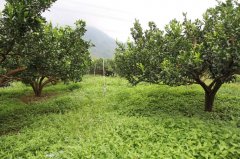
Orchard Sod Culture Techniques: Planting and Management Essentials
At present, many fruit growers engaged in organic and conventional cultivation have implemented sod culture, and their orchards present a scene of lush green, full of ecological beauty. However, implementing sod culture in orchards may bring quite a few troubles, such as possibly harboring disease vectors, competing with fruit trees for soil
条件筛选