-

Start soil moisture preparation for cotton early and seize favorable opportunities
Although there is still one to two months before cotton seedling raising and sowing, the current situation of consecutive drought across autumn, winter and spring has already posed a great threat to cotton planting this year, and based on past years, there is also very little precipitation in our province in March-April. In view of the current situation, Dong Hezhong, deputy director and researcher of the Cotton Research Center of the Shandong Academy of Agricultural Sciences, suggests that cotton farmers: this year's cotton planting should start early and prepare early, seize the opportunity for soil moisture preparation according to weather conditions, actively prepare and conserve soil moisture, fight drought and protect seedlings, and strive for full seedlings from one sowing and early development of strong seedlings. Selected
-
The recipe and detailed preparation steps for Three Fresh Steamed Dace Fish Balls
The so-called "three fresh" ingredients are loofah, king oyster mushroom and cloud ear fungus. Once combined with the flavor of dace, they better bring out its fresh sweetness, making this dish clean-tasting yet not bland, fresh yet not vulgar. Ingredients: one dace, loofah, king oyster mushroom, soaked cloud ear fungus, chopped scallions, diced cured meat, dried shrimp, cornstarch, pepper powder, chicken bouillon powder, etc. Method: 1. First fillet the dace, keeping the whole head, bones and tail aside for later use. 2. Cut the dace flesh straight into thin slices, add an appropriate amount of cornstarch, salt and pepper powder to the fish flesh, together with chopped scallions and cured
-
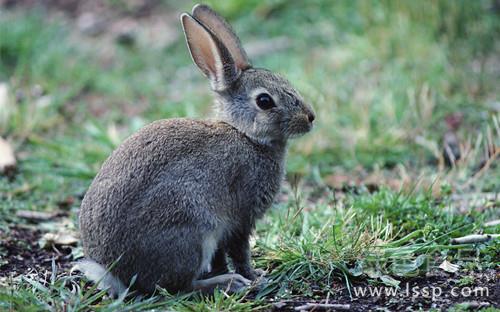
Rabbit epizootic enteritis is highly prevalent in winter; be on guard against refusal to eat, abdominal bloating, severe watery diarrhea and dehydration
Refusal to eat, abdominal bloating, severe watery diarrhea and dehydration; be on guard against rabbit epizootic enteritis in winter
-
A Bold Exploration of a New Technique for Transplanting Bare-Root Cotton Seedlings
Xinchang Town in Shishou City is located on the north bank of the Yangtze River, bordering Jiangling County. It is the largest town for early melons in Hubei Province and the birthplace of early chili pepper seedling cultivation in Hunan and Hubei. It was once the township in Hubei Province with the largest area, the highest benefits, and the best influence for intercropping cotton with melons and peppers. On this land where melons delight guests and peppers reflect the colors of spring, the year-round cotton planting area is about 24,000 mu. In recent years, under the promotion and guidance of agricultural technical service departments, some cotton farmers have been willing to accept new technologies and have actively and boldly explored new methods of cotton seedling cultivation. On the basis of substrate seedling cultivation and water-floating seedling cultivation in the previous two years, this year they
-
Methods for Site Selection and Land Preparation for Angelica sinensis Cultivation
1. Seedbed site: According to the growth habits of Angelica sinensis seedlings, choose a plot surrounded by mountains on all sides, with loose, fertile soil, high humus content, sheltered from the wind, with short sunlight duration, and cool and moist conditions for raising seedlings. Angelica sinensis seeds are small, and the young sprouts have weak soil-breaking strength, so fine land preparation is required to ensure normal emergence. Plow the land in the previous year to allow the soil to fully weather, or plow in April to May of the current year, preferably three times. The first and second plowing should be 24-30 cm deep, and the third shallow plowing 9-15 cm. Dry and burn the weeds, spread them out and plow them into the soil, pick out all stones and unburned weeds, break up clods, level the ground, and then apply 5000 kg of farmyard manure per mu as base fertilizer. Then level and make beds along the mountain contour, with a bed width of 100-120 cm and a bed height of about 25 cm. Dig drainage ditches around the perimeter to facilitate drainage, with a ditch width of 18-24 cm and a depth of 15 cm. Raising seedlings under such conditions results in dense plant growth, mutual shading, leaves growing upward, less sugar accumulated through photosynthesis, more nitrogen absorbed from the soil, and a low bolting and flowering rate. If a site with abundant sunlight and dry, barren soil is chosen for seedling raising, even with sufficient manure and fine land preparation, the strong sunlight and dry soil will result in fewer seedlings emerging, leaves spreading flat, a large nutritional area for plants, high sugar accumulation through photosynthesis, drier soil, less nitrogen absorbed from the soil, and consequently a higher bolting and flowering rate. This should be given serious attention.
-
Key Technical Points for the Early-Stage Operation of Edible Mushroom Growing Substrate
Preparing a good edible mushroom growing substrate is very important, as it directly affects the growth of the edible mushrooms and the grower's returns. Here I will use the preparation of growing substrate with Jinbaobei fermentation agent as an example to introduce the key operating points. 1. Material preparation: Prepare Jinbaobei edible mushroom substrate fermentation aid at 0.1% of the substrate weight (that is, one part per thousand; if discarded substrate is being reused, it may be added at 0.2%); pre-soak or rinse the crushed or cut main material in advance to pre-wet it, and adjust the moisture to 60-70% and the pH to about 8. If the moisture is too low, it is not conducive to the rapid reproduction of functional microorganisms,
-
Detailed explanation of the specific operation techniques for flower and fruit thinning in pear trees
1. Master the timing of flower and fruit thinning. Flowering, fruit set, and the number of cells in young fruit are mostly determined by stored nutrients. Remove as many excess flowers and fruits as possible to reduce wasteful consumption and concentrate all nutrients on the flowers and fruits that should be retained, so they can grow into large fruits. Therefore, from this reasoning, earlier thinning is better: thinning flower buds is better than thinning flowers, and thinning flowers is better than thinning fruits. However, decide whether to thin buds, thin flowers, thin fruits, or combine all three according to the year's flower quantity, weather during the flowering period, tree vigor, fruit-setting ability, and other conditions. For pear orchards with a large flower quantity (an "on" year), good weather, and a heavy workload, you can
-
Why is the nipplefruit also called "five generations under one roof" and "golden fruit"
Aliases: five generations under one roof, golden fruit, five sons paying birthday respects. Family and genus: an evergreen small shrub of the genus Solanum in the family Solanaceae. Morphological characteristics: the fruit of the nipplefruit is golden yellow with a peculiar shape; its flowering and fruiting period is summer and autumn, and the fruiting period is long, especially after leaf fall in early winter, because its fruit does not change color or shrink, making it unique and attractive. It is an upright branching small shrub, usually grown as an annual, with a plant height of 0.5--1.5 m, relatively sparse leaves, and the whole plant covered with waxy yellow flat spines. Its flowering and fruiting period is summer and autumn; before flowering, the flower buds often droop, and when fully open they are slightly upright, with 5 purple flowers
-
Detailed Explanation of the Preparation Method and Uses of Ganoderma Sterols
This project relates to a pharmaceutical preparation containing an organic active ingredient, in particular the preparation of a Ganoderma sterol extract obtained by extraction from Ganoderma, whose main component is white flaky crystals named 24-methyl-cholesta-5,22-dien-3β-ol; this sterol compound has outstanding efficacy in the preparation of drugs with an anti-cerebral-ischemic effect against that caused by various diseases, in particular drugs with an effect against hypoxia of cerebral cortical neurons.
-
Several Simple Preparation Methods of Green Fish Medicines
In the prevention and treatment of fish diseases, if local green plants or Chinese medicinal herbs can be used to prepare fish medicines, it can not only prevent and treat common diseases such as red-skin disease, enteritis, and gill rot, but also save costs. Several simple preparation methods of green fish medicines are introduced below: 1. Sanhuang powder: prepared from rhubarb, Phellodendron amurense (Amur cork tree bark), and Scutellaria baicalensis (Baikal skullcap) in a ratio of 5:3:2. When in use, add 1 kg of "Sanhuang powder" and 0.4 kg of table salt to every 10 kg of fish feed, add an appropriate amount of water, and make granular medicated bait for feeding. Once a day, for 5 consecutive days; the treatment effect is significant in the early stage of the disease.
条件筛选