-
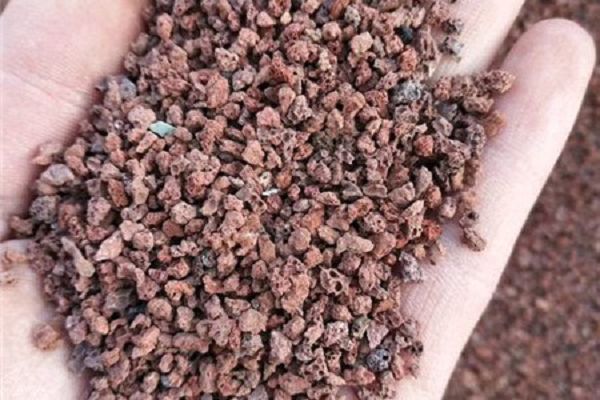
Can orchids be grown in pure soil, and what are the considerations for using soil to grow orchids?
Can orchids be grown in pure soil, and what are the considerations for using soil to grow orchids?
-

-
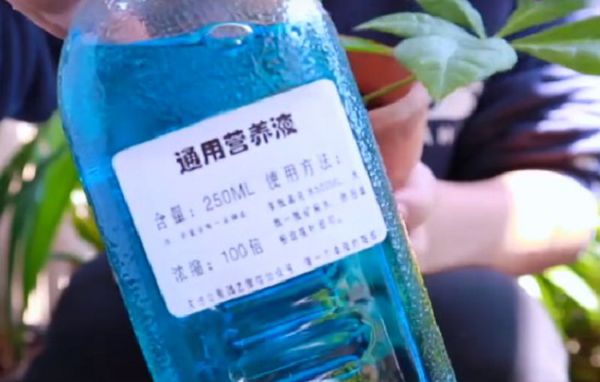
How to fertilize a money tree in summer? Improper operation easily causes root rot and yellow leaves
Fertilizing a money tree in summer requires attention; improper operation easily causes root rot and yellow leaves
-

What to Do About Tulip Variety Degeneration? Detailed Solutions
Imported tulips often perform well in the first year of bulb growth, with large flowers and vivid colors. Starting from the second year, the flowers become smaller, the colors turn dull, the leaves and petals show color-breaking patterns, and the plants grow poorly. This is mainly due to virus damage, commonly mosaic virus and color-breaking virus, which cause yellow and white stripes and irregular spots on the leaves. In severe cases, the leaves rot and the flower colors become mottled. Control methods: 1. Use virus-free plants obtained through shoot-tip culture when planting, or choose varieties with strong virus resistance; 2. Promptly
-
Key Technical Points for Site Selection and Land Preparation in Lily Cultivation
Well-drained, deep sandy loam soil should be chosen. For cultivation in hilly areas, gentle slopes with a gradient below 5 degrees should be selected. Continuous cropping is taboo. Continuous cropping of lilies leads to severe pests and diseases and reduced yield. After selecting the site, soil chemical treatment should be carried out in conjunction with soil plowing to reduce pests and diseases. Use 2.5-5 kg of Jialiu powder or 2-2.5 kg of carbofuran per mu to kill underground pests. Use 1 kg of 50% carbendazim wettable powder diluted in 500 kg of water per mu to spray the soil for sterilization. Deep plow and prepare the land, adapt to local conditions, and apply sufficient base fertilizer. Per
-
Detailed Explanation of Lily Scale Propagation Methods and Operation Steps
There are four lily propagation methods: scales, bulbs, bulbils, and seeds. Propagation by seeds and bulbils flowers late and is prone to variation. Bulb seedling raising flowers early, but the propagation coefficient is low, the amount of planting material used is large, and the cost is high. Therefore, for large-scale seedling raising, scale propagation is mostly used. 1. Seed selection. For lily scale propagation, select excellent varieties, choose fully mature, pest- and disease-free bulbs with plump scales, and peel off the thick, intact outer scales as seed material. 2. Seedbed preparation. For lily scale seedling raising, the seedbed requires
-
Detailed Explanation of Lily Propagation Techniques: Common Methods and Key Operation Points
Mainly propagated by scales, bulbs and bulbils. I. Cultivating seed bulbs (1) Scale propagation When lily leaves begin to turn yellow in autumn, select robust disease-free plants, dig up the bulbs, cut off the base to separate the scales, take the inner-layer scales, and from September to October on prepared beds, open furrows and plant them at a plant spacing of 3 cm and a row spacing of 17 cm, cover with 3 cm of soil, and cover with grass to preserve moisture. After planting, small bulbs grow from the cut surface, develop into new plants in the spring of the 2nd year, and in autumn are either transplanted for final planting or continuously cultivated for 3 years; the large ones are dug up for
-
Key Points and Detailed Operation Methods of Lily Whitening Processing Technology
Lily is one of the important health vegetables. The traditional processing method is to blanch the harvested lily and then dry it in the sun. Lily dried by this method still has a relatively high moisture content, is not resistant to storage, and is prone to discoloration. In the past, people used sulfur fumigation to maintain the whiteness of lily, but lily processed by this method is harmful to people's health. Now the dehydration method is used to dry lily, the moisture content is low, and after color protection, blanching and dehydration, discoloration is not likely to occur, which better solves the quality and safety problem of lily caused by sulfur fumigation.
-
Control Recommendations for the Overwintering Generation of the Box Tree Pyralid Moth
The box tree pyralid moth (Glyphodes perspectalis) is one of the important leaf-eating pests of forestry plants in this district, mainly damaging Chinese box (Buxus sinica var. parvifolia) and Japanese box (Buxus bodinieri). Since early spring this year, the whole district has carried out 2-3 rounds of comprehensive control against this pest, effectively bringing the damage under control; however, since the damage period of this pest is long and can last until the end of October, continued follow-up monitoring of this pest is still needed. According to monitoring at two sites, the Anting Ginkgo Garden and the Fangtai Flowers and Plants Horticultural Farm, a moth peak appeared under the forecasting lamp in early to mid-September, with the highest moth numbers on September 7-9, averaging 22.3 moths per lamp per day
-
Site preparation and planting measures for mixed forests of strip mulberry and black locust in converting farmland back to forest on the plains
Black locust uses pit-shaped site preparation, with a specification of 80 cm by 80 cm by 80 cm, a plant-to-row spacing of 3 m by 5 m, and a planting density of 45 trees per 667 sq m; plant in spring and autumn, apply sufficient base fertilizer before planting, and water after planting; strip mulberry is planted between the black locust, using pit-shaped site preparation, and planted in spring, the rainy season, or autumn.
条件筛选