-
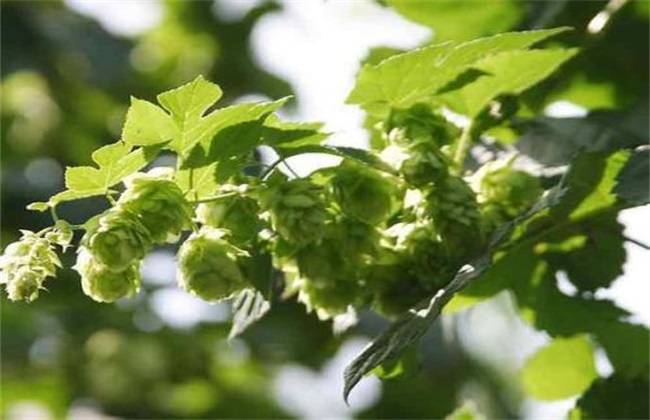
How to Propagate Hops? Detailed Explanation of Propagation Methods and Key Operation Points
Propagation Methods of Hops
-

Detailed Explanation of GAP Standardized Planting Operation Procedures for Asarum heterotropoides
I. Site Selection and Land Preparation 1. Site Selection Select a natural forest cutover site that meets the Grade II standards of GB5618-1995, with an irrigation water source, and water quality that complies with the "Farmland Irrigation Water Quality Standard GB15084-92," far from main traffic roads, surrounded by natural forest and planted forest on all sides, where a dust-proof forest belt may be established, with no pollution sources nearby. 2. Land Preparation Clear debris from the field, plow twice with a tractor to a depth not exceeding 30 cm, then harrow 5 times, leveling and pulverizing the soil. Make raised beds by hand; seedbeds 1.2 m wide, 25 cm
-
Detailed Explanation of Methods for Site Selection, Land Preparation, and Transplanting of Angelica sinensis
(1) Site selection and land preparation The seedling-raising plot should be chosen as a cool, fertile, and moist virgin wasteland or previously cultivated land, with loose, fertile sandy loam being preferable; the cultivation plot should be chosen as fallow land or secondary wasteland with deep soil layers. In mid-July, first cut down shrubs and weeds, spread them on the ground, and burn them, then deep-plow the land more than 25 cm, and let it weather and mature under the sun. Then, before planting, while preparing the land, apply 37,500 kg of decomposed stable manure per hectare and plow it into the soil as base fertilizer. Before sowing, shallow-plow once more and make raised beds 1.3 m wide, with furrow width 30 cm and bed height about 25 cm
-
Key Technical Points for Pre-Planting Preparation of Sexual Propagation of Gastrodia elata in Chongqing
Sexual propagation of Gastrodia elata uses hybrid seedling seeds of Gastrodia elata, propagated under the combined action of germination fungi and Armillaria mellea. The growth period of sexually propagated Gastrodia elata is one and a half years, that is, planted in June to July of the current year and harvested at the end of the second year. Its characteristics are small investment, high success rate, and stable yield. It is currently a relatively advanced high-yield cultivation technique for Gastrodia elata in China. 1. Selection of planting site. The growth of Gastrodia elata hardly requires sunlight, so it can be planted in basements, air-raid shelters, mountain streams and other places with certain ventilation conditions, as well as along courtyard edges, field edges, roadside edges, slope edges, forest edges
-
Detailed Explanation of Key Technical Points for Site Selection and Land Preparation in Goji Berry Cultivation
(1) Choose a nursery site with convenient irrigation, flat terrain, ample sunlight, deep soil layers, and well-drained sandy loam. In late autumn or early winter of the year before sowing, plow deeply 25-30 cm. While preparing the land, apply 2500-3000 kg of barnyard manure per 667 sq m, irrigate with winter water, and wait until the soil thaws 10 cm in the following spring. Then prepare the land again and harrow it fine, form raised beds 120-130 cm high, level the bed surface and break up the soil clods, ready for sowing or cutting propagation. (2) For the planting site, it is advisable to choose light loam or sandy loam with convenient drainage and irrigation, and a salt content below 0
-
Causes of Gastrodia elata trait degeneration and control methods
Degeneration of Gastrodia elata traits usually manifests as a decline in the yield of arrow gastrodia, with the individuals becoming smaller and slender; the yields of rice gastrodia and white gastrodia drop substantially, the tubers turn ginger-yellow or light brown, stress resistance is poor, and the original yield and traits cannot be fully expressed. The causes are generally as follows: 1. Multiple generations of asexual propagation. Degeneration generally begins to appear after 5 to 6 generations of asexual propagation, but the speed of degeneration differs when cultivated on different soils; degeneration is slower when cultivated on granite soil, followed by yellow-brown earth sandy soil parent material, and the acidic soil formed by the weathering of shale or limestone.
-
Key Technical Points for Site Selection and Land Preparation in Honeysuckle Cultivation
(1) For the seedling nursery, it is advisable to choose sandy loam soil close to a water source, convenient for irrigation, loose and fertile, and well-drained. After selecting the site, plow the soil deeper than 30 cm, harrow it fine and level it, and apply 1500-2000 kg of decomposed barnyard manure or compost per 667 sq m as base fertilizer. Then shallow plow and harrow once, and form beds 100-200 cm wide and 20 cm high. Use these as seedbeds for cutting propagation and sowing propagation. (2) For the planting site, use wasteland slopes, field edges, ditch edges, and in front of and behind houses
-
Methods for Site Selection and Land Preparation for Angelica sinensis Cultivation
1. Seedbed site: According to the growth habits of Angelica sinensis seedlings, choose a plot surrounded by mountains on all sides, with loose, fertile soil, high humus content, sheltered from the wind, with short sunlight duration, and cool and moist conditions for raising seedlings. Angelica sinensis seeds are small, and the young sprouts have weak soil-breaking strength, so fine land preparation is required to ensure normal emergence. Plow the land in the previous year to allow the soil to fully weather, or plow in April to May of the current year, preferably three times. The first and second plowing should be 24-30 cm deep, and the third shallow plowing 9-15 cm. Dry and burn the weeds, spread them out and plow them into the soil, pick out all stones and unburned weeds, break up clods, level the ground, and then apply 5000 kg of farmyard manure per mu as base fertilizer. Then level and make beds along the mountain contour, with a bed width of 100-120 cm and a bed height of about 25 cm. Dig drainage ditches around the perimeter to facilitate drainage, with a ditch width of 18-24 cm and a depth of 15 cm. Raising seedlings under such conditions results in dense plant growth, mutual shading, leaves growing upward, less sugar accumulated through photosynthesis, more nitrogen absorbed from the soil, and a low bolting and flowering rate. If a site with abundant sunlight and dry, barren soil is chosen for seedling raising, even with sufficient manure and fine land preparation, the strong sunlight and dry soil will result in fewer seedlings emerging, leaves spreading flat, a large nutritional area for plants, high sugar accumulation through photosynthesis, drier soil, less nitrogen absorbed from the soil, and consequently a higher bolting and flowering rate. This should be given serious attention.
-
Detailed Explanation of the Preparation Method and Uses of Ganoderma Sterols
This project relates to a pharmaceutical preparation containing an organic active ingredient, in particular the preparation of a Ganoderma sterol extract obtained by extraction from Ganoderma, whose main component is white flaky crystals named 24-methyl-cholesta-5,22-dien-3β-ol; this sterol compound has outstanding efficacy in the preparation of drugs with an anti-cerebral-ischemic effect against that caused by various diseases, in particular drugs with an effect against hypoxia of cerebral cortical neurons.
-
Key Points and Operation Methods of Goji Berry Pruning Techniques Explained
I. Pruning during the young stage 1. Trunk-establishing pruning: Before the seedlings sprout, cut off the sprouts below 40 cm (branching zone) on the main trunk base stem, and cut the top at a plant height of 60 cm to 70 cm. 2. Summer pruning: From late April to late July, at intervals of 15 days, cut off the sprouting shoots within the branching zone of the main trunk, and cut back the lateral branches retained on the branching zone at 20 cm to 25 cm to promote the sprouting of secondary fruiting branches; among the vigorous branches growing upward from the lateral branches, select and retain 2 to 3 branches growing in different directions from the main branch, and cut them at 30 cm
条件筛选