-

How to grow rat tail cactus well? A full breakdown of the latest tips
The rat tail cactus is one of the earliest cactus species used for ornamental cultivation. Also known as medicinal sage, salvia, and so on, it is a succulent plant of the genus Aporocactus in the cactus family, native to the high-altitude desert regions of Mexico. Its long modified stems closely resemble a rat's tail and are very unusual.
-
How to Propagate the Rat Tail Cactus? Grafting Methods and Care Tips
The rat tail cactus (Aporocactus flagelliformis) is also a member of the cactus family. Its ornamental value is very high, and the flowers it produces are very charming. Its vitality is extremely tenacious, and its propagation rate is very fast. Keep one pot at home, and before long, it will multiply into many pots. So exact
-
How to Grow and Care for the Rat Tail Cactus: Grow It This Way for Fast, Full Pots
A furry rat tail cactus filling its pot is a truly delightful sight, but if you want your rat tail cactus to fill the pot, it takes not only the accumulation of time, but also the right growing methods and techniques, which are key factors. You should know that going with the flow is the fastest way. ⟦4 <p>A furry rat tail cactus filling its pot is a truly delightful sight, but if you want your rat tail cactus to fill the pot, it takes not only the accumulation of time, but also the right growing methods and techniques, which are key factors. You should know that going with the flow is the fastest way.</p><p></p><p><strong>Rat Tail Cactus Growing Methods and Precautions</strong></p><p>1. Soil</p><p>The rat tail cactus (Aporocactus flagelliformis) likes fertile soil that drains well and is airy; it can be mixed from leaf mold, sand and the like.</p><p>2. Temperature and Light</p><p>The rat tail cactus likes a warm growing environment and can tolerate shade. The overwintering temperature must be above 10°C, and it should be moved indoors in time and placed in a spot indoors with plenty of sunlight; the indoor temperature must not be lower than 10°C, and it can be moved outside only after Qingming Festival. In summer, keep it ventilated and place it outdoors to grow. Pay attention to shading and cooling.</p><p></p><p>3. Watering</p><p>Avoid rain exposure, otherwise it will cause root rot. In summer, maintain a certain humidity; never let it stay dry for a long time, as this is not good for the growth of the rat tail cactus. In winter, keep it relatively dry and control watering, following the principle of not watering until dry, and watering thoroughly when you do. The soil should not be too wet. After flower buds appear, reduce the amount of watering to avoid the buds dropping. During the growing season, spray water frequently to keep it moist and increase the indoor air humidity.</p><p>Fertilizing the rat tail cactus: the rat tail cactus should be given liquid fertilizer once every two weeks, mainly organic fertilizer; no fertilizing is needed in winter and summer.</p><p>4. Pest and Disease Prevention</p><p>The rat tail cactus is prone to damage by red spider mites; the affected parts are usually yellow-brown, and dimethoate can be sprayed for prevention.</p><p>5. Repotting</p><p>The rat tail cactus should be repotted twice a year, after flowering; if the roots fill the whole pot, move it to a pot one size larger. Soil for the rat tail cactus: the rat tail cactus likes fertile soil that drains well and is airy; it can be mixed from leaf mold, sand and the like.</p><p></p><p><strong>How to Grow the Rat Tail Cactus for Fast, Full Pots</strong></p><p>The rat tail cactus is a succulent in the cactus family; it has long stems like rat tails, and its red flowers bloom on these rat tails, which is very unusual. The rat tail cactus likes a warm, humid environment with plenty of sunlight. During the summer growing season, ensure sufficient water, and it will easily grow into a cascading waterfall.</p><p></p><p><strong>Pests and Diseases of the Rat Tail Cactus and Their Control</strong></p><p>1. Common Diseases</p><p>The most common disease of the rat tail cactus is spot disease. When spot disease appears on the rat tail cactus, it mainly shows on its stems, where diseased spots appear and gradually expand; in severe cases it will rot and wither, threatening the entire plant.</p><p>Control method: Generally, when spot disease appears on the rat tail cactus, measures must be taken promptly for control. Spraying with chemicals is a commonly used method. Spraying with zineb is sufficient; preferably use a 600-fold dilution of 65% zineb wettable powder.</p><p>2. Common Pests</p><p>The most common pest of the rat tail cactus is the red spider mite. The damage from red spider mites is also relatively serious, so red spider mites must be controlled promptly.</p><p>Control method: When growing the rat tail cactus, observe the plant's growth condition frequently so that pests and diseases can be found in time. It is best to spray some dimethoate emulsifiable concentrate frequently for prevention. When pests are found, kill them promptly so as not to affect the plant's growth.</p><p></p><p><strong>Tips for Getting the Rat Tail Cactus to Bloom</strong></p><p>1. Pruning</p><p>Each time winter is about to end, prune it by cutting off overly dense and short stems to ensure the density in each pot does not become too great.</p><p>2. Fertilizing When spring arrives and the weather turns warm, fertilize it to ensure sufficient nutrients. Also remember to place it in a spot with plenty of sunlight for growing, as this makes it easier to bloom.</p><p></p><p>Cactus blooming and filling the pot are both things people look forward to very much. When growing the rat tail cactus, besides mastering the techniques for filling the pot, seeing the rat tail cactus bloom is also very fulfilling, so doing the blooming tips in this article at the appropriate time will let us reap unexpected surprises!</p>
-
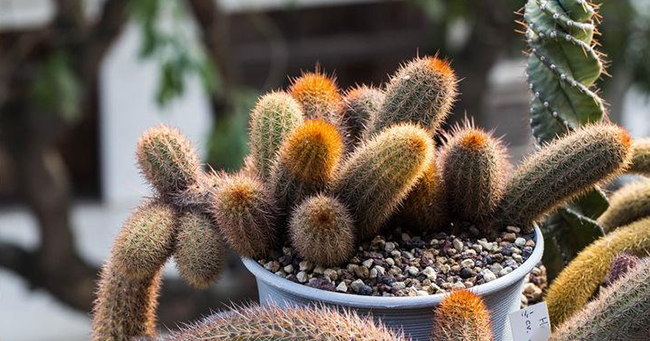
How to Grow the Golden Rat Tail Cactus: A Detailed Guide to Cultivation Methods and Precautions
Golden Rat Tail Cactus (Cactus) The Golden Rat Tail Cactus is a perennial succulent plant in the Cactaceae family. Its place of origin is Mexico in the Americas, and its stems are slender and soft. The flowers are brilliantly colored, and it can be grown as a hanging plant to create a unique display. The flowering period is from April to June. Morphological characteristics of the Golden Rat Tail Cactus: the stems are slender and cylindrical, 1.5-2.5 cm thick, up to 1.5 m tall, much branched
-
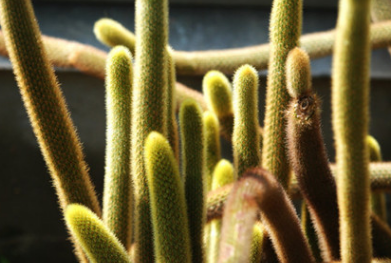
Propagation Methods and Common Pest Control for the Golden Rat Tail Cactus
The Golden Rat Tail Cactus, also known as the Golden Woolly Torch Cactus, thrives in a sunny environment. It tolerates drought and partial shade, but dislikes waterlogged conditions. The optimal growing temperature is 20-25°C, and it can withstand low temperatures of 4°C. It is robust and undemanding about soil, growing well in ordinary flowering plant potting mix.
-
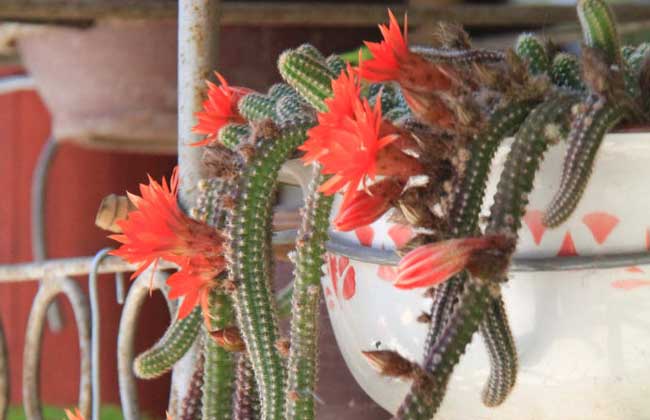
How to grow rat tail cactus well? A detailed guide to practical care methods
How to grow rat tail cactus well?
-
How to propagate the golden rat tail cactus by cuttings? Master these key points
The stems of the golden rat tail cactus are slender, generally twisted and pendent. In its place of origin, the golden rat tail cactus can reach up to 2 m tall, while under cultivation it generally grows about 20-30 cm. The golden rat tail cactus is not difficult to cultivate, and artificial propagation can be done by cuttings
-
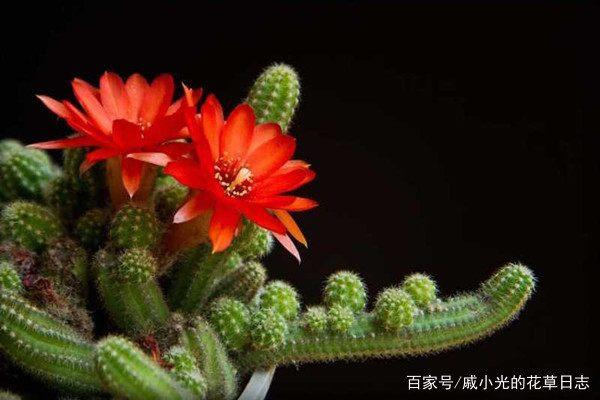
Grow your potted rat-tail cactus this way for lush branches and big, beautiful blooms
Many years ago, when I first saw a potted rat-tail cactus, I did not know its scientific name. What I saw was a pot full of long and short stems, tinged with faint purple and a bit of pale green, like furry, chubby worms that looked like big hairy earthworms, ...
-
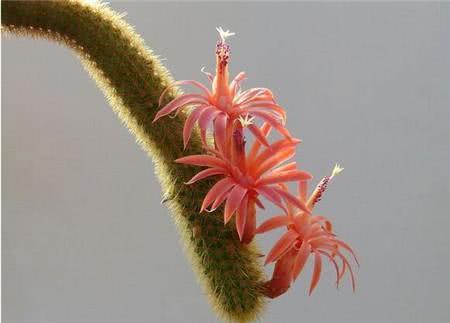
What kind of succulent plant is the golden rat tail cactus?
The golden rat tail cactus is a perennial succulent plant in the cactus family. It originates from Mexico in the Americas, and its stems are slender and soft. Its flowers are brightly coloured, and it can be grown as a hanging plant to create a striking display, with a flowering period from April to June. The stems are slender and cylindrical, 1.5-2.5 cm thick, and up to 1...
-
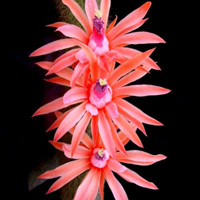
The adaptability of the golden rat-tail cactus is surprisingly strong
The golden rat-tail cactus is a perennial succulent plant of the Cactaceae family, with slender creeping stems densely covered with yellowish-brown short spines. Young stems are bright green, later turning gray. Flowers are pink. The crested form of the golden rat-tail cactus, also known as golden rat-tail crest, is formed by the irregular growth and extension of the growing point of the golden rat-tail column cactus.
条件筛选