How to grow rat tail cactus well? A detailed guide to practical care methods
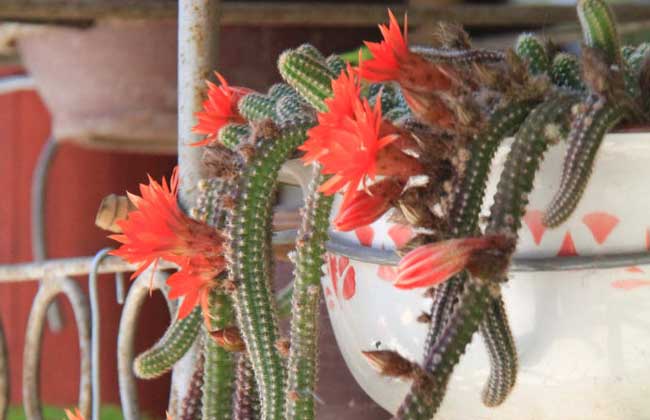
The rat tail cactus is one of the earliest cactus species used for ornamental cultivation, also known as medicinal sage, salvia, and so on. It is a succulent plant of the genus Aporocactus in the family Cactaceae, native to the high mountain desert regions of Mexico. Its long modified stems closely resemble rat tails and are very peculiar. Let us take a look below at how to grow rat tail cactus well!
Growth habits of the rat tail cactus
The rat tail cactus prefers a warm, humid environment with plenty of sunlight. It is not cold-tolerant, and is relatively tolerant of shade and drought. The soil should be fertile, airy, and well-draining. In winter, the temperature should not be lower than 10°C. During the summer growing season, it needs plenty of water, and should be misted frequently to maintain high air humidity. Fertilize once a month. It prefers fertile, well-draining, airy soil, which can be made by mixing leaf mold, sand, and loam.
Propagation methods for the rat tail cactus
1. Cuttings: During the growing season, cut plump modified stems from the rat tail cactus as cuttings, cutting them into small sections 8-10 cm long. They should not be too short, as too short makes rooting difficult. After drying in the air for 1-2 days, insert them into a sand bed or peat soil, not too deep. The cutting medium should not be too wet; a water-holding capacity of 60-70% is suitable. Roots will form one month after insertion, and then they can be potted up. This method propagates quickly and is commonly used in production.
2. Grafting: Through grafting, the rat tail cactus can grow into a good hanging plant shape. Flat grafting and slant grafting can be used, and the best time for grafting is from May to September. Choose a branch of Pereskia that has not fully lignified, cut it off 2-3 cm from the branch, and whittle it into a cone about 1 cm long. Insert the base of a young, green rat tail cactus into the pointed cut of the rootstock, without tying. After grafting, pay attention to shading and controlling watering. Humidity should not be too high, otherwise the graft will fail. If the scion remains fresh and green after more than ten days, it has survived.
How to grow rat tail cactus well?
1. Potting soil: For the rat tail cactus, prepare potting soil with equal parts leaf mold, sandy soil, and loam, and mix in a small amount of sesame paste residue and bone meal as base fertilizer.
2. Humidity: When grown outdoors, the rat tail cactus should be placed in a spot with ample light and shelter from rain. When grown indoors, a certain humidity should be maintained in summer, and long periods of dryness must be avoided to prevent the modified stems from turning yellow and withering.
3. Light: When the rat tail cactus is grown outdoors in midsummer, it needs appropriate shading. When moved indoors in winter, it needs plenty of sunlight and reduced watering.
4. Watering: When watering the rat tail cactus, make sure to water thoroughly only after the soil has dried out. Do not let the soil become too wet, to avoid root rot. Especially after flower buds appear, water even more sparingly to avoid bud and flower drop. In winter, the soil must be relatively dry, and watering should be controlled.
5. Fertilizing: Fertilize the rat tail cactus once a month. During the growing period, apply liquid fertilizer once every 10-15 days to promote lush growth and large, brightly colored flowers.
6. Temperature: Potted rat tail cactus is generally moved indoors before Frost's Descent, and the room temperature should not be lower than 10°C. It is best to move it outdoors after Pure Brightness.
7. Pruning: The stems of the rat tail cactus are slender, creeping, and much branched. When potted, it needs a support frame or hanging basket cultivation, and the whole plant should be pruned to maintain a graceful shape.
8. Pests and diseases: Spot disease sometimes occurs on the stems of the rat tail cactus, and it can be sprayed with a 600-fold solution of 65% zineb wettable powder. For red spider mites, dimethoate can be sprayed regularly for prevention.