Grow your potted rat-tail cactus this way for lush branches and big, beautiful blooms
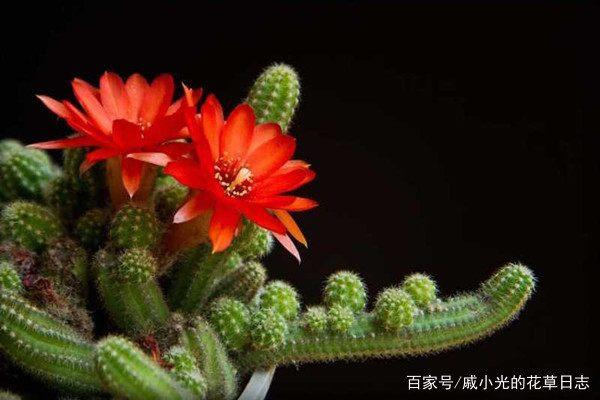
Many years ago, when I first saw a potted rat-tail cactus, I did not know its scientific name. What I saw was a pot full of long and short stems, tinged with faint purple and a bit of pale green, like furry, chubby worms that looked like big hairy earthworms, and also like fingers.
And when I saw it in bloom, it was even more astonishing. Could it really produce such beautiful flowers? The flowers, slightly orange amid the red, were delicate, bright, and brilliant, yet with a touch of simplicity. People often say that red paired with green is the most tasteless combination, but in that moment, the red with green was something I could never tire of looking at. The vivid trumpet-shaped little red flowers were very beautiful.
The potted rat-tail cactus, whose scientific name should be Aporocactus flagelliformis in the Cactaceae family, also has a very vivid name, as its freely growing branches closely resemble a little mouse's tail. Most plants in the Cactaceae family are covered in spines and thorns, making people shrink back in fear, yet after the heart blooms with joy, the green slimness and red abundance are so romantic and charming.
The potted rat-tail cactus can be watered once every ten days to half a month, does not need much time and effort to care for, and stays green all year round with extremely strong vitality. As long as there is a little soil, a little water, and a little sunlight, sometimes even if you are lazy and do not water it for half a month, you do not need to worry that it will die. With just a little water, it grows as if jointing, silently contributing the green of life.
For the potted rat-tail cactus, after the spring flowering period, the amount of watering should be controlled. At this time, the plant becomes thinner and leaner because flowering has consumed nutrients, and fertilizing should also be stopped. It is best to move it outdoors to let it get more sunlight.
Summer management is very important. It should not be exposed to scorching sun, but it still needs more sunlight. Especially during the rainy season, it must not be rained on, as rain will cause the branches to drop off completely. For plants that are too large to move easily, you can cover the entire plant with a plastic bag, trying not to let rainwater flow into the pot.
Autumn is the key period to encourage more flowering, and it is also the period of flower bud differentiation and vigorous growth. At this time, if fertilizer, water, and light are appropriate, the branch segments can be lengthened and new branching points can be increased. Fertilizing should focus mainly on phosphorus and potassium fertilizers. In daily care, the pot should often be turned and rotated for even sun exposure, which can encourage the whole plant to bloom more evenly.