Propagation Methods and Common Pest Control for the Golden Rat Tail Cactus
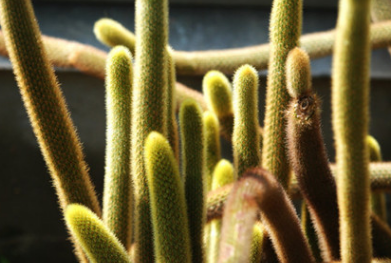
The Golden Rat Tail Cactus, also known as the Golden Woolly Torch Cactus, thrives in a sunny environment. It tolerates drought and partial shade, but dislikes waterlogged conditions. The optimal growing temperature is 20-25°C, and it can withstand low temperatures of 4°C. It is robust and undemanding about soil, growing well in ordinary flowering plant potting mix.
How to Propagate the Golden Rat Tail Cactus
1. Propagation Method for the Golden Rat Tail Cactus: Division
Mature Golden Rat Tail Cacti produce small offsets at their base, which can be divided in spring or autumn for propagation. Cut off the small offsets from the base, wait for the cut surface to dry, then plant them in a growing medium. Do not water the newly planted offsets right away; wait two days, then water lightly. Once roots have formed, resume normal care.
2. Propagation Method for the Golden Rat Tail Cactus: Cuttings
During the growing season, cut plump modified stems from the Golden Rat Tail Cactus to use as cuttings, cutting them into 8-10 cm segments. They should not be too short, as short segments root poorly. After drying them in the air for 1-2 days, insert them into a sand bed or peat soil, not too deep. The cutting medium should not be too wet; a water-holding capacity of 60-70% is ideal. Roots will form about one month after insertion, after which they can be potted up. This method propagates quickly and is commonly used in commercial production.
For Golden Rat Tail Cactus cuttings, it is best to use columnar cacti as rootstock; upright, sturdy diamond-shaped cacti give even better results as rootstock.
3. Propagation Method for the Golden Rat Tail Cactus: Grafting
Grafting is usually done in May-June, using upright columnar cacti such as Opuntia ficus-indica or Selenicereus grandiflorus as rootstock. Take a 10 cm piece of modified stem from the tip of the Golden Rat Tail Cactus as the scion; it will heal about 50 days after grafting.
Through grafting, it can develop a fine trailing form. Both flat grafting and slant grafting can be used. The best time for grafting is from May to September. The method is as follows: choose a branch of Pereskia that has not fully lignified, cut it off 2-3 cm from the branch, and carve it into a cone about 1 cm long. Insert the base of a young, green Golden Rat Tail Cactus stem into the pointed cut of the rootstock; no tying is needed.
After grafting the Golden Rat Tail Cactus, provide shade and control watering; humidity should not be too high, otherwise the graft will fail. If the scion remains fresh and green after about ten days, the graft has taken. Remove the binding material, then resume normal care. Grafted plants grow more vigorously and faster than cuttings, and can produce 4-5 side branches or even more.
Common Pests of the Golden Rat Tail Cactus and Their Control
1. Common Pest of the Golden Rat Tail Cactus: Red Spider Mite
Red spider mites are one of the most common plant pests, and they reproduce quickly, producing about 10 generations per year. Red spider mites are extremely small; they insert their piercing-sucking mouthparts into the leaf mesophyll and stem bark of plants, sucking the sap and causing the plant to turn yellow or even wither.
Control method: Spray with a 1500-fold dilution of 40% omethoate emulsifiable concentrate.
2. Common Pest of the Golden Rat Tail Cactus: White Spider Mite
The white spider mite is not a native pest in our country; it is an introduced species. Generally, introduced species have strong pesticide resistance, so controlling white spider mites is relatively difficult. However, difficult as it is, it must still be controlled, otherwise a beautiful pot of Golden Rat Tail Cactus will be ruined!
Control method: Spray with a 2000-fold dilution of 5% fenpyroximate suspension concentrate.
3. Common Pest of the Golden Rat Tail Cactus: Whitefly
Pest symptoms: Adults and nymphs pierce and suck the sap of leaves, fruits, and tender shoots. Affected leaves develop chlorotic yellow-white spots; as the damage worsens, the spots expand into patches, and eventually the entire leaf turns pale and drops early. Affected fruits have reduced flavor quality, and young fruits often drop when severely damaged. The honeydew they excrete can induce sooty mold.
Control method: For early infestations, begin spraying when whiteflies first appear sporadically with a 1500-fold dilution of 20% buprofezin wettable powder, or a 1000-fold dilution of 25% pyridaben emulsifiable concentrate, a 3000-4000-fold dilution of 2.5% bifenthrin emulsifiable concentrate, a 2000-3000-fold dilution of 2.5% cyhalothrin emulsifiable concentrate, a 2000-fold dilution of 20% fenpropathrin emulsifiable concentrate, or a 1500-fold dilution of 10% imidacloprid wettable powder. Apply once every 10 days or so, for 2-3 consecutive treatments.
Common Pests of the Golden Rat Tail Cactus and Their Control Methods
Common Pest of the Golden Rat Tail Cactus: Red Spider Mite
Red spider mites are one of the most common plant pests, and they reproduce quickly, producing about 10 generations per year. Red spider mites are extremely small; they insert their piercing-sucking mouthparts into the leaf mesophyll and stem bark of plants, sucking the sap and causing the plant to turn yellow or even wither.
Control method: Spray with a 1500-fold dilution of 40% omethoate emulsifiable concentrate.
Common Pest of the Golden Rat Tail Cactus: White Spider Mite
The white spider mite is not a native pest in our country; it is an introduced species. Generally, introduced species have strong pesticide resistance, so controlling white spider mites is relatively difficult. However, difficult as it is, it must still be controlled, otherwise a beautiful pot of Golden Rat Tail Cactus will be ruined!
Control method: Spray with a 2000-fold dilution of 5% fenpyroximate suspension concentrate.
Common Pest of the Golden Rat Tail Cactus: Whitefly
Pest symptoms: Adults and nymphs pierce and suck the sap of leaves, fruits, and tender shoots. Affected leaves develop chlorotic yellow-white spots; as the damage worsens, the spots expand into patches, and eventually the entire leaf turns pale and drops early. Affected fruits have reduced flavor quality, and young fruits often drop when severely damaged. The honeydew they excrete can induce sooty mold.
Control method: For early infestations, begin spraying when whiteflies first appear sporadically with a 1500-fold dilution of 20% buprofezin wettable powder, or a 1000-fold dilution of 25% pyridaben emulsifiable concentrate, a 3000-4000-fold dilution of 2.5% bifenthrin emulsifiable concentrate, a 2000-3000-fold dilution of 2.5% cyhalothrin emulsifiable concentrate, a 2000-fold dilution of 20% fenpropathrin emulsifiable concentrate, or a 1500-fold dilution of 10% imidacloprid wettable powder. Apply once every 10 days or so, for 2-3 consecutive treatments.
Golden Rat Tail Cactus Growing Methods and Precautions, and Grafting Methods
The Golden Rat Tail Cactus, also called the Rat Tail Cactus, is a very warm-loving succulent, one might say the warm-hearted one among cacti. Golden Rat Tail Cacti mostly live in clusters, with a whole extended family growing together. During growth, their stems become intertwined. So anyone who likes clustering plants and warmth can give it a try.
Golden Rat Tail Cactus Growing Methods and Precautions
1. Growing Habits
It thrives in a sunny environment. It tolerates drought and partial shade, but dislikes waterlogged conditions. The optimal growing temperature is 20-25°C, and it can withstand low temperatures of 4°C. It is robust and undemanding about soil, growing well in ordinary flowering plant potting mix.
2. Propagation Methods
A common method is cutting the top to encourage branching, followed by division propagation, carried out in spring and autumn. Cut 5-8 cm stem segments from mature plants, dry the cut surface, and they can be used for cuttings; 3-4 cm stem segments can be used as scions for grafting.
3. Cultivation and Management
During the growing season, water on the principle of letting the soil dry between waterings, and apply a light fertilizer once a month, mainly phosphorus and potassium. Long-term insufficient light is unfavorable for flowering, so it should be kept in a sunny spot for care. Provide appropriate shade in midsummer, and reduce watering in winter, keeping the potting soil slightly moist. Pay attention to controlling leaf spot disease, red spider mites, and whiteflies. Soil: Fertile, well-draining sandy loam and forest soil; avoid waterlogged sites; tolerates drought.
4. Precautions
① Water: Do not let it go without water in summer; keep the potting soil moist and mist regularly to maintain humidity. In winter, water once every ten days, and be careful not to spray water onto the stem bark.
② Sunlight: It likes light, tolerates strong sunlight, and also tolerates partial shade, but long-term shade makes the stems grow thin and spindly.
③ Fertilizer: Before potting, add decomposed organic fertilizer to the nutrient soil. Fertilize once a month during the growing season, and do not fertilize during winter and summer dormancy.
④ Temperature: It prefers warm climates with large day-night temperature differences, and is not cold-tolerant.
Grafting Methods for the Golden Rat Tail Cactus
Grafting is usually done in May-June, using upright columnar cacti such as Opuntia ficus-indica or Selenicereus grandiflorus as rootstock. Take a 10 cm piece of modified stem from the tip of the Golden Rat Tail Cactus as the scion; it will heal about 50 days after grafting.
Through grafting, it can develop a fine trailing form. Both flat grafting and slant grafting can be used. The best time for grafting is from May to September. The method is as follows: choose a branch of Pereskia that has not fully lignified, cut it off 2-3 cm from the branch, and carve it into a cone about 1 cm long. Insert the base of a young, green Golden Rat Tail Cactus stem into the pointed cut of the rootstock; no tying is needed.
After grafting the Golden Rat Tail Cactus, provide shade and control watering; humidity should not be too high, otherwise the graft will fail. If the scion remains fresh and green after about ten days, the graft has taken. Remove the binding material, then resume normal care. Grafted plants grow more vigorously and faster than cuttings, and can produce 4-5 side branches or even more.
Common Pests of the Golden Rat Tail Cactus and Their Control Methods
1. Red Spider Mite
Red spider mites are one of the most common plant pests, and they reproduce quickly, producing about 10 generations per year. Red spider mites are extremely small; they insert their piercing-sucking mouthparts into the leaf mesophyll and stem bark of plants, sucking the sap and causing the plant to turn yellow or even wither.
Control method: Spray with a 1500-fold dilution of 40% omethoate emulsifiable concentrate.
2. White Spider Mite
The white spider mite is not a native pest in our country; it is an introduced species. Generally, introduced species have strong pesticide resistance, so controlling white spider mites is relatively difficult. However, difficult as it is, it must still be controlled, otherwise a beautiful pot of Golden Rat Tail Cactus will be ruined!
Control method: Spray with a 2000-fold dilution of 5% fenpyroximate suspension concentrate.
3. Whitefly
Pest symptoms: Adults and nymphs pierce and suck the sap of leaves, fruits, and tender shoots. Affected leaves develop chlorotic yellow-white spots; as the damage worsens, the spots expand into patches, and eventually the entire leaf turns pale and drops early. Affected fruits have reduced flavor quality, and young fruits often drop when severely damaged. The honeydew they excrete can induce sooty mold.
Control method: For early infestations, begin spraying when whiteflies first appear sporadically with a 1500-fold dilution of 20% buprofezin wettable powder, or a 1000-fold dilution of 25% pyridaben emulsifiable concentrate, a 3000-4000-fold dilution of 2.5% bifenthrin emulsifiable concentrate, a 2000-3000-fold dilution of 2.5% cyhalothrin emulsifiable concentrate, a 2000-fold dilution of 20% fenpropathrin emulsifiable concentrate, or a 1500-fold dilution of 10% imidacloprid wettable powder. Apply once every 10 days or so, for 2-3 consecutive treatments.
The Flower Meaning of the Golden Rat Tail Cactus
The flower meaning of the Golden Rat Tail Cactus is: a warm family.
The Golden Rat Tail Cactus is a succulent plant, also known as the Golden Woolly Torch Cactus, Golden Rat Tail, Rat Tail Cactus, medicinal sage, salvia, Golden Button, and Golden Button Column. It usually blooms in summer, has the ability to remove formaldehyde, and can protect against radiation. The Golden Rat Tail Cactus is an ornamental plant and a flower very familiar to us all. Its golden stems and brilliant flowers are all in warm tones, unlike plants that look cold and distant; perhaps that is why it carries the flower meaning of "a warm family"!
"A warm family" is indeed very representative for the enthusiastic, uninhibited Golden Rat Tail Cactus, which also loves to grow in clusters. The methods and techniques for growing the Golden Rat Tail Cactus are not very different from those for ordinary succulents and cacti, so it is not very difficult to grow.