-
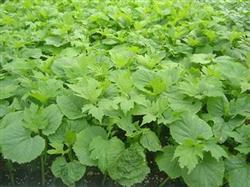
How to raise bitter melon seedlings so they come up uniform and strong?
The seed coat of bitter melon is thick and hard. If the seeds are sown directly into the field, water does not easily penetrate inside, germination is slow, the seedlings emerge unevenly, and the rate of missing plants is relatively high. Therefore, the seeds should be soaked and pre-germinated before sowing. (1) Pre-germination method: first put the seeds into warm water at about 55°C and soak them for 10 minutes to sterilize...
-
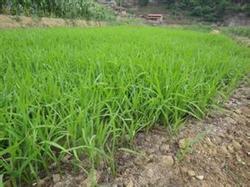
Key Field Management Techniques After Transplanting Dry-Raised Rice Seedlings to the Paddy Field
1. Prepare the field carefully so that the field is level and the soil is puddled, with not even a inch of water exposing the mud. 2. Fertilization principle: apply a heavy basal fertilizer and skillfully apply panicle-grain fertilizer. Apply no less than 1500 kg of farmyard manure per mu. When harrowing the field, apply phosphate and potassium fertilizers plus 70% of the nitrogen fertilizer as a one-time basal application, 20% of the nitrogen fertilizer as tillering fertilizer, and 10% as panicle fertilizer (apply 5-10 days before heading). ...
-
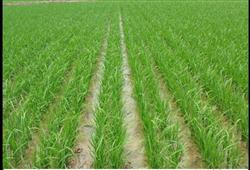
Summary of the Key Points of the Dry-Raised Sparse-Planting Rice Cultivation Technique
Dry-raised sparse-planting rice is one of the agricultural technique measures promoted; the annual rice cultivation area is 9315 mu, and the per-unit yield was low. With the continuous development and progress of science and technology, the yield has increased significantly, and especially since the promotion of wide-narrow row strip planting and dry-raised sparse planting, the results have been even better, and farmers have achieved increased production and income. Dry-raised sparse-planting rice...
-
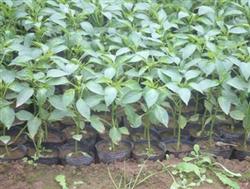
How to raise seedlings for spring-planted peppers? Key technical points explained
(1) Preparing the cold frame Select a plot with fertile soil, sheltered from the wind and facing the sun, where eggplants and tomatoes have not previously been grown, and build a cold frame. For each mu to be planted, raise seedlings using 150 grams of seed, and the cold frame should be more than 10 sq m. Apply plenty of base fertilizer, water heavily to build up soil moisture, and use a small amount of urea, phosphate fertilizer and active potassium fertilizer. Because the cold frame is sealed...
-
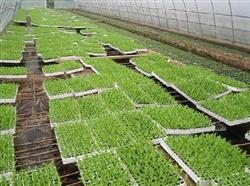
How to sow and raise lettuce seedlings? Detailed key points of the method
Lettuce can be sown directly or raised as seedlings and then transplanted. In spring and summer, direct sowing is the main method; in autumn and winter, either seedling raising or direct sowing can be used. 1. Seed soaking and sprouting: In summer and early autumn, temperatures are high and seed germination is inhibited. You can first soak the seeds in warm water for 3 hours, then wrap them well in a towel or gauze and place them in a well (20-30 cm above the water surface)...
-
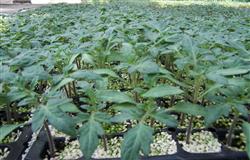
How to raise seedlings for autumn-winter tomatoes? Key technical points explained
1. Seedbed preparation: The seedling-raising period for autumn-winter tomatoes in a solar greenhouse coincides with the hot, rainy season. The seedbed should be capable of preventing rain and waterlogging, providing ventilation, and lowering temperature. Seedlings must be raised under film-covered conditions so they can adapt to greenhouse conditions. It is best to choose a dry site with good ventilation and set up a 1.5-2 m high arched...
-
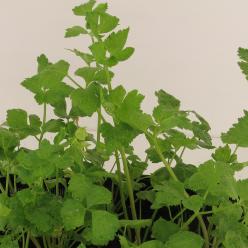
How to sow and raise seedlings for autumn delayed cultivation of celery?
(1) Seed treatment: The suitable seedling age for transplanting celery is 5 or 6 true leaves, the seedling raising period is 50-60d, and the sowing period is from June to August. At this time, the high temperature is not conducive to emergence, so low-temperature seed soaking and germination should be carried out before sowing. The method is: 6-7d before sowing, soak the seeds in cold water for 24h, rub and wash them several times and change the water during this period, and after taking them out, wrap them well in gauze or a gunny bag...
-

How to Make Braised Sea Cucumber with Scallions So It Tastes Delicious? Detailed Method Shared
Ingredients: 1000 g of rehydrated tender small sea cucumber, 105 g of large scallions, 15 g of green garlic, 5 g of minced ginger, 27.5 g of ginger juice, 10 g of wet starch, 700 g of chicken stock, 27.5 g of sugar, 12.5 g of soy sauce, 15 g of cooking wine, 2 g of salt, 3.5 g of monosodium glutamate, 50 g of scallion oil, 150 g of rendered lard (about 75 g consumed). Method: Wash the rehydrated sea cucumber, put it in a pot of cold water and bring to a boil over high heat, simmer for about 5 minutes, drain well, then simmer in 300 g of chicken stock until tender and flavored, then drain off the chicken stock. Large scallions 10
-
To raise the per-unit yield of double-season rice in Jiangxi, the key lies in changing the "six mores and six lesses" phenomenon
Rice is the most important food crop in Jiangxi, and increasing the per-unit yield of double-season rice is an important way to ensure Jiangxi's position as a major grain-producing region and to ensure that Jiangxi makes a greater contribution to the country's food security. In recent years, although the per-unit yield of double-season rice in Jiangxi has risen steadily, the phenomenon of a relatively low per-unit yield level has still not improved much. Compared with neighbouring Hunan, it is 50-60 kg lower per 667 sq m. Analysis shows that the "six mores and six lesses" phenomenon is the main reason for Jiangxi's low rice per-unit yield. 1. More seeding rate, less seed used. Cultivating
-
How is rice dry-raised? Keep these thirteen points in mind
The trayless seedling-throwing technique for dry-raised rice uses a rice-specific slow-release medicinal-fertilizer super-absorbent seed coating agent called "Dry-Raising Nanny" to coat rice seeds, carry out dry seedling raising, and after pulling the seedlings, directly throw them into the field. It is a light, simplified, and cost-saving rice cultivation technique. Its key cultivation points are as follows: 1. Select the correct model. For application in dry-raised seedling throwing, the seedling-throwing type of "Dry-Raising Nanny" should be chosen. 2. Determine the dosage. Each bag (350 grams) of "Dry-Raising Nanny" super-absorbent seed coating agent coats 1-1.5 kg of rice seed. 3.
条件筛选