-
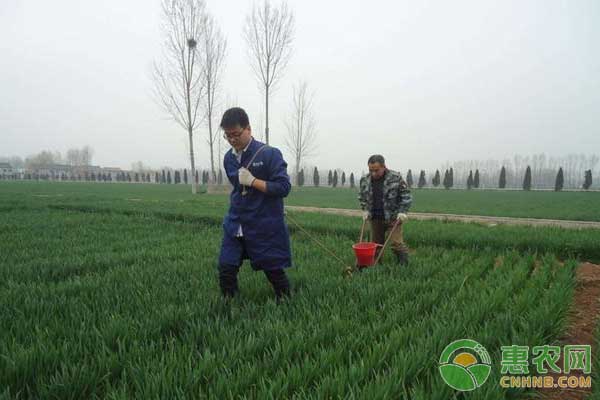
Wheat Management Techniques: How to Properly Apply the Freezing Water to Wheat?
Wheat Management Techniques: How to Properly Apply the Freezing Water to Wheat?
-
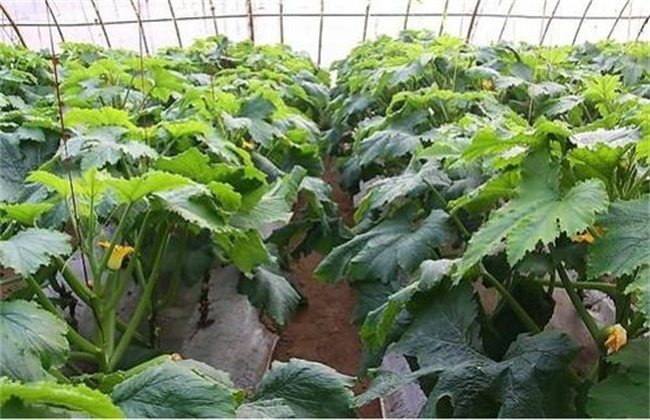
How to properly control excessive growth in zucchini? These technical points need to be mastered
Techniques for controlling excessive growth in zucchini
-

How to fertilize bitter melon properly? Master the correct fertilization methods
How to fertilize bitter melon properly
-
How to apply wintering fertilizer properly to spinach before overwintering
1. Sowing. Spinach is mainly broadcast-sown, though drilling is also possible. Under high-temperature conditions, germination is slow, so for early-autumn sowing it is best to soak the seeds to promote germination: soak the seeds for 12 hours, then treat them in a refrigerator at 4°C for 24 hours, and then keep them at 15-25°C to promote germination for several days; once most have germinated, they can be broadcast-sown. Sowing rate per mu...
-
Properly controlling excessive vine growth in sweet potatoes can promote high yields
Sweet potato is a crop with high and stable yields. It has the characteristics of wide adaptability, strong stress resistance, drought and barren tolerance, and relatively few pests and diseases. When planted in places with good water and fertilizer conditions, it can generally yield 2000--3000 kg per mu. However, due to differences in natural conditions and cultivation levels, the yield per unit area is also extremely uneven. In order to fully...
-
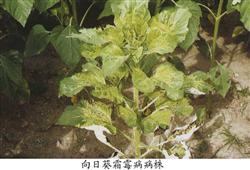
How to fertilize sunflowers properly? A full analysis of methods and key points
Symptoms The disease can occur at the seedling stage and the adult plant stage. It causes plant dwarfing, failure to form heads, or death. When infected at the seedling stage, symptoms begin to appear at 2-3 true leaves. After the leaves are affected, chlorotic patches begin to appear along the leaf veins on the leaf surface, and a white downy mold layer, namely the pathogen's sporangiophores and sporangia, can be seen on the underside of the leaves. Diseased plants grow slowly or remain stunted and do not grow....
-
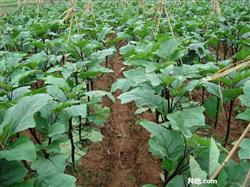
How to prune leaves from eggplant properly? Master the correct method
How should eggplant leaves be pruned properly? Please explain that moderate leaf pruning of eggplant can reduce flower drop, reduce fruit rot, and promote fruit coloring. Generally, only senescent yellowed leaves or leaves with weak photosynthesis are removed. When the opposite eggplant fruit reaches 3-4 cm in diameter, remove the old leaves below the first fruit; when the fourth mother eggplant reaches 3-4 cm in diameter,...
-
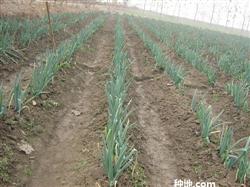
How to transplant Welsh onions properly? Transplanting methods and key technical points
How to transplant Welsh onions properly? Please advise: for Welsh onions, it is best to cut the leaves before transplanting. Cutting the leaves before transplanting Welsh onions can noticeably speed up the recovery after transplanting, favor the growth and development of Welsh onions, and increase the yield of Welsh onions. The specific method for transplanting Welsh onions with cut leaves: after pulling the onion seedlings out of the seedling bed, tie the seedlings neatly into small bundles, then...
-
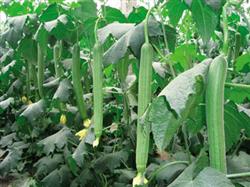
How to fertilize loofah properly? A detailed guide to the correct fertilizing methods
How should loofah be fertilized? Please help explain. For fertilizing loofah, you can refer to the following methods: 1. Growth characteristics: Loofah is a herbaceous plant of the Cucurbitaceae family. It is cultivated in Guangdong, Guangxi, Hainan and other places. Loofah has a strong root system, a long growing period, high yield, and a large demand for water and nutrients. Therefore, applying sufficient base fertilizer and frequently applying topdressing is...
-
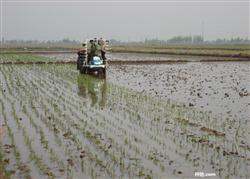
How to transplant rice seedlings properly? A detailed explanation of the key technical points
How to transplant rice seedlings well? Please guide: according to climate characteristics, the following work should be done well in rice transplanting techniques: 1. Transplant early at the right time, speed up progress, and expand the transplanting area. When the daily average temperature steadily passes 13°C and the field water temperature reaches 18°C, transplanting can begin. This year transplanting started on May 8 and [ended] before May 28...
条件筛选