-

How to make spiced candied carambola? Detailed production method shared
This product is made by candying fresh carambola with spices and sugar. The processing technique is as follows: 1. Raw material handling: After washing the fresh carambola, remove the ridged edges and cut it lengthwise into single segments, then slice into long petal-shaped thin pieces. 2. Hardening treatment: Use alum or calcium bisulfite as a hardening agent, soak in 3% alum or 0.2% calcium bisulfite solution for 6-8 hours, remove, drain off the water, and prepare for spiced sugar candying. 3. Spiced sugar candying: For every 50 kg of fresh carambola slices, prepare a mixed powder made from equal amounts of clove, dried tangerine peel, and licorice ground together
-
Detailed Explanation of Industrialized Production Technology for Potato Microtuber
This achievement includes a series of industrial technologies for virus elimination of potato microtubers, rapid propagation, and field planting of induced microtubers. Based on the basic theories and operational techniques of bioengineering, combined with the physiological mechanisms of tuber formation, suitable culture media and culture conditions are used to induce potato test-tube plantlets and axillary buds of test-tube plantlet segments to form microtubers suitable for field planting under tissue culture conditions, thereby achieving commercial production. Through suitable induction techniques and improvements in culture containers, the production rate of test-tube plantlets per unit culture area has been increased by 3 to 5 times, reaching a maximum of 2
-
Common problems in potato production and their solutions
Zhaosu is located in the northwest border region, at an altitude of 1720-1860 m, with a short frost-free period and a cool mountainous climate. With the adjustment of the industrial structure, potato has become the main crop of our regiment. 1. Existing problems 1. Climatic effects From April to early May 2007, due to high temperatures and dry soil, potato emergence was difficult and seed potatoes shriveled. After emergence, there was abundant rain, causing seed rot and missing plants with gaps in the rows. 2. Poor quality of seed potatoes In 2007, seed potatoes suffered from rot, disease and damage. When cutting seed potatoes, diseased tubers were not strictly removed
-
Common Problems and Solutions in Potato Production
Suihua City is a major potato-producing city, with a perennial planting area stable at around 1.5 million mu, and the quality of potato production is of great significance to agricultural production. In order to achieve high quality, high yield and high efficiency in potato production, and to help farmers achieve the goal of continuously increasing their income, I have summarized and analyzed the problems that frequently occur in potato production in our city over the years and their causes, and put forward corresponding solutions. I. Problems that frequently occur in production and their causes 1. Potato blight Potato late blight is a major disease in potato production in our city,
-
Detailed Explanation of Mechanized Potato Production Technology Throughout the Entire Process
Shawan County has an annual potato planting area of 2,250 hectares, which has become a new highlight for increasing the income of farmers and herders in cool and cold regions. Because the traditional manual planting and harvesting methods are backward, labor-intensive, and low in efficiency, it is difficult to achieve large-scale operation. Through practice, advanced potato seeders and harvesters were introduced, and a mechanized technology for the entire potato production process was summarized. At present, this technology has been fully promoted. 1. Pre-planting preparation 1. Soil conditions Choose loam or sandy loam with deep soil layers, high organic matter content, loose and easily crumbled texture, good permeability, and medium or higher fertility.
-
Product Introduction of Lvbang 98 Rice-Specific Formula
Main effects: (1) It promptly supplies all the nutrients needed for rice growth, helps cultivate strong seedlings, increases the number of effective panicles and grain weight per panicle, and raises yield by 10%-20%; (2) It has a good effect when used in the early stages of rice blast, sheath blight, bacterial leaf blight, rice false smut, and other diseases; (3) It effectively reduces stomatal aperture, promotes root development, and improves the rice plant's ability to resist transpiration. Usage: (1) Seed soaking: dilute 50 g in 15-20 kg of water, soak the amount of seed used for one mu of seedling field, pile for 12-24 hours, then
-
Key Points from the Seminar on Pollution-Free Fishery Product Certification
On August 14, at the 2007 National Pollution-Free Fishery Product Certification Exchange Seminar held in Shenyang, Liaoning Province, the person in charge of the Fishery Sub-center of the Agricultural Product Quality Safety Center of the Ministry of Agriculture stated: at present, China's fishery product certification rate (annual output of certified products/annual output of aquatic products) is still very low. In particular, in major fishery provinces with an annual output of more than 1 million tons, the certification rate is below 10%. China is a major fishery production country. In order to adapt to domestic and international consumption trends for fishery products and ensure the quality of fishery products
-
Detailed Explanation of the Production Process for Canned Small Fish
Small fish are found in enormous quantities in rivers, streams, lakes and ponds. Under traditional processing methods, they are mostly used for feed processing or eaten fresh. Used as feed, this results in a waste of resources; eaten fresh, consumption is not large due to seasonal influences and differences in people's dietary habits. Made into canned products, however, they have enormous potential and broad market prospects. 1. Raw material requirements and handling: Select small fish with intact bodies, normal odor, elastic flesh and good freshness. Squeeze out the internal organs of the small fish completely, rinse thoroughly, ensure no internal organs remain, and wash off the small scales as much as possible.
-
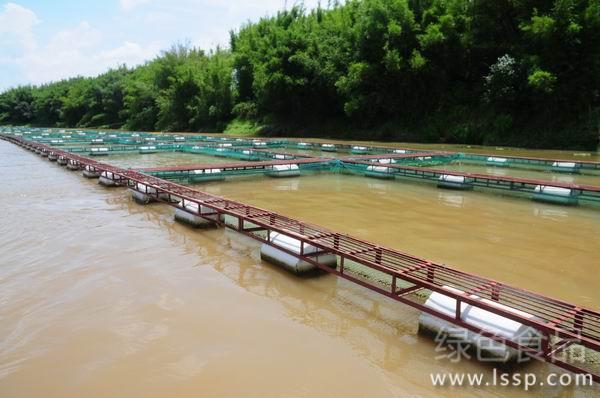
What are the key points for production management during the overwintering stage of freshwater aquaculture
Key points for production management during the overwintering stage of freshwater aquaculture
-
Production Methods and Multifunctional Applications of Soybean Dietary Fiber
1. Physiological Functions of Multifunctional Soybean Dietary Fiber Soybean dietary fiber mainly refers to the general term for those macromolecular carbohydrates that cannot be digested by human digestive enzymes, mainly including cellulose, pectin, xylan and mannose, etc. Although dietary fiber cannot provide the human body with any nutrients, it has important physiological functions for the human body. Dietary fiber has significant effects in lowering blood pressure and plasma cholesterol, and regulating gastrointestinal function, blood sugar and insulin levels. Multifunctional Soybean Fiber (MSF) is mainly composed of dietary fiber and protein, with contents of 67.98% (dry basis) and 19.75% respectively, making it a good protein-fiber additive. Studies have shown that adding a small amount of MSF has a good strengthening effect on medium-gluten or low-gluten flour; within a certain addition range, it can not only increase the dietary fiber and protein content of products, but is also very beneficial for improving the quality of products such as bread, noodles and biscuits. MSF may be the best-functioning of all dietary fibers, far beyond what other synthetic fibers (such as litesse, polydextrose) can match. Multifunctional soybean dietary fiber is a high-quality dietary fiber obtained from fresh okara as raw material through special heat treatment, and it has good effects in regulating blood sugar, lowering blood lipids and promoting defecation.
条件筛选