What are the key points for production management during the overwintering stage of freshwater aquaculture
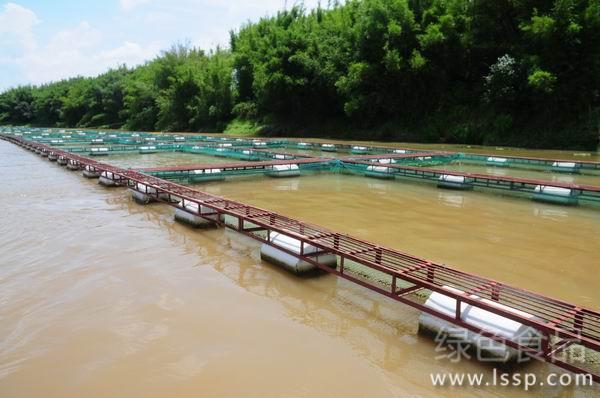
Freshwater aquaculture
After entering November, production of most freshwater aquaculture species in Hebei Province has ended, and some freshwater aquaculture species have entered the overwintering stage. To ensure better economic benefits and do a good job in production management during the overwintering of freshwater aquaculture, the Freshwater Aquaculture Industry Innovation Team of the Hebei Modern Agricultural Industry Technology System offers the following technical guidance.
Maintain a relatively high water level and strengthen water quality regulation
After autumn, air temperature and water temperature gradually drop across Hebei Province, and dissolved oxygen in the water body is relatively high. Because pond fish carrying capacity is relatively large, feeding amounts are relatively high, and residual feed and metabolites also accumulate considerably, anaerobic fermentation easily produces harmful substances such as ammonia nitrogen and hydrogen sulfide. At the same time, the temperature difference between day and night is relatively large, and convection between the upper and lower water layers increases, making water quality prone to deterioration. Therefore, a relatively high water level should be maintained as much as possible, new water should be added or water exchanged regularly, and aerators should be turned on in a timely manner; quicklime, chlorine preparations, iodine preparations, etc. should be used regularly for disinfection, and organic acids or sodium humate should be used to complex toxic and harmful substances in the water body to improve the water quality environment; microecological preparations should be used regularly to regulate water quality. Technical service institutions and farms with the conditions should frequently test dissolved oxygen, pH, ammonia nitrogen, nitrite, etc. in aquaculture water so that the aquaculture water meets the provisions of NY5051 "Water Quality for Pollution-Free Food Freshwater Aquaculture".
Before overwintering, more sludge should be removed (with a dredging pump, etc.), ponds should be filled with water (as much as possible maintaining 1.8 m or more), and the fertility of the pond water should be adjusted well to maintain an appropriate amount of phytoplankton and control the total amount of zooplankton. Ponds that have already been completely harvested should be drained and cleared, with pond water drained dry, and sludge, weeds, and wild trash fish in the pond removed. Winter and early spring should be used to dry the ponds, so as to reduce aquaculture diseases the following year and increase aquaculture production.
Improve feed quality and ensure overwintering survival rate
Before overwintering, favorable opportunities should be seized to strengthen feeding. First, feed quality is required to be good and nutritionally complete. Feed should comply with the provisions of NY5072 "Safety Limits for Fishery Feed for Pollution-Free Food". Feed and additives without product quality standards, without quality inspection certificates, and without production licenses and product approval numbers are prohibited. Deteriorated and expired feed is prohibited; second, the protein ratio of bait should be appropriately increased, and Vc and immune polysaccharides, etc. should be added to the feed to improve the disease resistance and overwintering ability of aquatic animals; third, according to weather, water quality, and fish conditions, the feeding amount should be appropriately increased and feeding time extended. The amount fed in the evening should be appropriate, and there should be no leftover feed, so as to improve feed utilization, ensure rapid and healthy growth of aquatic animals, and avoid polluting water quality.
Persist in pond patrols and do a good job in production management
Before overwintering, persist in patrolling the pond morning and evening every day, observe the activity and feeding conditions of aquatic animals, inspect water color, transparency, etc., and promptly remove rotting grass and residual feed. For aquaculture species prone to escape, pay attention to checking escape prevention facilities and whether there are leaks in pond embankments, inspect escape prevention facilities at water inlets and outlets, and strengthen anti-theft patrols at night.
Overwintering ponds should be cleared of snow and dust in winter to increase light transmittance, 1 to 2 gas-releasing ice holes should be opened per mu, new water should be replenished in a timely manner, and in emergencies ice can be broken, using water pumps, air pumps, aerators, or oxygen-increasing agents, etc. to increase oxygen.
For Chinese softshell turtles overwintering in winter greenhouses, the density and strength of the greenhouse frame should be checked. Greenhouses with damaged plastic sheeting should be repaired as soon as possible. When replacing plastic sheeting, anti-aging drip-free film should be selected. Where conditions permit, double-layer film can be chosen to enhance wind and snow resistance and insulation effects. Keep water depth above 1 m to avoid ice formation on the water surface. In heavy snow, snow should be removed in a timely manner.
Focus on prevention and do a good job in disease control
Before overwintering, the principle of "prevent disease first when there is no disease, treat early when there is disease" should be followed, adopting a method combining "external disinfection" and "internal administration". In addition to regularly disinfecting the water body, when disease occurs, diagnosis should be made in a timely manner, the cause should be determined, and highly effective and low-toxicity national standard fishery drugs should be used for treatment, so as to ensure the safe overwintering of farmed fish.