Detailed Explanation of the Production Methods and Technical Key Points of Aloe Bonsai
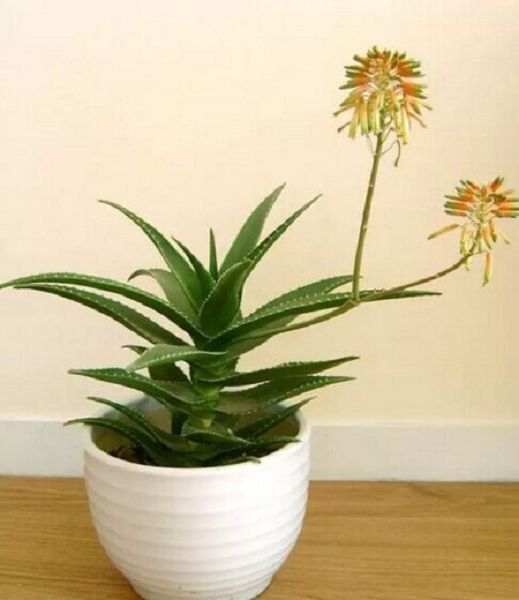
Aloe has a graceful posture and an inviting emerald green color, with considerable ornamental value. Developing it as bonsai has good prospects and considerable benefits. Aloe bonsai is a new branch of Chinese bonsai, and its artistic classification should belong to the flower-and-plant bonsai type. Like other bonsai, aloe bonsai is not merely a miniature of nature; it is also a re-creation of natural scenery using romantic techniques on the basis of realism.
Can aloe be made into bonsai? Promotional materials issued by some flower bases say: Aloe has a graceful posture and an inviting emerald green color, with considerable ornamental value. If developed as bonsai, the prospects are good and the benefits are considerable. That being so, it is still necessary and beneficial to explore making bonsai with aloe.
The production of aloe bonsai has much in common with the production of other bonsai, except that on the basis of inheriting the characteristics and skills of traditional bonsai production, one point must also be adhered to, namely highlighting the unique characteristic of aloe bonsai within flower-and-plant bonsai. For accessories in aloe bonsai production, plastic, ceramic, and clay figures and animals, among others, are sometimes made according to the needs of the conceived composition.
Making aloe bonsai can be divided into two steps: design and operation. The design of aloe bonsai mainly determines the theme and conceives the composition. Conception is the author's specific artistic image of the work formed during the creative process. Conception focuses on handling the spirit of the work (that is, its charm, namely its expressive dynamics and poetic appeal), while composition focuses on handling the form of the work (that is, its type and body). Whether the work succeeds or not, conception is the key.
The specific operation of making aloe bonsai is largely the same as the production process of other bonsai. A few points are explained below:
Material selection: For making aloe bonsai, small varieties among succulent flowers and dwarf aloe are used as materials. There are many aloe varieties that can be used; according to statistics, there are more than 500 kinds, and aloe varieties that conform to the conceived composition and highlight the theme should be selected from them. Aloe bonsai uses aloe as the main material and, after certain modification and processing, appropriately configures rocks and accessories such as figures and animals to reproduce in the pot the beautiful flower-and-plant image and profound artistic conception of nature. The accessories of aloe bonsai can also use stones, other plants, and so on.
Pot selection: The pots used for aloe bonsai are similar to those for tree bonsai. Sometimes, according to need, wooden pots are made (and must undergo anti-corrosion treatment) or wooden outer pots are carved.
Potting: This should be carried out in spring and summer; winter is not suitable, as the temperature is too low and it is not conducive to the emergence of new roots. Before potting, a piece of broken tile can first be placed at the bottom of the pot and pressed over the drainage hole at the bottom, which can both maintain drainage and prevent the potting soil from leaking out. When potting, first place the aloe seedling upright in the center of the pot, try to let the root system spread out, fill soil to cover the roots, then gently lift the seedling upward a little and press it slightly so that the roots come into close contact with the potting soil above, below, left, and right, then add potting soil until it remains 2 to 3 cm below the pot rim, taking care to keep the seedling as upright as possible. Finally, slowly water thoroughly into the pot.
Watering: Aloe is called a plant that cannot die of drought, so not watering or watering little generally has little effect, but if water accumulates in the soil, it will cause root rot and death by drowning. In spring, generally water once every 5 to 7 days; the principle of watering is not to water until dry, and when watering, water thoroughly; in summer, water once every 2 to 3 days, and also take care to reduce exposure to strong sunlight to reduce water loss; in autumn, the watering method for aloe is basically similar to that in spring, and at the same time the potting soil should be kept alternately dry and moist. Before aloe turns green and roots, it is not suitable to water much. The time of watering is generally best in the early morning and evening, and the water temperature is best close to the potting soil temperature. Remember that for potted aloe, it is better to keep it dry than wet. In winter, water once every 15 to 20 days, appropriately increase spraying water on the leaf surface, water as little as possible, and keep the potting soil dry.
Fertilizing: To grow it well, fertilizer is indispensable. Aloe can use fertilizers with nitrogen, phosphorus, potassium, and some trace elements, and in order to ensure that aloe is a green and natural plant, fermented organic fertilizers can be used as much as possible, such as cake fertilizer, chicken manure (a small amount), compost, and so on.
Processing: Modifying the aloe in aloe bonsai is simpler and easier than processing trees. Under normal circumstances, it is enough to remove unnecessary leaves, and some leaves can be appropriately bent and processed.
Styling: Styling is created by the author according to the natural laws of plant physiology and the specific form of aloe, combined with the author's aesthetic views, in order to achieve the goal of formal resemblance. Aloe bonsai is a styling artwork that combines natural beauty and artistic beauty. Bonsai creation not only requires a certain artistic accomplishment, but also requires artistic processing methods such as material selection, pruning, and even wiring, as well as carving and chiseling of accessories to create the styling, so one must possess a certain basic scientific knowledge and horticultural technique.
Aloe bonsai is a new branch of Chinese bonsai, and its artistic classification should belong to the flower-and-plant bonsai type. Like other bonsai, aloe bonsai is not merely a miniature of nature; it is also a re-creation of natural scenery using romantic techniques on the basis of realism, shrinking the dragon to an inch and then presenting it before people.