-
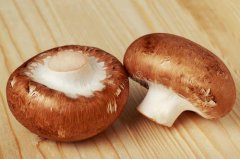
What Are the Mushroom-Processed Foods? An Introduction to Common Types of Mushroom Products
Mushrooms are now a common dish on the market, but did you know that besides being sold directly for eating, they can also be made into what kinds of goods for sale? What price range do they fall within? Let's take a look together. Shiitake stem meat floss, mushroom sauce, mushroom soy sauce
-
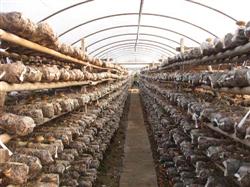
What is the silver ear mushroom cultivation process? A detailed explanation of the complete steps
What is the silver ear mushroom cultivation process? Please give a brief introduction. The silver ear mushroom cultivation process can be referenced as follows: 1. Material preparation: the substrate formula is 78% cottonseed hulls, 10% sawdust, 10% wheat bran, 2% gypsum powder, with a moisture content of 60-65%. 2. Bag filling: use 13×55 cm polyethylene plastic bags, fill them with a bagging machine (wet weight about 2 jin), punch three holes in each bag with a hole puncher specially designed for silver ear mushrooms and stick the adhesive tape over them. Note that the two ends should be 5 cm from the bag top, and the other hole is punched in the middle, then put into the sterilization stove.
-
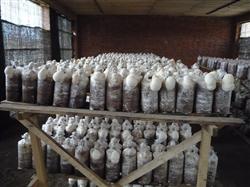
What are the steps for cultivating lion's mane mushroom? A detailed explanation of the growing process
What are the steps for cultivating lion's mane mushroom? Please give an introduction. First, making the spawn: spawn is divided into mother spawn, stock spawn and planting spawn. Mother spawn is the spawn kept on a slant in test tubes; its preparation is relatively strict, and it is generally kept in research institutions or production units with the right conditions. Individuals or specialized households producing on a small scale can obtain it from these units...
-
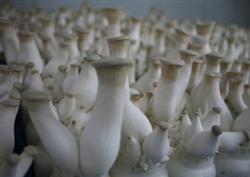
A detailed guide to the king oyster mushroom cultivation process, so easy to understand you will get the growing steps at a glance
What should you pay attention to when cultivating king oyster mushrooms? King oyster mushroom is one of the edible mushroom species newly developed in recent years. Because its cultivation techniques are not yet widespread, some problems encountered in production often affect yields, so attention must be paid to them. 1. Most of the mushroom bags become contaminated during the spawn-running process, and in severe cases...
-
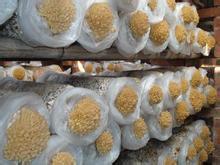
Detailed Explanation of the Facility Cultivation Process for Yellow Flammulina velutipes
The main Flammulina velutipes varieties cultivated in China are divided into two major categories: yellow Flammulina velutipes and white Flammulina velutipes. Among them, white Flammulina velutipes has already been widely cultivated in factory settings, but yellow Flammulina velutipes is still mainly cultivated agriculturally. The year-round facility cultivation technology has not yet been fully solved, and only high-altitude areas can be used for off-season cultivation. In order to understand...
-
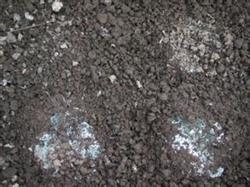
Strictly control the spawn production process when cultivating oyster mushrooms
Green mold, also known as Trichoderma viride, is one of the most serious pathogens harming oyster mushrooms. It causes damage at different production stages of oyster mushrooms. Once the disease occurs, it leads to reduced yields in mild cases and total crop failure in severe cases, becoming an important obstacle restricting the development of oyster mushroom production. Through several years of exploration and experimentation, the integrated control measures are summarized and introduced as follows...
-
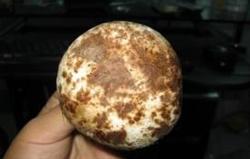
In the process of oyster mushroom cultivation, the seed production stage must be strictly controlled.
Rust-colored or dark brown spots appearing on the caps and stipes of oyster mushrooms are called oyster mushroom rust spot disease. This disease is a bacterial disease that readily occurs during the fruiting body growth stage of oyster mushrooms. The pathogen causing this disease is a species of Pseudomonas bacterium that is extremely widely distributed in nature. In the early stage of the disease, the spots are only the size of a needle tip, and the color...
-
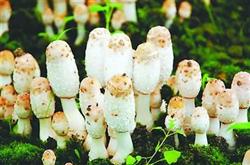
Harvesting Methods and Dried Product Processing Techniques for the Shaggy Mane Mushroom
The shaggy mane mushroom, also known as the shaggy ink cap, is a typical mesophilic variety. When the soil temperature is below 8°C, it cannot fruit normally; when the soil temperature is above 30°C, the mycelial vigor declines, the parasitic fungus Coprinus comatus pest mushroom appears in large numbers, and the shaggy mane crop is nearly lost entirely. By adopting measures to cool down in summer and warm up in winter, shaggy mane mushrooms can be produced year-round, but in summer...
-
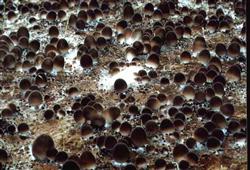
What are the common problems in the process of straw mushroom cultivation
1. Appearance of clustered mushrooms: Too large a seeding rate and uneven seeding will lead to clustered mushrooms. Therefore, the seeding rate should be controlled at 0.2-0.3 kg/sq m. The seeding method can be layer seeding, mixed seeding or broadcast seeding; it is best not to use hole seeding. 2. Aging of spawn: If aged spawn is used, although mycelial germination and colonization are normal, and the yield of the first flush is also good. But the yield of the second and third flushes is significantly reduced, and the overall yield decreases. Therefore, when purchasing spawn, you must pay attention.
-

A Detailed Guide to Post-Harvest Handling and Processing Methods for Wine Cap Mushroom
Wine cap mushroom, also known as King Stropharia, is a domesticated wild mushroom species, and in recent years there has been a trend of gradual expansion. Its mushrooms have a delicate fragrance, crisp and tender flesh, good palatability, high yield, high selling price, and very considerable economic benefits. However, its fresh products have a short storage time and are not easy to preserve. If not sold fresh in time, huge losses will be caused. In order to ensure that economic benefits are not lost, the salting processing and dried product processing techniques for wine cap mushroom are now introduced. 1. Salting processing of wine cap mushroom. 1. Harvesting. The mushroom bodies of wine cap mushroom used for salted export should be at 6-7
条件筛选