Harvesting Methods and Dried Product Processing Techniques for the Shaggy Mane Mushroom
The shaggy mane mushroom, also known as the shaggy ink cap, is a typical mesophilic variety. When the soil temperature is below 8°C, it cannot fruit normally; when the soil temperature is above 30°C, the mycelial vigor declines, the parasitic fungus Coprinus comatus pest mushroom appears in large numbers, and the shaggy mane crop is nearly lost entirely. By adopting measures to cool down in summer and warm up in winter, shaggy mane mushrooms can be produced year-round, but in summer...
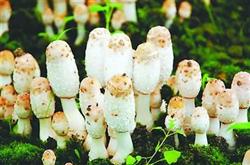 For timely harvesting of the shaggy mane mushroom, it must be picked at the button stage when the cap is still folded and unopened, and the annulus is about to loosen or has just loosened, at six or seven tenths maturity. Use a bamboo strip to scrape clean the soil from the base and the scales from the cap. After harvesting, rinse clean with pure water and quickly drain, or sun-dry the moisture for about 2 hours, then process promptly. If harvested after the annulus has loosened or fallen off, oxidative browning will occur during drying, the cap will autolyze and turn black, and it will lose its commercial value.
Drying is a key technique; the quality of the drying directly affects the color, aroma, shape and economic returns of the dried product. Zhang Fengying, a specialized household in Hongzhi Village, Dongshi Town, Zhijiang City, Hubei Province, based on three years of buyers' requirements for dried products, created a set of "New Methods for Dehydrating and Drying Shaggy Mane Mushrooms," which passed quality inspection and meets export commodity standards. The technical points are as follows:
(1) Drying facilities: 1. Drying room. 2. Dryer.
(2) Slicing and arranging on screens: Take fresh mushrooms picked the same day, washed and drained, and use a long-handled blade or stainless steel knife to cut them in half from the lower edge of the annulus down to the base of the stem, forming a whole mushroom shape connected by the cap but split into two halves. Separate by size and dryness, and spread the cut surfaces on bamboo screens. Place large, moist mushrooms on the middle layer of the bamboo rack, small, dry mushrooms on the top layer, and poor-quality ones on the bottom layer.
(3) Temperature control and moisture removal: (1) Start drying at 37°C, gradually raise to about 60°C, with a maximum of 65°C. The four drying stages -- initial drying, dehydration, color fixing, and final drying -- last 16 to 24 hours in total. Mushrooms with high moisture content (picked on rainy days) take longer to dry, and vice versa. Note: The drying temperature should be raised slowly; if the temperature rises too quickly, the caps will crack and turn black, reducing quality. When the temperature reaches 37°C, put the fresh mushrooms into the room for drying; the caps will naturally contract inward, increasing the degree of curling, and the color will be white with good quality. If they are put in for drying below 35°C, the cells in the mushroom body continue to be active, the caps expand and cannot maintain their shape, and the commercial value is low. (2) When the relative humidity in the drying room (or dryer) reaches 70% (shown by a hygrometer), open the air inlet and exhaust vents for ventilation and moisture removal. As the humidity drops, the vents should be half-opened and half-closed accordingly, that is, at the beginning the inlet and exhaust vents are fully open for about 4 hours, then half-open and half-closed for about 17 hours in the middle, and finally both vents are fully closed for the last 2 hours. When the moisture content of the mushroom body drops to 12%-13%, it becomes a dried product. A simple way to judge: press the cap with a fingernail; if it feels hard and leaves a slight nail mark, the dryness is appropriate. High moisture content makes it prone to mold, while low moisture content makes the cap prone to breaking. The processed dried product should immediately be packaged in double-layer plastic (11180, -55.00, -0.49%) tubular film, with the film opening tied tightly, and then put into woven bags, 5 kg per bag, selling for 300 yuan per bag.