-

Detailed Explanation of Pollution-Free Control Techniques for Tea Plant Pests and Diseases
The main pests currently occurring in tea gardens include the tea green leafhopper (Empoasca vitis), the pink tea mite (Acaphylla theae), and the tea geometrid (Ectropis obliqua); diseases include anthracnose and tea brown leaf spot. Tea farmers should strengthen tea garden surveys and carry out timely pest and disease control. For tea gardens with multiple concurrent pests, combine primary and secondary control, select high-efficiency, safe, pollution-free pesticides and biological pesticides, mix them rationally, reduce the number of sprayings, and ensure tea yield and quality. Because the overwintering base of the tea green leafhopper was relatively high last winter and this spring, as temperatures rise, tea gardens throughout the county
-
Pollution-free control methods for pests and diseases in flowers, trees and bonsai
Alcohol swabbing method: gently swab the leaves of orchids infested with scale insects using disinfecting alcohol; this can kill the scale insects, and in the following year there will rarely be any scale insect damage. Vinegar swabbing method: soak a cotton ball in edible vinegar (rice vinegar), then gently swab the leaves of camellias; this not only kills scale insects but also restores the damaged leaves to a green, glossy condition. Iodine swabbing method: when dry rot is found on the trunk of a stump bonsai, immediately use a blade wiped with iodine to scrape away all the rotted parts, reaching down to the xylem, then apply iodine to the main trunk; one week
-
What are the pollution-free control methods for the jujube looper moth?
The control principle is to make use of its characteristics of overwintering under the tree and the wingless female moth, strengthen control efforts under the tree, and eliminate or stop the female moths from climbing the tree to lay eggs. Large-scale control can reduce the insect population by 80%-90%. On this basis, to eliminate the larvae that slip through the net on the tree, pollution-free pesticides can be used for control. 1. Artificial pupa digging. Before the adults emerge in spring, turn the soil within 1 m around the tree and 15 cm deep to dig out pupae, collect the pupa clumps and dispose of them in a centralized manner. You can also deep-plow the tree in autumn to destroy its overwintering sites so that it cannot
-
Key Technical Points for Pollution-Free Control of Edible Mushroom Pests
Technical Introduction: Edible mushrooms, from spawn production and mycelial running to fruiting, are highly susceptible at every stage to invasion and damage by dozens of pests and pathogens, including various contaminating microorganisms, diseases, insect pests, nematodes and pest mites. Moreover, as the number of years of edible mushroom cultivation increases, the occurrence and damage of these harmful organisms have become a major factor limiting and restricting the continued development of edible mushroom production. This technology comprehensively integrates agricultural, physical and chemical control methods, and can effectively control the occurrence and damage of edible mushroom pests. Core technical contents (1) Edible
-
Pollution-Free Control Methods and Technical Key Points for Edible Mushroom Diseases
In the process of edible mushroom production, as long as management is carried out according to the biological characteristics of the selected mushroom strain, physiological diseases will not occur. When infectious diseases occur, pesticides must be applied in accordance with pollution-free requirements, with prevention as the priority, and never use pesticides casually. Long-stemmed mushrooms and unopened caps are typical symptoms of oxygen deficiency, especially when semi-underground mushroom sheds are used for cultivation. This phenomenon occurs commonly, severely reducing mushroom quality and affecting production efficiency. Solution: strengthen ventilation management. In low-temperature seasons, open the ventilation openings and door between 10 AM and 2 PM.
-
Causes of Tea Geometrid Outbreaks and Pollution-Free Control Methods
Tea geometrid, also known as the arching worm, measuring worm, and hanging-silk worm, belongs to the order Lepidoptera, family Geometridae. In Liandu District, this pest is mainly distributed in tea areas such as Bihu and Lixin, and is a voracious pest. If control is not timely, it often causes severe reductions in summer and autumn tea yields, and leads to decline in tree vigor, seriously affecting tea production. In previous years it occurred every year, but the damage was not great. In August 2007, this pest broke out over a large area in the Huanglingshang tea garden of Lixin Township, not only severely affecting the tea yield of that season, but also causing decline in tree vigor and poor cold resistance
-
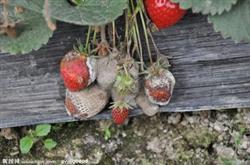
Key Technical Points for Pollution-Free Pest and Disease Control in Strawberries
Symptoms: Strawberry black mold mainly affects nearly ripe fruit. If harvested fruit is not promptly handled and packaged, it is even more susceptible to infection, causing large-scale fruit rot. When the disease first appears, the fruit surface shows light brown water-soaked lesions, which then rapidly soften and rot, producing a gray cotton-like growth, on which granular black mold develops, namely the mycelium and conidia...
-
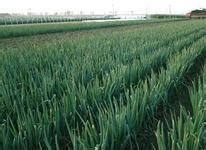
Key Points of Pollution-Free Pest Control Techniques in Welsh Onion Fields
I. Onion thrips, also known as small white insect or tobacco thrips. Adults and nymphs use their rasping-sucking mouthparts to suck sap from within the leaves, causing many fine, dense, long yellowish-white spots to form on the onion leaves. In severe cases, the leaves turn yellow and white, twist, die, and droop, seriously affecting the yield and quality of welsh onion. 1. Occurrence pattern. Onion thrips...
-
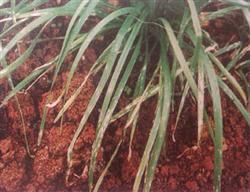
How to treat gray mold in Chinese chives? Key points of pollution-free control techniques
(1) Symptoms and epidemic patterns The disease mainly affects the leaves and shows 3 types: the white-spot type, in which water-soaked grayish-white spots form on both the front and back of the leaves, oval or spindle-shaped, with pale yellow margins; later the lesions enlarge into large dead patches, causing half a leaf or the whole leaf to die. In humid conditions, a sparse gray mold layer forms. The dry-tip type occurs...
-
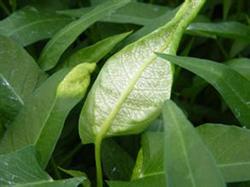
What are the key points for pollution-free control of white rust in water spinach?
Symptoms: The lesions appear on the underside of the leaves. On the upper surface of the leaves, pale yellow to yellow spots first appear, then gradually turn brown. The lesions expand, and on the underside of the leaves white raised blister-like spots form, nearly round or oval to irregular in shape, sometimes merging into larger blisters. In the later stage, the blisters rupture and release white sporangia. When the leaves are severely affected, the lesions are dense and the diseased...
条件筛选