Can the small plantlets cut from a spider plant be grown in water?
Spider plants (Chlorophytum comosum) are deeply loved by many plant enthusiasts because they can be hung in front of windows or under eaves, adding a nice decorative touch to the environment. Of course, although it is called a hanging plant, it does not have to be hung - it can also simply be placed in a suitable spot. If placed indoors, it not only provides ornamental value but also purifies indoor air. So, the spider plant is a great choice for indoor potted plants.
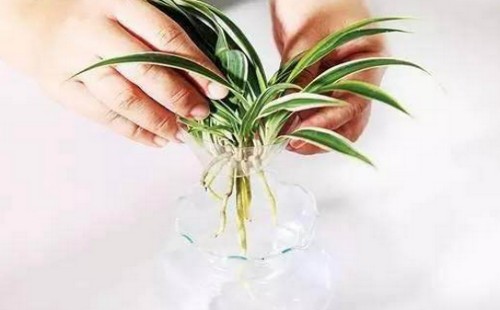
Spider plants can be grown not only in soil but also in water. Whether grown in soil or water, if cared for and managed well, they can produce young plantlets. However, with water-grown spider plants, you need to be careful not to submerge the leaves in water, as this can cause leaf rot and also easily breed bacteria, which can infect the plant and hinder its growth.
Even water-grown spider plants will continue to grow and likewise produce young plantlets, which we can separate and grow in soil when the opportunity arises. When cutting off the small plantlets, the original runners do not need to be kept - you can cut close to the root crown of the plant. So, can the small spider plant plantlets that have been cut off be grown in water? The answer is certainly yes. So, how do you grow the separated small spider plant plantlets in water?
1. Container selection
To achieve the effect of enjoying both the leaves and the roots, you first need to choose a transparent glass container, then select a suitable vase based on the size of the separated young plantlets. Generally, choose a glass container with a narrow neck, so the spider plant can rest at the mouth of the container and be held in place, or it can be left unfixed.
2. Selecting the plantlet
Cut a newly grown plantlet from the runner of the water-grown mother plant, and it is recommended to keep the aerial roots, as this is better for survival in water. Of course, in addition to cutting water-grown plantlets, you can also use young plantlets produced from soil-grown plants, washed clean, for water cultivation.
3. Water cultivation process
During water cultivation of spider plants, the amount of water added should not be too much, and the water level must be strictly controlled. Usually, the water level should submerge 1/3-1/2 of the spider plant's root system, leaving the upper part of the roots in the air, which ensures that the roots can absorb oxygen from the air in addition to dissolved oxygen, and this is better for the growth of water-grown spider plants.
4. Care and management
For young water-grown spider plant plantlets, during the initial stage you can change the clean water every 2-3 days, with purified water being best. When the plant has grown new roots to about 3-5 cm, you can add a small amount of nutrient solution as appropriate, doing so when changing the water. But when changing the water, you should also trim the roots appropriately, mainly cutting off rotten roots, and at the same time clean the inner wall of the container.
Water-grown spider plants generally only need indirect light; do not expose them to strong direct light for long periods, and do not keep them in shade for long periods either. If the leaf tips appear dry and withered, cut them off promptly and strengthen care and management afterward.