Precautions and Key Technical Points for Intercropping in Pear Orchards
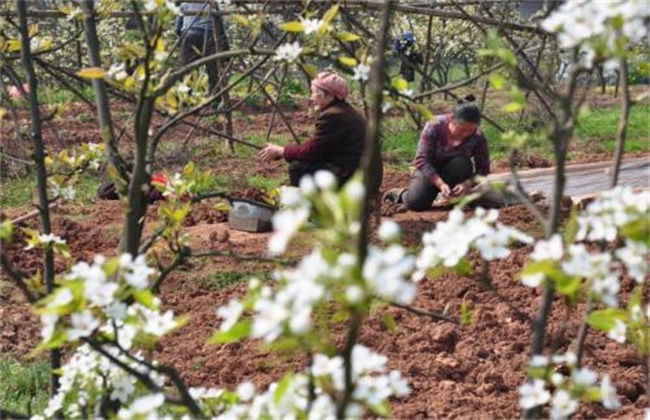
Intercropping and relay intercropping are traditional planting patterns in our country, and with the continuous development of agriculture, this pattern has attracted the attention of a large number of farmers and has been widely applied. Pear orchards are very suitable for intercropping, but there are still some issues to pay attention to during intercropping, otherwise it will affect the growth and development of both crops. Let's take a look at the precautions for intercropping in pear orchards together.
1. Crops should not be tall
In pear orchards, it is not suitable to intercrop with tall-stalked crops such as corn and sorghum, as this will seriously affect the ventilation and light penetration of the pear trees. Pear trees are light-loving fruit trees, and once there is insufficient light, it will affect their growth, development and yield. It is suitable to intercrop with short-stalked crops such as beans, tuber crops, peanuts and strawberries.
2. The growth period should not be too long
In pear orchards, it is not suitable to intercrop with crops that have too long a growth period, especially perennial crops, as this will affect the fertilization and cultivation of the pear trees and have an adverse effect on the growth of the pear trees. It is suitable to reasonably intercrop with crops that have a relatively short symbiotic period with pear trees, such as rapeseed, garlic and green manure.
3. Should not be deep
The root system of pear trees is relatively developed and rooted deeply, so it is not suitable to intercrop with crops that have developed root systems and deep roots, so as to avoid the crops competing with pear trees for water and fertilizer. It is suitable to intercrop with crops whose root systems are distributed in the front and whose taproots are not developed, such as some vegetables. In addition, it is not suitable to intercrop with crops that consume relatively strong soil fertility, such as sugar beet.
4. Should not be close
In pear orchards, intercrops should not be planted close against the trunks or under the tree canopy, so as to avoid hindering the management of pear trees and affecting the growth of pear trees. The intercropping distance should be as far away from the pear trees as possible, generally no less than 50 cm beyond the vertical line of the canopy, to ensure the normal growth of pear trees and crops without interfering with each other.
5. Avoid intercropping with root-type medicinal materials
Intercropping Chinese medicinal materials in pear orchards can yield several times or even dozens of times more income than intercropping with crops, but not all Chinese medicinal materials are suitable for intercropping. For example, root-type Chinese medicinal materials not only have a long growth period, but their roots are also very easy to break the roots of pear trees during harvesting.
6. Give priority to fruit
After intercropping, fertilizer and water management should be strengthened according to the cultivation of both pear trees and intercrops, but the principle of giving priority to fruit must always be adhered to. When there is a conflict between the growth of pear trees and the growth of intercrops, control measures should be taken against the intercrops to create conditions for the normal growth and development of pear trees.
The above is an introduction to the precautions for intercropping in pear orchards. I hope it can help you. To learn more related knowledge, please stay tuned to us.