Methods and Technical Key Points for Scraping Bark of Fruit Trees in Winter
Generally, when planting some arbor-type fruit trees, the trunks are relatively thick and there is a lot of old bark. It usually does not fall off on its own. Therefore, bark scraping can be done in winter. Bark scraping also has many benefits for tree growth, so most fruit growers scrape the bark of fruit trees in winter. So how exactly do you scrape, and what specific methods are there for bark scraping? Let's take a look right away at how to scrape bark.
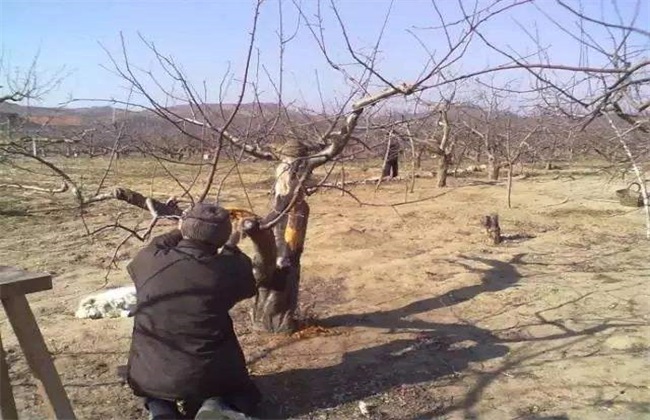
1. Purpose of Bark Scraping
Generally, fruit growers scrape the bark of pome fruit trees that have grown for more than ten years, such as pears and apples; trees that have not reached that growth period cannot be scraped. However, 8-year-old grapes can be scraped. Generally, young trees are not scraped; rashly scraping bark affects fruit tree growth and easily inhibits it. Bark scraping is done to eliminate insects and pathogens overwintering in the bark, and to stimulate bark renewal. Trees in their prime have very good growth vigor and generally do not need bark scraping.
2. Timing of Bark Scraping
The time for bark scraping is during the dormant period, when sap is not flowing, generally after the fruit trees shed their leaves and before they sprout the following year. This is roughly between November and February of the following year. During this period, fruit trees do not sprout or grow. Bark scraping is generally done in autumn and winter, and generally should not be done in summer, nor during growth and fruiting periods.
3. Bark Scraping Method
Specialized bark scraping tools can now be purchased. Not only the trunk, but also the main branches, side branches, and auxiliary branches all need bark scraping. However, the more tender branches further up cannot be scraped, and fruiting branch groups cannot be scraped, as this affects growth and the nutrient supply to the branches. The scraping depth is to stop once the red inner bark is visible. Generally, only the rough outer bark needs to be removed.
4. Disinfection Treatment
After scraping the bark, promptly sweep up the scraped bark debris under the tree, as well as some dead branches and dead leaves. Sweep them all out of the orchard together, then burn them. This ensures that insects and pathogens are eliminated. Then, to protect the trunk and prevent cold and freezing damage, whitewashing is needed. Use lime, salt, soybean cake slurry mixed with water and vegetable oil, stir well, and finally add lime-sulfur mixture and apply it evenly to the trunk.
Bark scraping of fruit trees has certain benefits for old trees that have reached a certain growth age, but for trees that have not reached that age, it will have an impact. Pay attention to the timing and method of bark scraping; do not scrape bark arbitrarily.