-

Identification and Prevention of Physiological Disorders in Atlantic Potato Tubers
The Atlantic potato is a high-quality raw material for processing snack foods such as potato chips and French fries. Its growth period is relatively short, and it has strict requirements for the cultivation environment: it needs cool conditions but is not tolerant of low temperatures. During cultivation, freeze protection and fertilizer and water management should be done well to avoid physiological disorders such as black heart, hollow heart, starch leakage, cracking, and deformities, and to improve tuber quality and marketable yield. I. Tuber black heart 1. Symptoms: Irregular patterns ranging from black to blue appear in the center of the tuber. When oxygen deficiency is severe, the entire tuber may turn black. Usu
-
Detailed Explanation of the Reproductive Organs and Physiological Characteristics of the Female Fox
The reproductive organs of the female fox consist of the ovaries, fallopian tubes, uterus, vagina, and external genital organs. The external genital organs include the vestibule of the vagina, labia, and clitoris. The ovaries of the female fox are located at the third and fourth lumbar vertebrae, at the posterior margin of the kidneys. The left ovary is positioned more anteriorly than the right ovary. The ovaries are flat in shape and grayish-red; during estrus, the ovary is 2 cm long and 1.5 cm wide; the fallopian tubes are 5-7 cm long. The ovaries and fallopian tubes are covered by adipose tissue. The uterus is a bicornuate uterus, with the uterine horns and uterine body suspended by the broad ligament of the uterus on the lower lateral walls of the pelvis. The uterine horns are 10-13 cm long, the uterine body is 4-6 cm long, and the cervix protrudes into the vagina. The vagina is 6-8 cm long, with its anterior end connected to the cervix and its posterior part adjoining the urogenital vestibule. The vestibule has two relatively well-developed protrusions, mating. During mating, the vestibule is stimulated and contracts violently, the two lateral protrusions swell, and together with the bulbous body of the male fox's penis, this results in a copulatory tie. The vulva of the female fox, together with the bulbous body of the male fox's penis, results in a copulatory lock. The vulva of the female fox is round on top and pointed at the bottom; outside the breeding season it is covered by pubic hair and not visible; during the breeding season it shows morphological changes.
-
What are the control methods for physiological diseases of mushrooms?
Hard opening of the cap: When mushrooms encounter abnormal weather, the phenomenon of young fruiting bodies opening their caps prematurely is called hard opening of the cap. It generally occurs at temperatures above 18°C, with a temperature difference of about 10°C, or under sudden temperature drops. Insulation work should be done well before sudden temperature changes, and the relative air humidity in the mushroom house should be increased. Malformed mushrooms: The causes of formation are uneven thickness of the casing soil, low fruiting position, and carbon dioxide content in the mushroom house exceeding 0.3%; or they are caused by pesticide damage, diseases, and insect pests. Attention should be paid to the quality of the casing soil and ventilation, preventing harmful gases from entering the mushroom house; attention should be paid to prevention
-
Physiological Disorders of Mushrooms and Their Control Methods
Mushrooms are relatively sensitive to their environment. A poor cultivation environment will hinder their normal growth and development, produce various abnormal phenomena, and lead to reduced yields and lower quality. Common physiological disorders of mushrooms include excessive mycelial growth, hard opening of the caps, thin-skinned early opening, and the appearance of ground-button mushrooms and hollow-stem white-core mushrooms. They are described below: Symptoms of excessive mycelial growth: after the casing soil of the mushroom bed is watered, the fluffy mycelium of the mushroom will continuously grow toward the surface of the fine soil, and in severe cases will form a fine, dense, water-impermeable mycelial mat, thereby delaying the time of fruiting and reducing the
-
How to prevent and control non-physiological diseases of mushrooms?
(1) Deformed mushrooms Deformed mushrooms are mostly induced by temperature differences or unfavorable environments; they may also be related to the strain used. Deformities mainly include the following types: 1. Hollow stipe. Mushrooms on the bed look normal, but when the base is cut off, part of the stipe is found to be hollow, usually with a ring-shaped cavity around a hard core. Afterwards, the cut surface of the stipe may crack and then curl backward, causing the mushrooms to lose their appealing appearance and decline in quality. This is mainly caused by low air humidity during the fruiting period, rapid evaporation of water from the mushroom bodies, excessively dry casing soil, and the fruiting bodies being unable to obtain water.
-
Control Methods and Technical Key Points for Physiological Diseases of Button Mushrooms
Button mushrooms are relatively sensitive to their environment. A poor cultivation environment will hinder their normal growth and development, produce various abnormal phenomena, and lead to reduced yield and lower quality. Common physiological diseases of button mushrooms include excessive mycelial growth, hard opening of the caps, thin-skinned early opening, and the appearance of soil-level mushrooms and hollow-stemmed white-core mushrooms. They are described below: Symptoms of excessive mycelial growth: after the mushroom bed is cased and watered, the fluffy mycelium of the button mushroom will continuously grow toward the surface of the fine soil. In severe cases, it will form a fine, water-impermeable mycelial mat, thereby delaying the time of fruiting and reducing the mushroom
-
What Types of Physiological Deformities Occur in Mushrooms? A Full Analysis of Common Types
Mushroom deformities are mostly triggered by temperature differences or unfavorable environmental conditions; they may also be related to the strain used. The common deformed mushrooms mainly include the following types: 1. Hollow stipe. From the outside the mushroom looks normal, but when the base is cut off, part of the stipe is found to be hollow, usually with a ring-shaped cavity around a hard core. Afterwards, the cut surface of the stipe may split and curl backward, making the mushroom poor in appearance and reducing its marketability. Cause: This is mainly caused by low air humidity during the fruiting period, rapid evaporation of water from the mushroom body, and overly dry casing soil,
-
Physiological leaf roll in potatoes
[Disease diagnosis] The symptoms of physiological leaf roll and viral leaf roll share certain similarities. The main manifestation is the upward curling of the leaflets. Usually the lower leaves of the plant, or all the leaves of the whole plant, become brittle and curl upward into a tube shape. In some cases only the leaf margins curl slightly upward; in others the curling is severe, forming a spoon shape or tube shape. In severe cases, the leaves become thicker, brittle and hard, and darker and more intense in color, giving a feeling of a messy, clustered clump. The characteristic of physiological leaf roll is that the leaf rolling shown by affected plants is relatively uniform. [Cause] There are several causes of physiological leaf roll: for example, excessive one-sided application of nitrogen fertilizer,
-
Rice physiological red blight can be controlled with raw gypsum powder
Rice physiological red blight often occurs in cold-waterlogged mountain valley fields and in paddy fields where organic green manure has not fully decomposed. This disease mostly occurs at the tillering stage of rice, showing as very little tillering, leaves turning yellow-brown, and tea-brown irregular spots on the first and second leaves from the base; some mistake it for leaf blast. When the rice hills are pulled up, the root system is yellow-brown, and in severe cases black; the seedlings do not grow, commonly called "fa qiu". There are three main causes of physiological red blight: first, toxic substances such as hydrogen sulfide produced during the decomposition of green manure; second, some cold-waterlogged
-
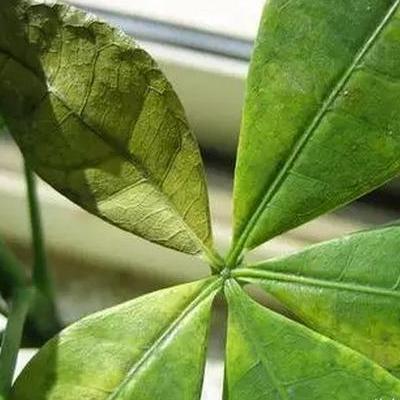
What Are the Symptoms of Physiological Diseases in Flowers and Plants and How to Treat Them
Flowers and plants are something many people love to grow, but when they get sick, it is a real headache. What are the symptoms of physiological diseases in flowers and plants? What to do about physiological diseases in flowers and plants: What are the symptoms of physiological diseases in flowers and plants: The first is leaf discoloration. The leaf color becomes lighter, or turns yellow or white
条件筛选