-
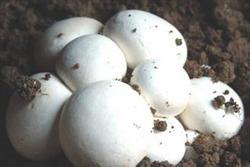
How to prevent and control physiological diseases of button mushrooms during the fruiting period
In button mushroom production, from casing soil onward until fruiting, in addition to routine management, correctly mastering and applying the following four key points on watering plays an important role in ensuring the amount and vitality of mycelium, ensuring the number and uniformity of pinheads, and ensuring the healthy growth of fruiting bodies and their commercial quality. 1. The "mycelium-pressing water" should be...
-

What are the control methods for common physiological diseases of edible fungi?
1. Mycelial overgrowth After inoculation of edible fungi, vegetative growth is excessive, and the fluffy mycelium grows densely. After casing soil is applied, it often "drills" out of the ground and forms a mycelial mat. This situation is related to the characteristics of the strain and environmental conditions. Low water content in the soil layer, excessively high nitrogen content in the compost, poor ventilation, and excessively high air humidity all easily cause mycelial overgrowth, producing the phenomenon of "mycelium emergence." Common control methods: select high-quality strains; pry loose and break up the hardened mycelial mat; cover with fine soil, increase ventilation, and lower relative air humidity; use heavy watering to promote mycelial
-
Be on strict guard against physiological diseases in edible mushroom cultivation
Wild mushroom: caused by high nitrogen, high moisture and high temperature in the substrate. Control methods: reduce the nitrogen content of the substrate and raise the pH value of the substrate to 8-9. Green mold: caused by a too low pH value, poor ventilation of the substrate bags, and excessive bag temperature leading to a stuffy stack. Control methods: raise the pH value to 8-9, strengthen microporous aeration to promote mycelial growth, and prevent stuffy stacks from high humidity. Dead mushrooms: shortly after pinning, large numbers of small mushroom pins sometimes shrink, turn yellow and even die. This is mainly because the temperature of the substrate bags in the mushroom stack is too high and the heat from mycelial metabolism cannot
-
What are the common physiological diseases of bag-cultivated shiitake mushrooms?
Physiological diseases, also known as non-infectious diseases, are poor growth phenomena caused by unsuitable growing conditions or the influence of harmful substances in the environment. Although such diseases have no pathogenic agents and are not mutually contagious, once they occur they can cause major losses. In Chunhua, Shaanxi, the most common physiological diseases of bag-cultivated shiitake mushrooms include mycelial thinning, mushroom burning (pile heating), yellow water in the mushroom logs, mushroom log decline, and deformed mushrooms. 1 Mycelial thinning 1.1 Symptoms: mycelial growth is sparse, and the mushroom logs are soft and lack elasticity. 1.2 Causes: ① The substrate had already become moldy before sterilization
-
How to prevent and control common physiological diseases of oyster mushrooms?
1. Mycelial overgrowth. In oyster mushroom production, mycelial overgrowth often causes the mycelium to become densely clumped, forming old mycelial skin that fails to produce mushrooms. The main causes are aging of the spawn or subculturing with aerial mycelium during the transfer of primary spawn. In production, if the mushroom house is poorly ventilated, the temperature is too high, or the film is left covering for too long, mycelial overgrowth without mushroom production can also occur. Prevention and control methods: strengthen spawn production management; during the fruiting body differentiation stage, increase the ventilation of the mushroom house and lower the temperature of the mushroom house. When old mycelial skin appears during cultivation, promptly remove the old mycelial skin, score the mycelial block and mycelial film to stimulate mushroom production.
-
Control Methods and Technical Key Points for Physiological Diseases of Oyster Mushrooms
Oyster mushrooms have the characteristics of wide adaptability, strong stress resistance, a wide range of cultivation material sources, simple cultivation techniques, and high economic benefits. In recent years, oyster mushroom production has developed rapidly in our county, but in production, various non-infectious physiological diseases often occur due to poor management, causing yield reductions and directly affecting the economic benefits of oyster mushroom production. Based on many years of production practice experience, we have summarized the symptoms and control techniques of several main physiological diseases that commonly occur in oyster mushroom production. 1. Excessive mycelial growth In oyster mushroom production, excessive mycelial growth often causes the mycelium to become dense
-
What are the control methods for physiological diseases of mushrooms?
Hard opening of the cap: When mushrooms encounter abnormal weather, the phenomenon of young fruiting bodies opening their caps prematurely is called hard opening of the cap. It generally occurs at temperatures above 18°C, with a temperature difference of about 10°C, or under sudden temperature drops. Insulation work should be done well before sudden temperature changes, and the relative air humidity in the mushroom house should be increased. Malformed mushrooms: The causes of formation are uneven thickness of the casing soil, low fruiting position, and carbon dioxide content in the mushroom house exceeding 0.3%; or they are caused by pesticide damage, diseases, and insect pests. Attention should be paid to the quality of the casing soil and ventilation, preventing harmful gases from entering the mushroom house; attention should be paid to prevention
-
Physiological Disorders of Mushrooms and Their Control Methods
Mushrooms are relatively sensitive to their environment. A poor cultivation environment will hinder their normal growth and development, produce various abnormal phenomena, and lead to reduced yields and lower quality. Common physiological disorders of mushrooms include excessive mycelial growth, hard opening of the caps, thin-skinned early opening, and the appearance of ground-button mushrooms and hollow-stem white-core mushrooms. They are described below: Symptoms of excessive mycelial growth: after the casing soil of the mushroom bed is watered, the fluffy mycelium of the mushroom will continuously grow toward the surface of the fine soil, and in severe cases will form a fine, dense, water-impermeable mycelial mat, thereby delaying the time of fruiting and reducing the
-
How to prevent and control non-physiological diseases of mushrooms?
(1) Deformed mushrooms Deformed mushrooms are mostly induced by temperature differences or unfavorable environments; they may also be related to the strain used. Deformities mainly include the following types: 1. Hollow stipe. Mushrooms on the bed look normal, but when the base is cut off, part of the stipe is found to be hollow, usually with a ring-shaped cavity around a hard core. Afterwards, the cut surface of the stipe may crack and then curl backward, causing the mushrooms to lose their appealing appearance and decline in quality. This is mainly caused by low air humidity during the fruiting period, rapid evaporation of water from the mushroom bodies, excessively dry casing soil, and the fruiting bodies being unable to obtain water.
-
Control Methods and Technical Key Points for Physiological Diseases of Button Mushrooms
Button mushrooms are relatively sensitive to their environment. A poor cultivation environment will hinder their normal growth and development, produce various abnormal phenomena, and lead to reduced yield and lower quality. Common physiological diseases of button mushrooms include excessive mycelial growth, hard opening of the caps, thin-skinned early opening, and the appearance of soil-level mushrooms and hollow-stemmed white-core mushrooms. They are described below: Symptoms of excessive mycelial growth: after the mushroom bed is cased and watered, the fluffy mycelium of the button mushroom will continuously grow toward the surface of the fine soil. In severe cases, it will form a fine, water-impermeable mycelial mat, thereby delaying the time of fruiting and reducing the mushroom
条件筛选