-

Where Is the Origin of Hyacinths? A Detailed Explanation of Their Cultivation and Growing History
The Origin and Cultivation History of Hyacinths The origin of hyacinths is in the northeastern Mediterranean, and they have a long cultivation history dating back to the 15th century. For more than 300 years, hyacinths have been a favorite flower breeding subject for European horticultural plant breeders
-
Where is the place of origin of lettuce? An introduction to its cultivation history
Lettuce is the common name for leaf lettuce, also known as goose lettuce, stem lettuce, and mai zai cai, among others. It is an annual or biennial herbaceous crop of the genus Lactuca in the Asteraceae family. According to leaf growth form, it can be divided into head lettuce, curly-leaf lettuce, and upright lettuce. It is rich in nutrients and can be eaten raw; it is crisp and refreshing with a slight sweetness.
-
Where Is the Place of Origin of the Peanut? Understanding the Cultivation History of Peanuts in One Article
The peanut is a nut with abundant yields and widespread consumption in China, also known as the groundnut, the "longevity fruit," and the earth bean, among other names. It is an annual herbaceous plant of the order Rosales and the family Fabaceae (Leguminosae), best planted in warm climates with moderate rainfall in sandy soil areas, and is mainly distributed in Brazil, China, Egypt, and other places.
-
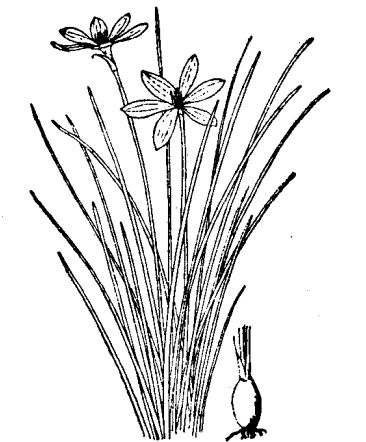
Detailed Explanation of Zephyranthes Candida Cultivation Techniques and Origin Distribution
[Aliases]Zephyranthes candida, jade curtain, white-flowered iris lily. [Family and genus]Amaryllidaceae, Zephyranthes. [Morphology]Perennial evergreen herb, with a small bulb that has a slender neck, plant height 15-20 cm. Leaves basal, linear, slightly fleshy, dark green. The scape is hollow, 10--25 cm tall
-

Introduction to the Growth Habits and Origin Distribution of Iris
[Aliases] Butterfly blue, butterfly flower, iron carrying pole. [Family and genus] Iridaceae, Iris. [Morphology] Rhizome short and thick with many nodes. Plant height 3060 cm. Leaves sword-shaped, 30--50 cm long, 2.5-3.0 cm wide. Flower stems 30-50 cm tall, with 1--2 branches
-
How Is Yellow Tea Produced? Understanding the Origins of Yellow Tea in One Article
The basic process for green tea is fixation, rolling, and drying. When the green tea processing technique is not properly controlled - for example, if after fixation the leaves are not spread to cool and rolled in time, or after rolling they are not dried or pan-fired in time and are left piled too long - the leaves turn yellow, producing yellow leaves and a yellow brew, similar to the yellow tea that appeared later. Therefore, the emergence of yellow tea evolved from improper green tea processing methods. Xu Cishu of the Ming Dynasty recorded this history of evolution in his "Tea Commentary" (1597).
-
Lingyun Baihao Tea Variety Characteristics and Origin Introduction
At the Lingyun production line of Guangzhou Jingcha Food Co., Ltd. in Dashan Tun, Anxiang Village, Jiayou Town, Lingyun County, workers are busy sorting the freshly processed finished black tea. Some are packing, some are busy weighing and registering for warehouse dispatch, and the products are being prepared for loading and transport to Guangzhou. The company manager said: Since Jingcha Food Company began production and entered the market last year, demand has exceeded supply, and all products are exported to the EU. Huang Daxiong, general manager of Guangxi Langfu Organic Tea Co., Ltd., laid out his tea-making plans: Lingyun tea has already entered a model of large-scale operation and market access system management. What is needed now is to develop high-tech, high-end tea products based on organic tea, develop mid-range products based on pollution-free tea gardens, follow the path of group-based development, and make Lingyun Baihao Tea a flagship tea product of China.
-
Origin Characteristics and Quality Introduction of Xinyang Maojian Tea
Xinyang Maojian tea is one of China's traditional famous teas and one of Henan Province's well-known local specialties. It is named "Maojian" because its strips are slender and elegant, round and straight with peak tips, and fully covered with white down; it is also named "Xinyang Maojian" because its place of origin is Xinyang. It has long been renowned at home and abroad for its unique style of "slender, round, tight, straight, with abundant white down, high fragrance, rich taste, and green color." As early as 1915, it won a gold award at the Panama Universal @#@119@#@; in 1959 it was honored as one of China's top ten famous teas; in 1982, 1986, and 1990 it was rated a national famous tea by the Ministry of Commerce for three consecutive times; in 1985 it won the Silver Award of the National Quality Award; in 1990 it won the Gold Award of the National Quality Award [2]; and in 1999 it again won a gold award at the Kunming World Horticultural Exposition.
-
What kind of tea is Nandan County Liulong tea? Origin and characteristics introduction
Liulong tea is produced in the Longma mountain group of Liuzhai Town, Nandan County, at the southern foot of the Yunnan-Guizhou Plateau. It has a long cultivation history of more than 800 years. The Longma mountain group is shrouded in clouds and mist all year round, with abundant rainfall and a large temperature difference between morning and evening. Its ecological environment is uniquely favorable, making it a pure, natural, and pollution-free high-quality tea-producing area. The Longma tea leaves, processed with modern technology and traditional craftsmanship, are of excellent quality and have characteristics such as a jade-green liquor color and fresh and tender quality. When brewed, the buds and leaves can be seen gradually unfurling, rising and sinking one after another. It smells fresh and tender with a rich fragrance, and drinking it is fresh and refreshing with a sweet aftertaste, making one feel relaxed and happy, with a sense of ethereal delight.
-
A Detailed Explanation of the Origin and Development History of Black Tea ⟧2⟧Black tea originated in the Ming Dynasty in the 16th century. During the tea manufacturing process, it was discovered that sun-drying could replace the fixing (kill-green) step
Black tea originated in the Ming Dynasty in the 16th century. During tea manufacturing, it was discovered that sun-drying could replace fixation (kill-green), and after rolling the leaves turned red, thus producing black tea. The earliest black tea production began with Souchong black tea in Chong'an, Fujian. In the Qing Dynasty, Liu Jing's "Pian Ke Yu Xian Ji" records: "At the ninth bend of the mountain there is Xingcun town, where tea experts gather. Tea produced elsewhere in the province such as Shaowu and Jiangxi Guangxin, with black leaves and red soup, locally called Jiangxi Wu, is all privately sold to the various firms of Xingcun." After the appearance of Xingcun Souchong black tea, Congou black tea gradually evolved. In the 1920s, India crushed tea leaves during processing to make broken black tea, and in the 1950s our country also began trial production of broken black tea.
条件筛选