-

What other management measures are there for macadamia orchards
1. Beekeeping in the orchard. Macadamia is an insect-pollinated flower; the main pollinating insects are honeybees, ground wasps, flies, thrips, etc. Keeping honeybees in the orchard greatly increases the chances of pollination between plants and between cultivars, which is of great benefit to raising yields. 2. Frost protection
-
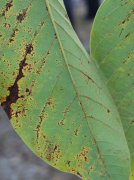
Symptoms and Control Methods of Rust Disease in Atemoya Orchards
Because orchards in mountainous areas and river valleys have high humidity, they are prone to triggering the spread and expansion of "annona rust." The Taitung District Agricultural Research and Extension Station of the Council of Agriculture (hereinafter referred to as the Taitung Station) recently monitored Beinan, Luye, and Donghe, among other areas, and found that some atemoya orchards
-
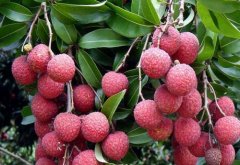
Rational Fertilization Methods for Lychee Orchards and Factors to Consider
Lychee cultivation is fairly widespread, and many regions have lychee orchards. So how should rational fertilization in lychee orchards be carried out, and what issues need to be considered? Let's take a look together! Rational fertilization in lychee orchards must take the following factors into consideration.
-
How to Apply Organic Fertilizer in Orchards in Spring? Detailed Methods and Techniques
Precautions: Choosing commercial organic fertilizer. First, clarify the source of the raw materials. Second, conduct a small-area trial demonstration with the chosen commercial organic fertilizer first. Be careful to apply it after it is fully decomposed. Most organic fertilizers, such as newly purchased chicken manure and cow manure, often carry harmful substances such as pathogens, and using them directly is harmful to crops.
-
What are the methods for planting pepper seedlings in orchards?
To grow pepper well, the quality of the pepper seedling planting is very important, so how should pepper be planted in an orchard? First, land preparation. 1) Land preparation method. When establishing an orchard on flat land, the whole orchard can be prepared. Deep plow 30-50 cm, and together with deep plowing apply 4000-
-
How Should Hawthorn Orchards Be Irrigated Reasonably? A Detailed Explanation of the Technical Points
Hawthorn, an edible plant, a drupe-type fruit, hard in texture, thin in flesh, with a slightly sour and astringent taste. A deciduous shrub. Branches densely growing, with fine thorns, young branches covered with soft hairs. Twigs purple-brown, old branches grayish-brown. The fruit can be eaten raw or made into preserved fruit or fruit cakes, and after drying can be used as medicine. It is a tree species unique to China that serves both as medicine and fruit, with effects such as lowering blood lipids and blood pressure, strengthening the heart, and resisting arrhythmia. It is also a good medicine for strengthening the spleen and opening the appetite, promoting digestion and resolving stagnation, and activating blood and resolving phlegm, with good therapeutic effects on conditions such as chest and diaphragm distension, hernia, blood stasis, and amenorrhea. The flavonoid compound vitexin in hawthorn is a drug with relatively strong anticancer activity, and its extract has a certain effect on inhibiting the growth, proliferation, and invasive metastasis of cancer cells in the body.
-
Key Technical Points for Fertilization and Soil Management in Pineapple Orchards
Pineapple (scientific name: Ananas comosus), commonly known as fengli, is one of the famous tropical fruits. In Fujian and the Taiwan region of China it is called wangli or wanglai (ng-li), in Singapore and Malaysia it is called huangli, and in the mainland and Hong Kong, China it is called boluo. There are more than 70 varieties, and it is one of the four famous fruits of Lingnan.
-
How to prune pear trees with an unreasonable structure
Currently, many pear orchards use high-density planting techniques for production. The single-layer high open-center form of pear trees is a tree form suitable for high-density pear orchards. Its suitable density is 44 trees planted per mu. The tree structure is a trunk height of 60-80 cm and a tree height of 3-3.5 m. The top of the central leader
-
Key Technical Points for Soil, Fertilizer and Water Management in Jujube Orchards
After jujube trees enter the full fruit-bearing stage, doing a good job of soil, fertilizer and water management and maintaining a good tree vigor are the prerequisites for high yield and quality. The soil, fertilizer and water management of jujube trees in the full fruit-bearing stage can be summarized as two tillages, four fertilizations and three waterings. The two tillages refer to deep plowing and intertillage. Deep plowing can loosen the soil in the jujube orchard,
-
Detailed Explanation of Key Technical Points for Soil Management in Apple Orchards
I. Ridge raising and mulching. 1. Dig fertilization pits (this can be done together with the application of base fertilizer). On the inner side, 30-40 cm vertically below the extended branches on the outer periphery of the tree canopy, dig 2-4 fertilization pits each 40 cm long and 40 cm wide and 50 cm deep (the depth for topdressing is 20 cm). 2. Dig trenches and raise ridges. Outside the fertilization holes, along the row direction
条件筛选