-
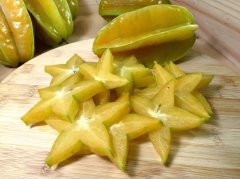
Nutritional Composition of Star Fruit and Common Varieties in Taiwan, and Who Should Not Eat It?
Do you like eating star fruit? Star fruit has fairly high nutritional value, but do you know what its nutritional value is? What are the common varieties? Star fruit is scientifically known as wu lian zi (Averrhoa carambola), and is commonly called feng guo in the Minnan region. Star fruit originated in the tropical and subtropical regions of Southeast Asia, and was introduced to China from Vietnam around the Han Dynasty.
-
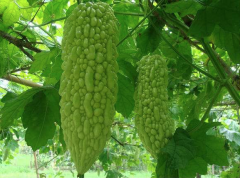
New Large-Fleshed Green Bitter Melon Variety: Nutrients of the Powder-Green Bitter Melon and How to Remove Its Bitterness
The powder-green bitter melon, also known as the green-fleshed bitter melon, sometimes this type of bitter melon bears few fruits, and it is also a fairly common bitter melon on the market, so do you know how this kind of bitter melon can be eaten? What nutrients does it have? Bitter melon can be eaten raw or cooked, and its nature
-
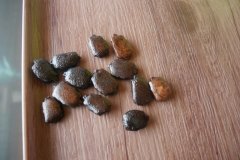
Taiwan Specialty Plant and Fruit: Gac (Momordica cochinchinensis) - Morphological Characteristics, Nutrients, and Can the Seeds Be Eaten?
The fruit from heaven - "Heaven Fruit" - its appearance gives no hint of heaven at all, yet it is a good friend to the eyes. People in Vietnam and South Asia call gac (Momordica cochinchinensis) the "fruit from heaven," and it is a treasure for young women to keep their skin rosy and radiant.
-

What are the nutrient contents of common organic fertilizer materials and the precautions for their application?
Organic fertilizer is mainly made from animal excreta or plant and animal residues and other by-product resources rich in organic matter. It includes human feces and urine, barnyard manure, compost, green manure, oilseed cake fertilizer, biogas fertilizer, etc. So, what are the nutrient contents of common organic fertilizer materials? What application precautions
-
What is micronutrient fertilizer and how to use it? Explained clearly in one article
Micronutrient fertilizer refers to fertilizers that supply trace elements to plants. Common ones include copper fertilizer, boron fertilizer, molybdenum fertilizer, manganese fertilizer, iron fertilizer, zinc fertilizer, etc., and they are mainly some inorganic salts and oxides. The use of micronutrient fertilizer is very broad, from grain crops to oil crops, cash crops, fruits,
-
How many years does it generally take for sea buckthorn to bear fruit after planting?
Sea buckthorn is a nutrient-rich fruit, rich in vitamin C, and has the reputation of being the king of vitamin C. It is widely planted in the northwest region, so how many years does sea buckthorn take to bear fruit? 1. How many years does sea buckthorn take to bear fruit? Sea buckthorn generally blooms and bears fruit 3-5 years after planting, but the yield
-
How Do Coconuts Disperse Their Seeds? A Detailed Explanation of the Dispersal Method
Coconuts are deeply loved by people for their rich nutrition and delicious taste. They originated in southeastern Asia and are often planted in Hainan and Taiwan, China. So, how do coconuts disperse their seeds? 1. How do coconuts disperse their seeds? Coconuts disperse their seeds by water.
-
Soilless cultivation formulas, including substrate formulas and nutrient solution formulas
Abstract Soilless cultivation substrate formula: sand, vermiculite, ceramsite, rock wool, perlite, sawdust, rice hulls, peat, etc. can be used. If cultivating tomato and cucumber vegetables, a mixed substrate of peat and vermiculite is better. Soilless cultivation nutrient solution formula: magnesium sulfate can be used
-
Sand Culture Vegetable Growing Techniques: Common Nutrient Film and Water-Vapor Sand Culture Methods
Abstract Nutrient film sand culture: grow in raised beds, dig a trench in the middle of the bed bottom, then install pipes for drainage and place a nutrient solution storage tank, irrigate with a micro pump. Water-vapor sand culture: use a trough-shaped structure, build the upper layer with a "two-four wall" (24 cm thick) and the lower layer with a "three-seven wall" (37 cm thick), stack with galvanized iron mesh
-
New soilless cultivation techniques for cilantro: nutrient solution concentration control is key
For soilless cultivation of cilantro, the first choice is a good planting plot, with an adequate clean water source, sufficient electricity and good ventilation to build a greenhouse. Cilantro is suitable for sowing and raising seedlings in autumn and winter, because seed germination requires a certain temperature. After the seedlings are transplanted, different nutrient concentrations can be set according to different
条件筛选