Nutritional Composition of Star Fruit and Common Varieties in Taiwan, and Who Should Not Eat It?
Do you like eating star fruit? Star fruit has fairly high nutritional value, but do you know what its nutritional value is? What are the common varieties?
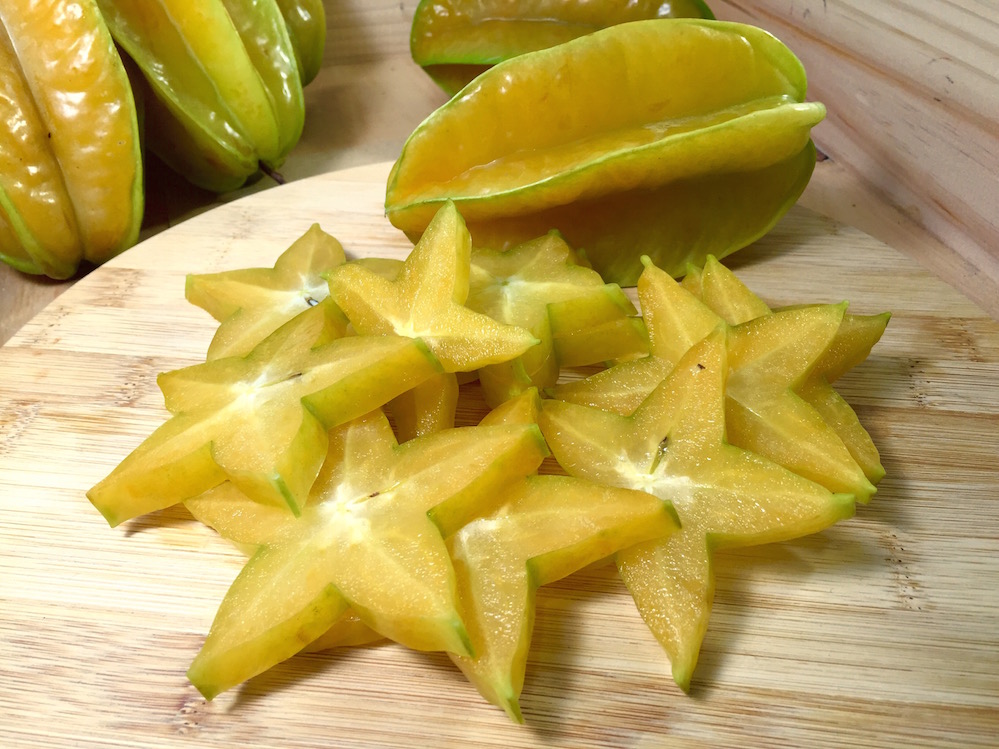
Star fruit is scientifically known as wu lian zi (Averrhoa carambola), and is commonly called feng guo in the Minnan region. Star fruit originated in the tropical and subtropical regions of Southeast Asia, and was introduced to China from Vietnam around the Han Dynasty. The Compendium of Materia Medica says: the star fruit has a very strange shape, like a farmer's roller, with five sword-like ridges running through it. Southerners call the ridges "lian zi," hence the name wu lian zi. The main harvest season runs from June and July of each year to March and April of the following year. The star fruit has a distinctive shape with five protruding ridges, and is also known in English as the star fruit.
The Nutritional Value of Star Fruit
Fresh star fruit ranks first among all fresh fruits in sugar content, containing sucrose, fructose and glucose, along with various nutrients. Analysis of the nutritional composition of fresh star fruit shows it contains: water 91.7%, protein 0.72%, fat 0.75%, crude fiber 0.23%, ash 0.42%, carbohydrates 3.4%, plus malic acid, citric acid, oxalic acid and vitamins A, B1, B2, C and others.
Common Star Fruit Varieties in Taiwan
The varieties commonly seen on the Taiwan market include the soft-branch variety and the Malaysian variety
The soft-branch variety's most notable feature is its relatively pale color, extremely fine flesh, few fibers, and balanced sweet-and-sour taste, making it currently the most delicious star fruit variety in Taiwan. It is mainly grown in the central Taiwan areas of Zhuolan, Dongshi and Shigang.
The Malaysian variety has large fruit, each weighing over 400 grams, and turns orange-yellow or even orange-red when ripe, very vivid in color.
Which two groups of people should not eat star fruit?
Kidney disease patients: Star fruit is rich in potassium ions, which under normal circumstances are excreted by the human kidneys, but patients with severe kidney disease or uremia cannot excrete the neurotoxin and will develop symptoms of poisoning.
Pregnant women: Star fruit is cooling in nature, so pregnant women should eat it sparingly.