-

Correct application methods for ammonium-nitrogen compound fertilizer
How should ammonium-nitrogen compound fertilizer be applied? Please give an introduction. There are three types of nitrogen fertilizer in compound fertilizer: ammonium nitrogen, nitrate nitrogen and urea. Nitrate nitrogen is absorbed most quickly by crops, but it is not easily retained in the soil and is prone to leaching with water, so it is best used as a top dressing and less suitable as a base fertilizer; urea also leaches easily, and after being applied to the soil it must undergo transformation before it can be absorbed by crops. This process takes a long time when spring soil temperatures are low, and its effect is too slow, so it is also not ideal as a base fertilizer. Only ammonium nitrogen is both easily adsorbed and retained by the soil, not prone to leaching, and unaffected by low temperatures, giving it the highest utilization rate and making it the most ideal base fertilizer. Therefore, ammonium-nitrogen compound fertilizer is suitable for application as a base fertilizer.
-

What should be noted when applying nitrogen fertilizer? A detailed explanation of the key points for using various types of nitrogen fertilizer
What should be noted when applying various nitrogen fertilizers? Please introduce the following points to note when applying various nitrogen fertilizers: 1. Ammonium nitrogen fertilizers should not be mixed with alkaline fertilizers. After mixed application, ammonia gas will volatilize, reducing the fertilizer effect. 2. Ammonium bicarbonate should not be broadcast. Ammonium bicarbonate is extremely unstable in nature, and after being broadcast on the soil surface, under...
-

Is it okay to apply only nitrogen fertilizer as base fertilizer in autumn and winter?
Is it okay to apply only nitrogen fertilizer as base fertilizer in autumn and winter? Please give an introduction. Some farmers are in the habit of applying 80-100 kg of ammonium bicarbonate or 60-80 kg of urea per mu when sowing autumn and winter crops. This method of applying only nitrogen fertilizer often causes some adverse consequences. First, it reduces the utilization rate of chemical fertilizer. Applying too much ammonium bicarbonate and urea...
-

What are the nitrogen fertilizer application methods for fruit crops?
How should nitrogen fertilizer be applied to fruit crops? An introduction is given that the sweetness of fruit is determined by the amount of sugar in its cells, and the accumulation of sugar is closely related to nitrogen fertilizer. Therefore, it is said that the sweetness of fruit is related to nitrogen fertilizer. Within 28 days from the end of flowering of the fruit tree to after the end of flowering, the cells of the young fruit are in a state of division, and the cells are filled...
-
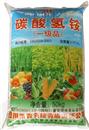
What types of nitrogen fertilizer are there? A complete guide in one article
What types of nitrogen fertilizer are there? What are their characteristics? We ask knowledgeable readers to help explain. The types of nitrogen fertilizer include ammonium bicarbonate, urea, ammonium chloride and ammonium nitrate. Zhongdi Network has compiled their characteristics and listed them below for readers' reference. 1. Characteristics of ammonium bicarbonate: generally ammonium bicarbonate has a nitrogen content of about 17%, and is...
-
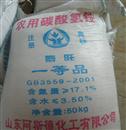
What types of nitrogen fertilizers are there? Introduction to common nitrogen fertilizer varieties
What are the common nitrogen fertilizers? What should be noted when using them? We hope a reader can help introduce them. The common nitrogen fertilizers include ammonium bicarbonate, ammonium chloride, ammonium sulfate, ammonium nitrate, and urea. Zhongdi Network has compiled the product introductions and usage precautions for the above nitrogen fertilizers, listed below for readers' reference. Ammonium bicarbonate...
-
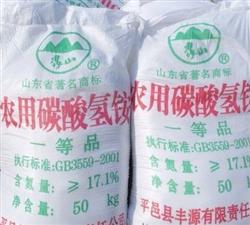
What is ammonium nitrogen fertilizer, and what are the common types?
What is ammonium nitrogen fertilizer? What types of ammonium nitrogen fertilizer are there? What properties do they have? We ask knowledgeable readers to help explain. Ammonium nitrogen fertilizer is a simple nitrogen fertilizer in the form of ammonium salts, and the more common types are ammonium bicarbonate, ammonium sulfate, and ammonium chloride. Zhongdi Network has compiled the properties of the above three ammonium nitrogen fertilizers, listed in detail below...
-
What are the respective roles of nitrogen fertilizer, phosphorus fertilizer, and potassium fertilizer?
What are the roles of nitrogen fertilizer, phosphorus fertilizer, and potassium fertilizer? What varieties of nitrogen fertilizer, phosphorus fertilizer, and potassium fertilizer are there? Is there any knowledgeable netizen who can help explain? Nitrogen fertilizer, phosphorus fertilizer, and potassium fertilizer are indispensable elements for agricultural planting, so Zhongdiwang has compiled the main roles and common varieties of nitrogen fertilizer, phosphorus fertilizer, and potassium fertilizer, listed in detail below...
-
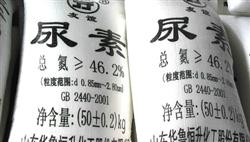
What Is Nitrogen Fertilizer? Definition and Basics Explained
What is nitrogen fertilizer? What exactly does nitrogen fertilizer do? What happens when crops are deficient in nitrogen or when nitrogen fertilizer is excessive? We ask knowledgeable readers to help explain. Nitrogen fertilizer refers to a straight chemical fertilizer that has a stated nitrogen (N) content and supplies plants with nitrogen nutrition. Nitrogen fertilizer can increase total biomass and total economic yield. Applying nitrogen fertilizer has...
-
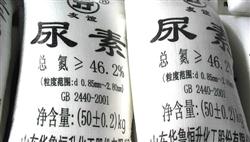
Introduction to the correct use of nitrogen fertilizer synergists
What nitrogen fertilizer synergists are there? How do you use nitrogen fertilizer synergists? We ask experienced readers to help explain. Nitrogen fertilizer synergists are also called nitrification inhibitors; their composition is a class of organic chemical substances, and their actual nature is that of some fungicides. Mixing nitrogen fertilizer synergists with nitrogen fertilizer and applying them to farmland can reduce nitrogen fertilizer losses caused by denitrification...
条件筛选