What types of nitrogen fertilizers are there? Introduction to common nitrogen fertilizer varieties
What are the common nitrogen fertilizers? What should be noted when using them? We hope a reader can help introduce them. The common nitrogen fertilizers include ammonium bicarbonate, ammonium chloride, ammonium sulfate, ammonium nitrate, and urea. Zhongdi Network has compiled the product introductions and usage precautions for the above nitrogen fertilizers, listed below for readers' reference. Ammonium bicarbonate...
 What are the common nitrogen fertilizers? What should be noted when using them? We hope a reader can help introduce them
The common nitrogen fertilizers include ammonium bicarbonate, ammonium chloride, ammonium sulfate, ammonium nitrate, and urea. Zhongdi Network has compiled the product introductions and usage precautions for the above nitrogen fertilizers, listed below for readers' reference.
Characteristics and precautions of ammonium bicarbonate:
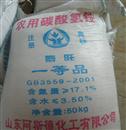
Generally, ammonium bicarbonate has a nitrogen content of about 17%. After being applied to the soil, the nutrient component ammonium ions can all be absorbed, and no harmful substances remain in the soil. It is a physiologically neutral quick-acting nitrogen fertilizer.
However, ammonium bicarbonate is volatile, so it should not be applied shallowly. The application depth should be below the 3 cm soil layer, and after application it should be covered with soil immediately and watered promptly. It should also not be applied in greenhouses, because the temperature in greenhouses is generally higher, and ammonium bicarbonate is more easily decomposed into ammonia gas and volatilized.
Characteristics and precautions of ammonium chloride:
Generally, ammonium chloride has a nitrogen content of about 25%, low hygroscopicity, and is very stable at room temperature. It is a physiologically acidic fertilizer. After being applied to the soil, the nutrient component ammonium ions can all be absorbed, but chloride ions can accumulate in the soil and may become toxic to crops.
Rice, sorghum, millet, cotton, hemp, sugar beet, spinach, and other crops with strong chlorine tolerance can be applied as needed. Barley, wheat, corn, soybean, pea, broad bean, peanut, radish, tomato, cucumber, and others have moderate chlorine tolerance and can be applied at normal rates. Sweet potato, flue-cured tobacco, lettuce, Chinese cabbage, apple, and others have weak chlorine tolerance and are chlorine-sensitive crops, so ammonium chloride should not be applied to them.
Characteristics and precautions of ammonium sulfate:
Generally, ammonium sulfate has a nitrogen content of about 21%, low hygroscopicity, and is very stable at room temperature, but it should not be applied over the long term, because this fertilizer is a physiologically acidic fertilizer. Long-term application in acidic soil will further increase soil acidity and destroy soil structure. When applied in alkaline soil, after the ammonium ions in ammonium sulfate are absorbed, the sulfate ions remain in the soil and react with calcium, which can make the soil compact and hard.
Characteristics and precautions of ammonium nitrate:
Generally, ammonium nitrate has a nitrogen content of about 34%, with strong fertilizer efficiency. After being applied to the soil, ammonium ions and nitrate ions can all be absorbed, with no adverse effects on the soil. It is a physiologically neutral quick-acting nitrogen fertilizer.
Because ammonium nitrate can dissociate nitrate ions, in paddy fields it is easily leached into deeper soil layers, producing denitrification and causing nitrogen loss. Therefore, it should not be applied in paddy fields. When applying nitrate nitrogen fertilizer on dry land, it should not be done on days of heavy rain or followed by heavy irrigation.
In addition, ammonium nitrate should not be applied to leafy vegetables. For example, pak choi, Chinese cabbage, amaranth, celery, spinach, and others have short growth periods and readily absorb nitrate nitrogen. When ammonium nitrate is applied, leafy vegetables absorb mostly nitrate ions. For the vegetables, this means a short storage life and easy rotting. For people, long-term consumption of these vegetables with high nitrate content can cause cumulative poisoning.
Characteristics and precautions of urea:
Generally, urea has a nitrogen content of about 45%. It is the fertilizer with the highest nitrogen content among solid nitrogen fertilizers, is relatively stable in nature, has low hygroscopicity, and is easily soluble in water. It is a high-quality neutral nitrogen fertilizer. Urea has a relatively high nutrient content and is suitable for various soils and many crops.
After urea is applied to the soil, it can only be absorbed and utilized by crops in large amounts after being converted into ammonium carbonate, so its fertilizer effect is relatively slow but more lasting. Furthermore, when applying it, it should be applied deeply and covered with soil, and heavy flooding irrigation should not be done immediately after application, to prevent urea from leaching into deeper layers and reducing fertilizer efficiency.
Click to get more nitrogen, phosphorus, and potassium application techniques
Click to get more chemical fertilizer application techniques